Departament de Bioquímica i Biomedicina Molecular, Universitat de Barcelona, 08028 Barcelona, Spain.
Centro de Investigación Biomédica en Red sobre Enfermedades Neurodegenerativas, Instituto de Salud Carlos III, Valderrebollo, 5, 28031 Madrid, Spain.
Cells. 2020 Apr 26;9(5):1075. doi: 10.3390/cells9051075.
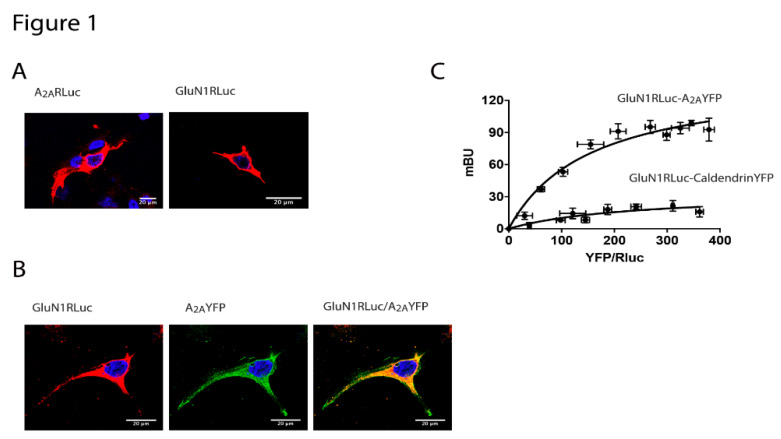
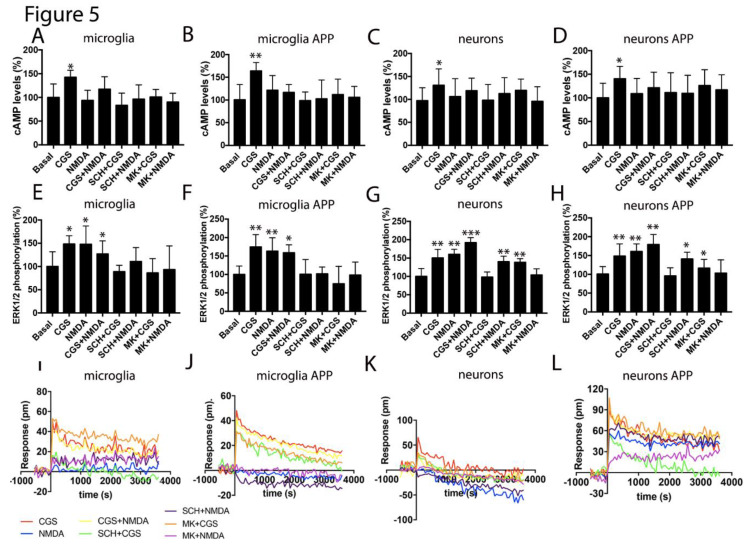
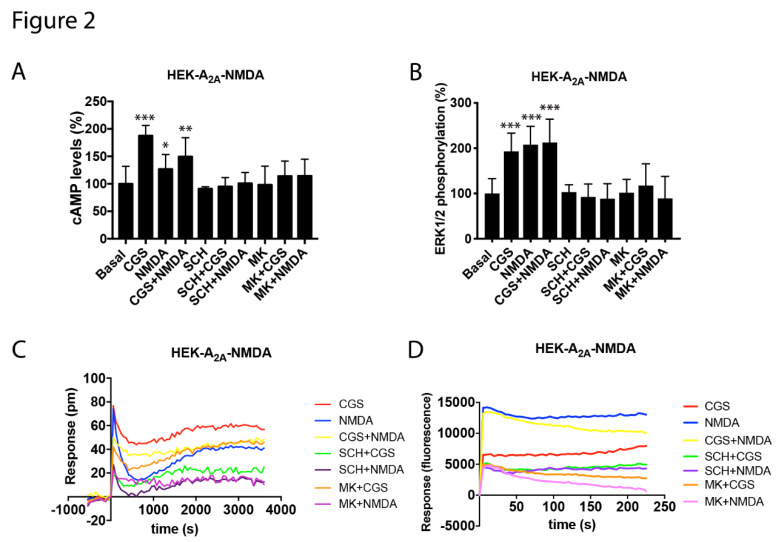
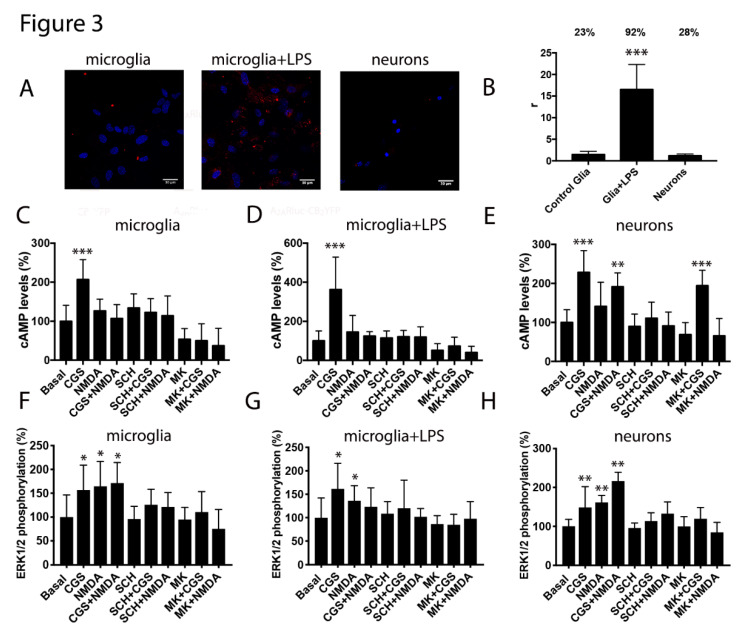
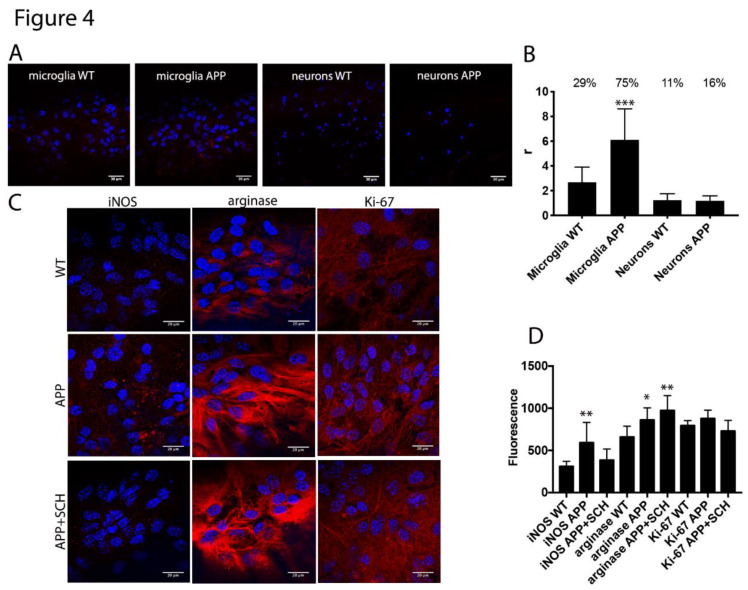
(1) Background. -methyl d-aspartate (NMDA) ionotropic glutamate receptor (NMDAR), which is one of the main targets to combat Alzheimer's disease (AD), is expressed in both neurons and glial cells. The aim of this paper was to assess whether the adenosine A receptor (AR), which is a target in neurodegeneration, may affect NMDAR functionality. (2) Methods. Immuno-histo/cytochemical, biophysical, biochemical and signaling assays were performed in a heterologous cell expression system and in primary cultures of neurons and microglia (resting and activated) from control and the APP transgenic mice. (3) Results. On the one hand, NMDA and A receptors were able to physically interact forming complexes, mainly in microglia. Furthermore, the amount of complexes was markedly enhanced in activated microglia. On the other hand, the interaction resulted in a novel functional entity that displayed a cross-antagonism, that could be useful to prevent the exacerbation of NMDAR function by using AR antagonists. Interestingly, the amount of complexes was markedly higher in the hippocampal cells from the APP than from the control mice. In neurons, the number of complexes was lesser, probably due to NMDAR not interacting with the AR. However, the activation of the AR receptors resulted in higher NMDAR functionality in neurons, probably by indirect mechanisms. (4) Conclusions. AR antagonists such as istradefylline, which is already approved for Parkinson's disease (Nouriast in Japan and Nourianz in the US), have potential to afford neuroprotection in AD in a synergistic-like fashion. i.e., via both neurons and microglia.
(1) 背景。-甲基-D-天冬氨酸(NMDA)离子型谷氨酸受体(NMDAR)是治疗阿尔茨海默病(AD)的主要靶点之一,存在于神经元和神经胶质细胞中。本文旨在评估神经退行性变的靶点——腺苷 A 受体(AR)是否会影响 NMDAR 的功能。
(2) 方法。在异源细胞表达系统和来自对照和 APP 转基因小鼠的神经元和小胶质细胞(静息和激活)的原代培养物中进行免疫组织化学/细胞化学、生物物理、生化和信号转导测定。
(3) 结果。一方面,NMDA 和 A 受体能够形成复合物,主要在小胶质细胞中进行物理相互作用。此外,在激活的小胶质细胞中,复合物的数量明显增加。另一方面,这种相互作用形成了一种新的功能实体,表现出交叉拮抗作用,这可能有助于通过使用 AR 拮抗剂来防止 NMDAR 功能的恶化。有趣的是,APP 小鼠海马细胞中的复合物数量明显高于对照小鼠。在神经元中,复合物的数量较少,可能是由于 NMDAR 不与 AR 相互作用。然而,AR 受体的激活导致神经元中 NMDAR 功能更高,可能是通过间接机制。
(4) 结论。AR 拮抗剂,如已被批准用于帕金森病的伊曲茶碱(Nouriast 在日本,Nourianz 在美国),有可能以协同的方式(即通过神经元和小胶质细胞)在 AD 中提供神经保护。