Departments of Medicine (Division of Hematology, Oncology, and Transplantation) and Pharmacology, University of Minnesota Masonic Cancer Center, Delivery Code 2812 Cancer and Cardiovascular Research Building; Suite 3-126 2231 6th St SE, Minneapolis, MN, 55455, USA.
Department of Health and Human Services, Laboratory of Signal Transduction, National Institute of Environmental Health Sciences, National Institutes of Health, Research Triangle Park, NC, 27709, USA.
Breast Cancer Res. 2020 May 1;22(1):39. doi: 10.1186/s13058-020-01277-8.
Altered signaling pathways typify breast cancer and serve as direct inputs to steroid hormone receptor sensors. We previously reported that phospho-Ser134-GR (pS134-GR) species are elevated in triple-negative breast cancer (TNBC) and cooperate with hypoxia-inducible factors, providing a novel avenue for activation of GR in response to local or cellular stress.
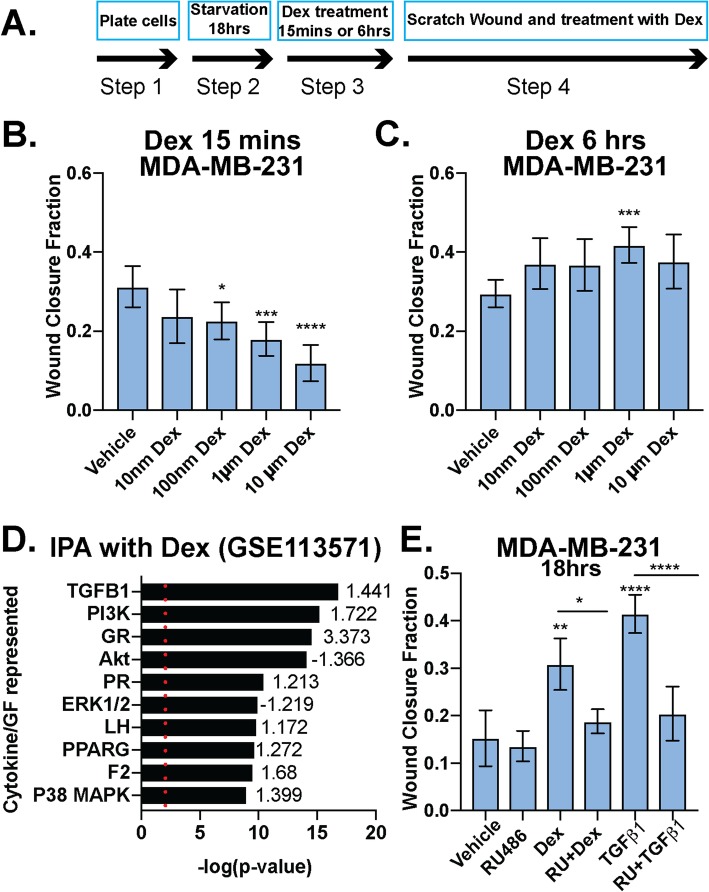
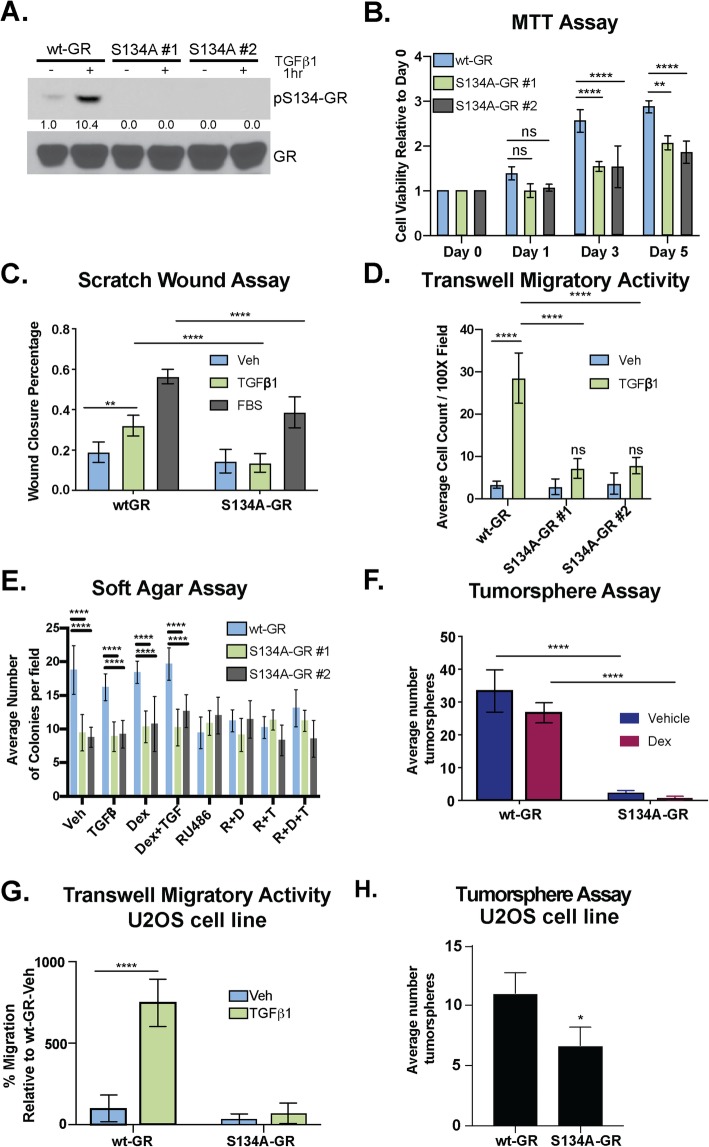
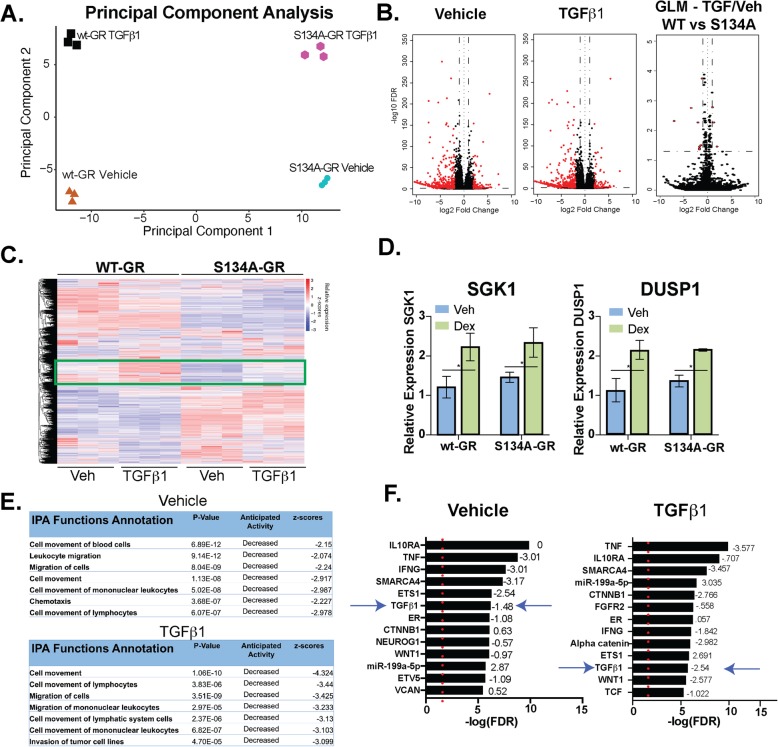
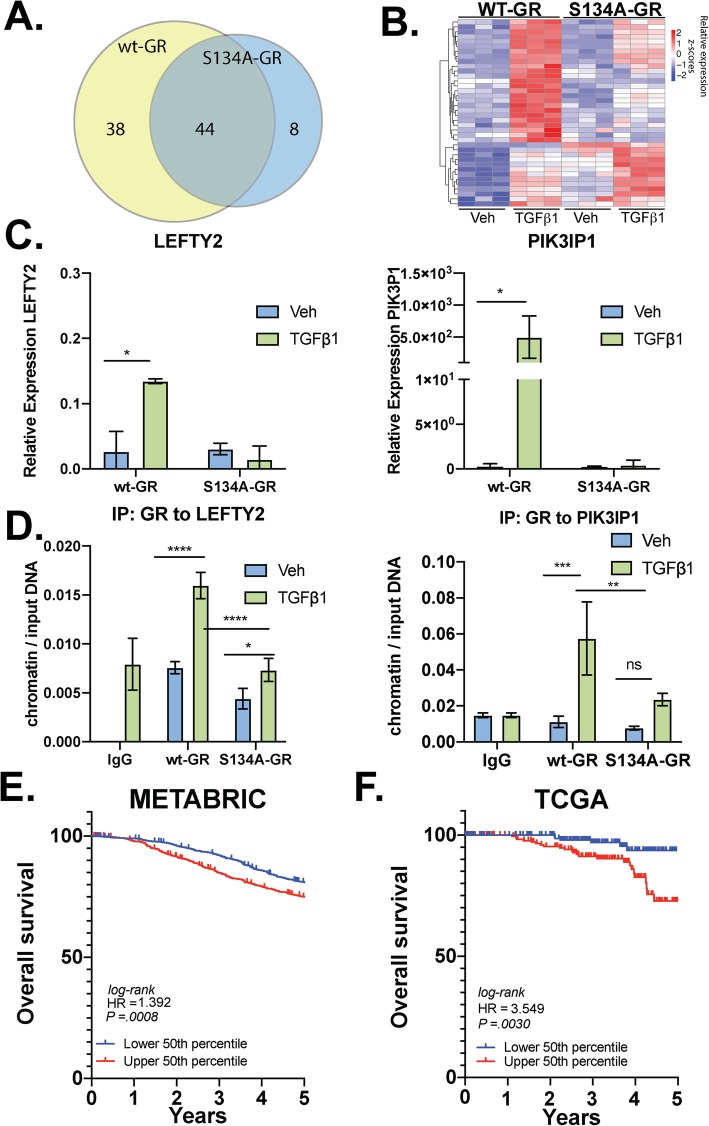
We probed GR regulation by factors (cytokines, growth factors) that are rich within the tumor microenvironment (TME). TNBC cells harboring endogenous wild-type (wt) or S134A-GR species were created by CRISPR/Cas knock-in and subjected to transwell migration, invasion, soft-agar colony formation, and tumorsphere assays. RNA-seq was employed to identify pS134-GR target genes that are regulated both basally (intrinsic) or by TGFβ1 in the absence of exogenously added GR ligands. Regulation of selected basal and TGFβ1-induced pS134-GR target genes was validated by qRT-PCR and chromatin immunoprecipitation assays. Bioinformatics tools were used to probe public data sets for expression of pS134-GR 24-gene signatures.
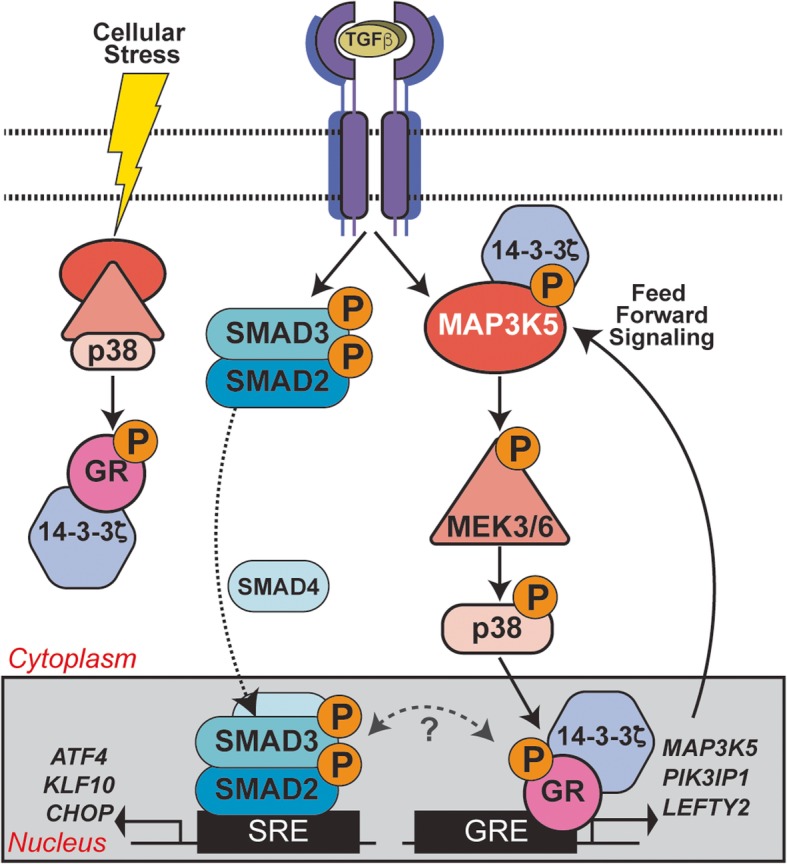
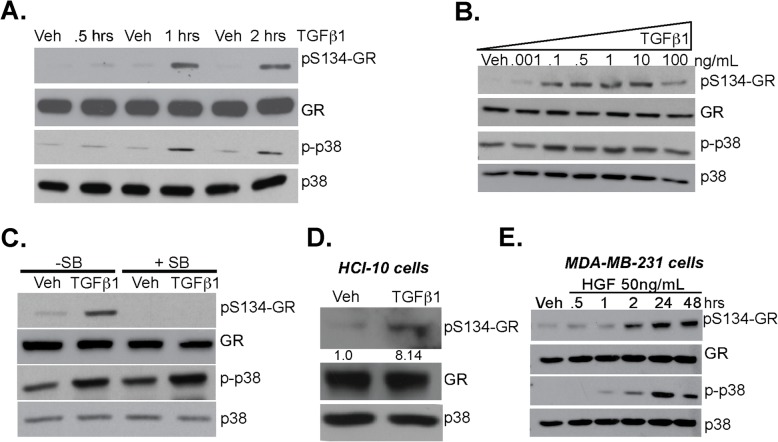
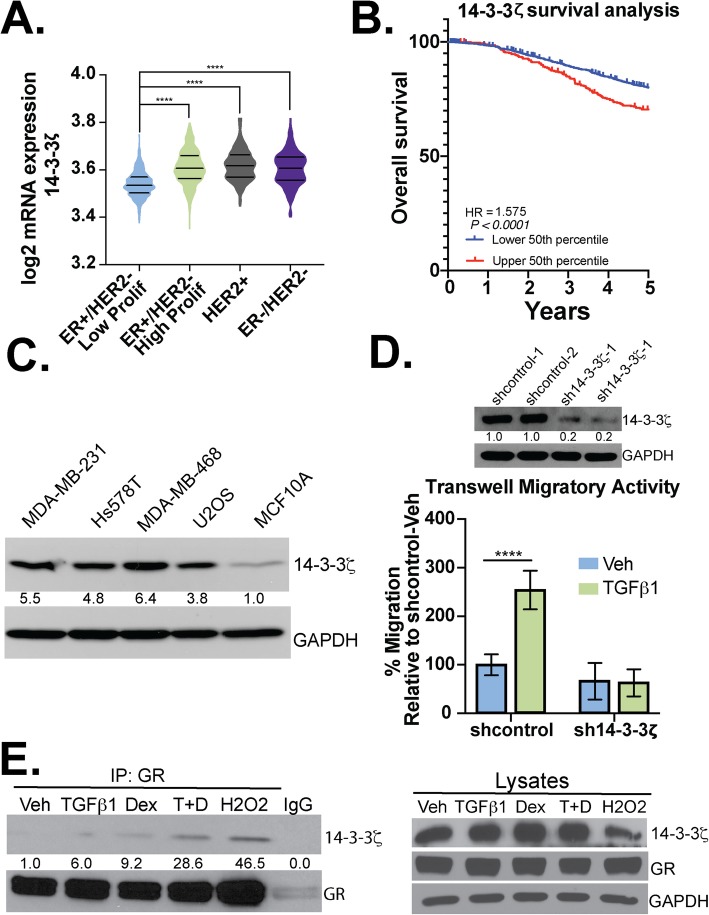
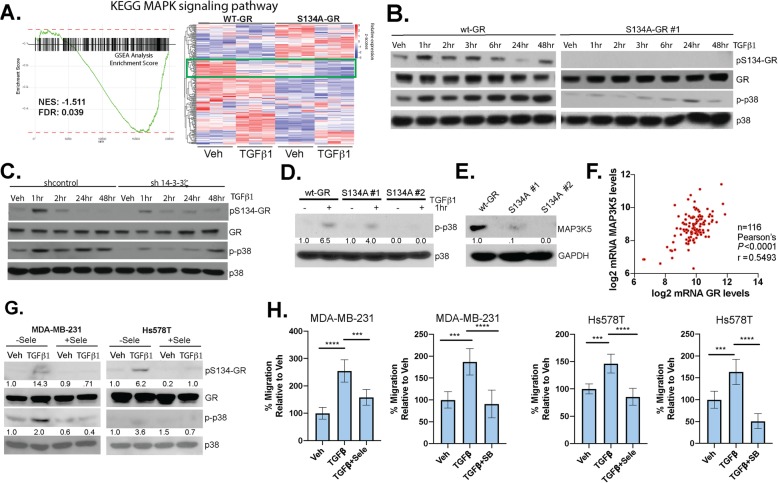
In the absence of GR ligands, GR is transcriptionally activated via p38-dependent phosphorylation of Ser134 as a mechanism of homeostatic stress-sensing and regulated upon exposure of TNBC cells to TME-derived agents. The ligand-independent pS134-GR transcriptome encompasses TGFβ1 and MAPK signaling gene sets associated with TNBC cell survival and migration/invasion. Accordingly, pS134-GR was essential for TNBC cell anchorage-independent growth in soft-agar, migration, invasion, and tumorsphere formation, an in vitro readout of cancer stemness properties. Both pS134-GR and expression of the MAPK-scaffolding molecule 14-3-3ζ were essential for a functionally intact p38 MAPK signaling pathway downstream of MAP3K5/ASK1, indicative of a feedforward signaling loop wherein self-perpetuated GR phosphorylation enables cancer cell autonomy. A 24-gene pS134-GR-dependent signature induced by TGFβ1 predicts shortened overall survival in breast cancer patients.
Phospho-S134-GR is a critical downstream effector of p38 MAPK signaling and TNBC migration/invasion, survival, and stemness properties. Our studies define a ligand-independent role for GR as a homeostatic "sensor" of intrinsic stimuli as well as extrinsic factors rich within the TME (TGFβ1) that enable potent activation of the p38 MAPK stress-sensing pathway and nominate pS134-GR as a therapeutic target in aggressive TNBC.
改变的信号通路是乳腺癌的特征,并作为甾体激素受体传感器的直接输入。我们之前报道过,磷酸化丝氨酸 134-GR(pS134-GR)在三阴性乳腺癌(TNBC)中升高,并与缺氧诱导因子合作,为 GR 响应局部或细胞应激的激活提供了新途径。
我们通过因子(细胞因子、生长因子)探测 GR 调节,这些因子在肿瘤微环境(TME)中丰富。通过 CRISPR/Cas 敲入创建了含有内源性野生型(wt)或 S134A-GR 种的 TNBC 细胞,并进行 Transwell 迁移、侵袭、软琼脂集落形成和肿瘤球体测定。采用 RNA-seq 鉴定 pS134-GR 靶基因,这些靶基因在没有外源添加 GR 配体的情况下,通过 TGFβ1 进行基础(固有)或调节。通过 qRT-PCR 和染色质免疫沉淀测定验证了选定的基础和 TGFβ1 诱导的 pS134-GR 靶基因的调节。使用生物信息学工具探测公共数据集,以研究 pS134-GR 24 基因特征的表达。
在没有 GR 配体的情况下,GR 通过丝氨酸 134 的 p38 依赖性磷酸化被转录激活,作为稳态应激感应的机制,并在 TNBC 细胞暴露于源自 TME 的试剂时受到调节。配体非依赖性的 pS134-GR 转录组包含与 TNBC 细胞存活和迁移/侵袭相关的 TGFβ1 和 MAPK 信号基因集。因此,pS134-GR 对于 TNBC 细胞在软琼脂中的无附着生长、迁移、侵袭和肿瘤球体形成是必需的,这是癌症干性特性的体外测定。pS134-GR 和 MAPK 支架分子 14-3-3ζ 的表达对于 MAP3K5/ASK1 下游功能完整的 p38 MAPK 信号通路都是必需的,这表明存在一个正反馈信号环,其中自我持续的 GR 磷酸化使癌细胞能够自主。由 TGFβ1 诱导的 24 个基因 pS134-GR 依赖性特征预测乳腺癌患者的总生存期缩短。
磷酸化丝氨酸 134-GR 是 p38 MAPK 信号和 TNBC 迁移/侵袭、存活和干性特性的关键下游效应物。我们的研究定义了 GR 作为内在刺激以及富含肿瘤微环境(TGFβ1)的外在因素的稳态“传感器”的配体非依赖性作用,这些因素能够有效地激活 p38 MAPK 应激感应途径,并将 pS134-GR 作为侵袭性 TNBC 的治疗靶点。