Srivastava Sudhir, Wagner Paul D
Division of Cancer Prevention, National Cancer Institute, National Institutes of Health, Bethesda, Maryland.
Cancer Epidemiol Biomarkers Prev. 2020 Dec;29(12):2401-2410. doi: 10.1158/1055-9965.EPI-20-0237. Epub 2020 May 1.
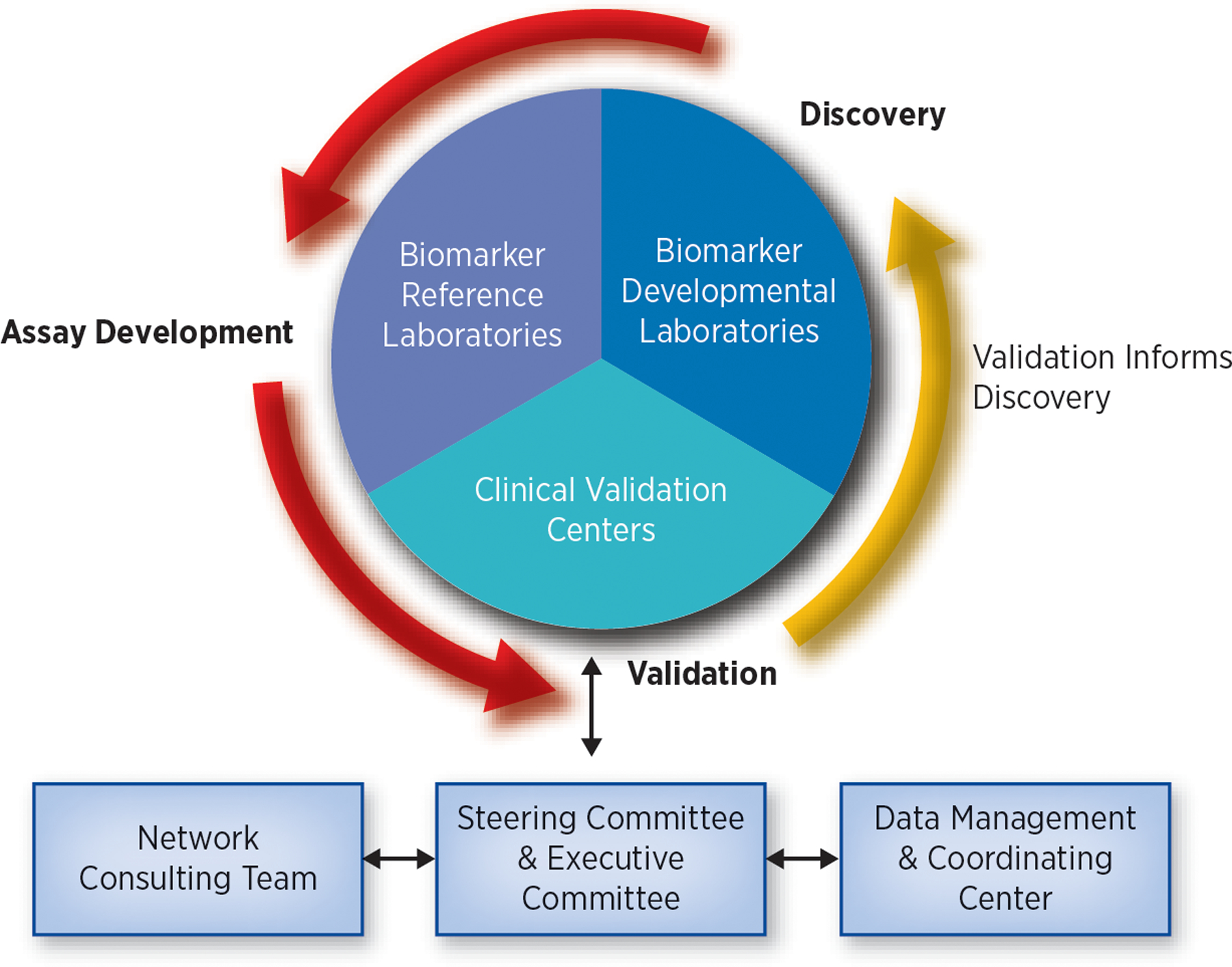
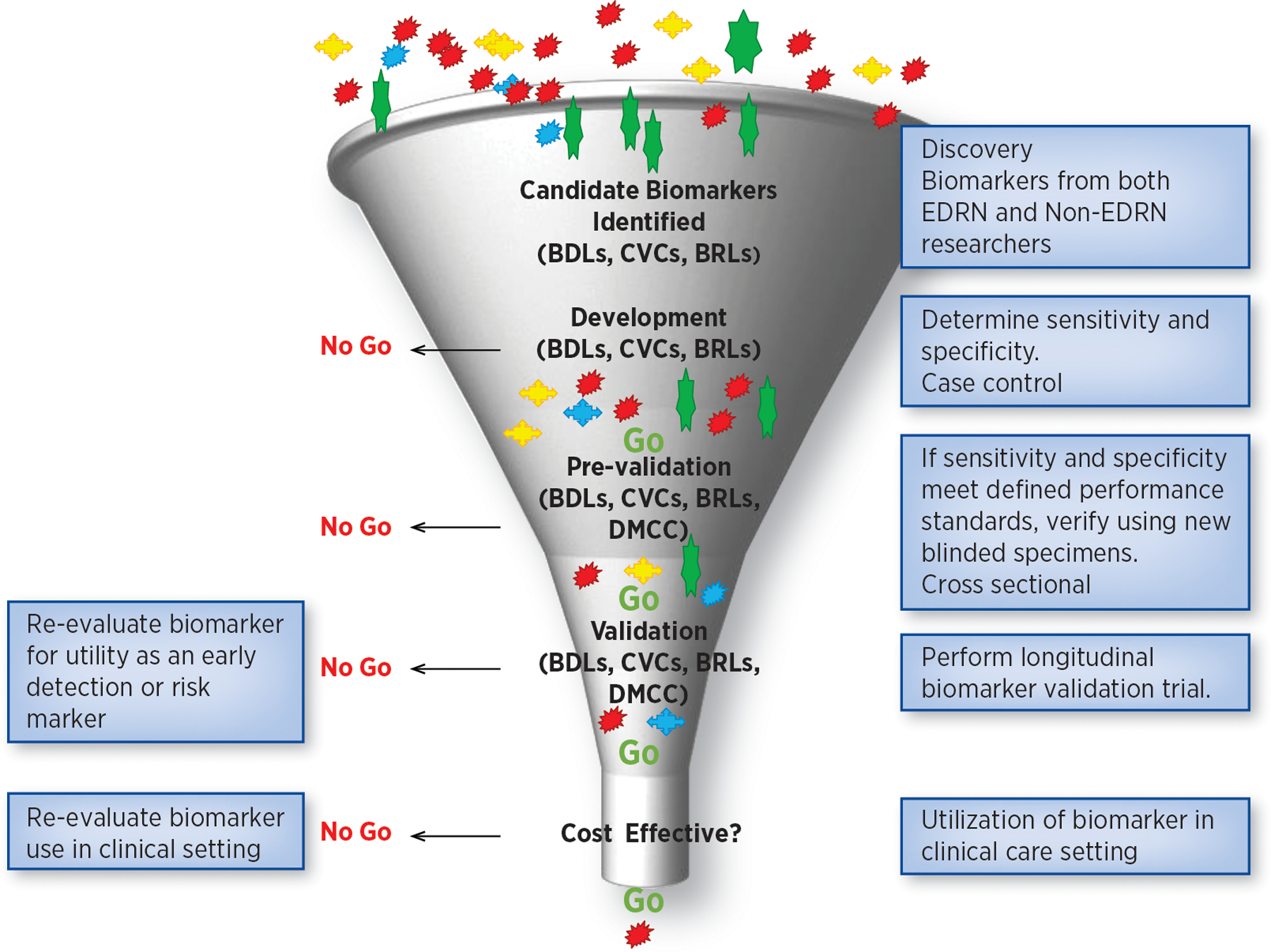
In 2000, the NCI (Rockville, MD) established the Early Detection Research Network (EDRN) to identify, develop, and validate biomarkers to improve the detection of early-stage cancers and risk assessment. This consortium of more than 300 investigators at academic institutions and in the private sector is working collaboratively to bring biomarkers and imaging methods to clinical fruition. Although significant roadblocks have hindered the field of biomarker discovery and validation, the EDRN has helped overcome many of them by setting well-defined strategies and milestones focused on solving defined unmet clinical needs. The EDRN has implemented measures to improve biomarker discovery and validation, such as data sharing, use of common data elements, generating multidisciplinary and multi-institutional collaborations within a cohesive and productive team environment, and putting emphasis on quality control and data replication for all candidate biomarkers for reaching a "go" or "no go" decision. A measure of the success of the EDRN is the number of biomarkers tests or devices approved by the FDA to which EDRN investigators have made significant contributions and the number of biomarkers tests developed by EDRN investigators that are available in Clinical Laboratory Improvement Amendments laboratories.
2000年,美国国立癌症研究所(位于马里兰州罗克维尔)设立了早期检测研究网络(EDRN),以识别、开发和验证生物标志物,从而改善早期癌症的检测及风险评估。这个由学术机构和私营部门的300多名研究人员组成的联盟正在协同合作,以使生物标志物和成像方法实现临床应用。尽管重大障碍阻碍了生物标志物的发现和验证领域,但EDRN通过制定明确的策略和里程碑,专注于解决明确的未满足临床需求,帮助克服了其中许多障碍。EDRN已实施多项措施来改善生物标志物的发现和验证,比如数据共享、使用通用数据元素、在一个有凝聚力且富有成效的团队环境中开展多学科和多机构合作,以及强调对所有候选生物标志物进行质量控制和数据复制,以做出“通过”或“不通过”的决定。EDRN成功的一个衡量标准是美国食品药品监督管理局(FDA)批准的、EDRN研究人员做出重大贡献的生物标志物检测或设备的数量,以及EDRN研究人员开发的、可在临床实验室改进修正案实验室使用的生物标志物检测的数量。