LEO Foundation Skin Immunology Research Center, Department of Immunology and Microbiology, University of Copenhagen, Copenhagen, Denmark.
Center for Cancer Immune Therapy (CCIT), Department of Hematology and Oncology, Copenhagen University Hospital, Herlev Hospital, Herlev, Denmark.
Oncoimmunology. 2020 Apr 17;9(1):1751561. doi: 10.1080/2162402X.2020.1751561. eCollection 2020.
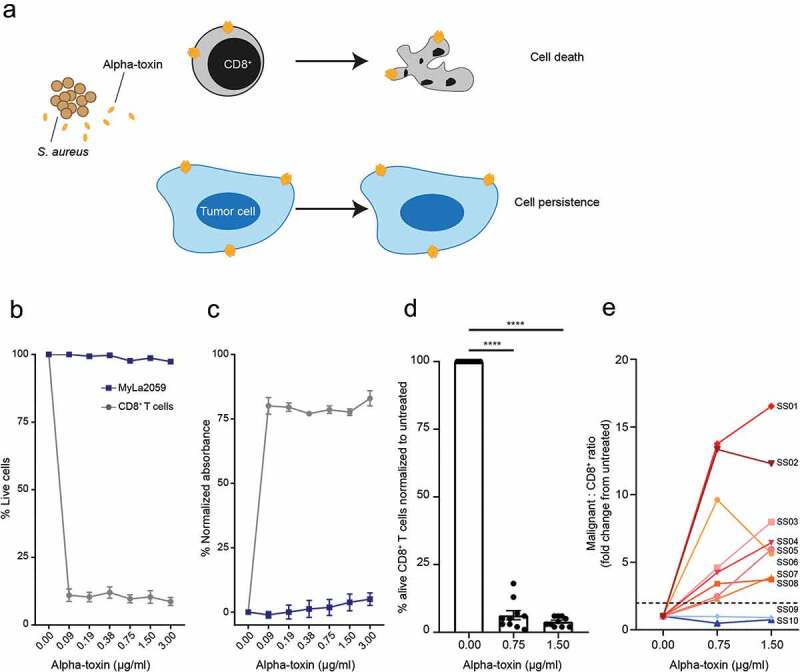
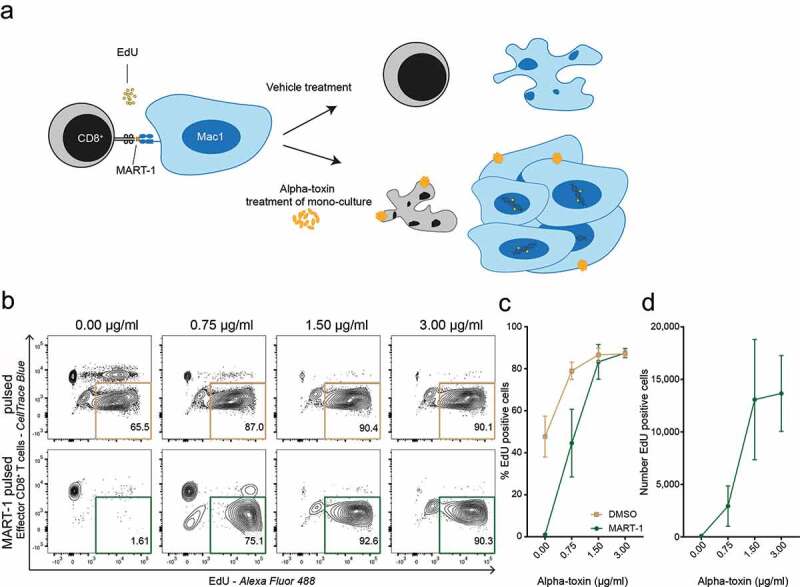
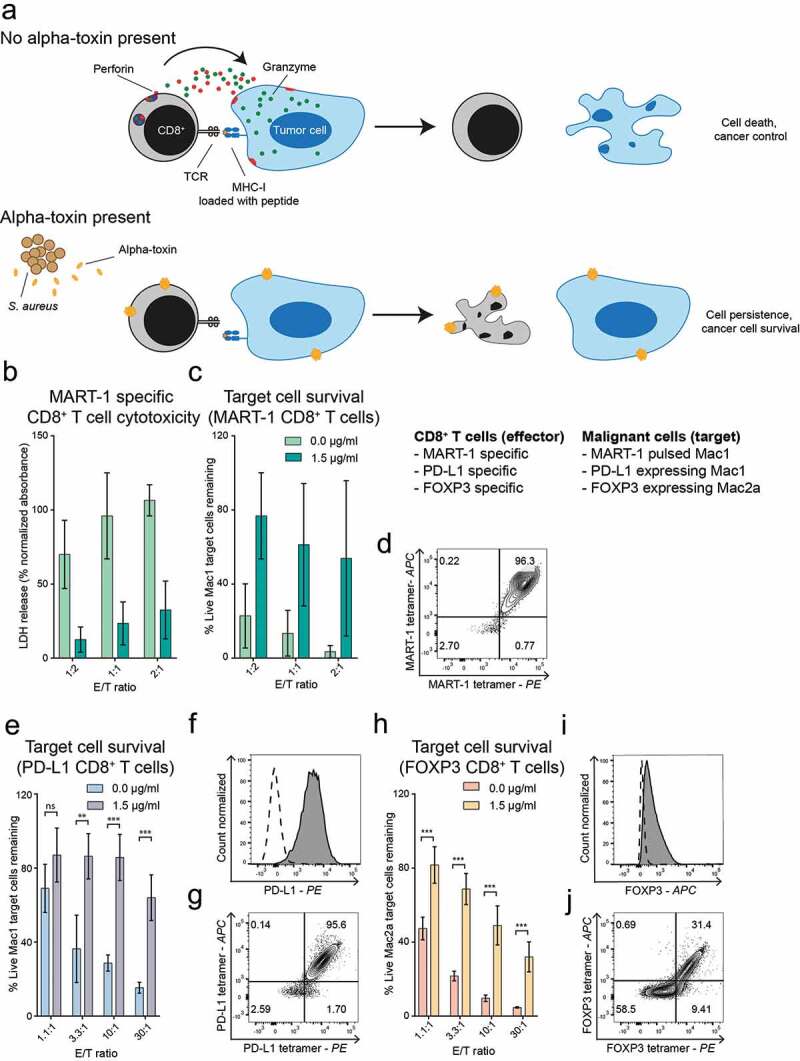
and its toxins have been linked to disease progression and mortality in advanced stages of cutaneous T-cell lymphoma (CTCL). CD8 T cells play a crucial role in anti-cancer responses and high CD8 T cell numbers in tumor lesions are associated with a favorable prognosis in CTCL. Here, we show that CD8 T cells from both healthy donors and Sézary syndrome patients are highly susceptible to cell death induced by Staphylococcal alpha-toxin, whereas malignant T cells are not. Importantly, alpha-toxin almost completely blocks cytotoxic killing of CTCL tumor cells by peptide-specific CD8 T cells, leading to their escape from induced cell death and continued proliferation. These findings suggest that alpha-toxin may favor the persistence of malignant CTCL cells by inhibiting CD8 T cell cytotoxicity. Thus, we propose a novel mechanism by which colonization with may contribute to cancer immune evasion and disease progression in CTCL.
并且其毒素与皮肤 T 细胞淋巴瘤(CTCL)晚期的疾病进展和死亡率有关。CD8 T 细胞在抗肿瘤反应中起着至关重要的作用,肿瘤病变中 CD8 T 细胞数量较高与 CTCL 的有利预后相关。在这里,我们表明,来自健康供体和蕈样肉芽肿患者的 CD8 T 细胞对葡萄球菌α-毒素诱导的细胞死亡非常敏感,而恶性 T 细胞则不然。重要的是,α-毒素几乎完全阻断了肽特异性 CD8 T 细胞对 CTCL 肿瘤细胞的细胞毒性杀伤,导致它们逃避诱导的细胞死亡并继续增殖。这些发现表明,α-毒素可能通过抑制 CD8 T 细胞的细胞毒性来促进恶性 CTCL 细胞的持续存在。因此,我们提出了一种新的机制,即定植可能有助于 CTCL 中的癌症免疫逃逸和疾病进展。