Department of Radiation Oncology, National Cancer Center/National Clinical Research Center for Cancer/Cancer Hospital, Chinese Academy of Medical Sciences and Peking Union Medical College, Beijing, 100021, China.
J Appl Clin Med Phys. 2020 Jul;21(7):119-127. doi: 10.1002/acm2.12897. Epub 2020 May 4.
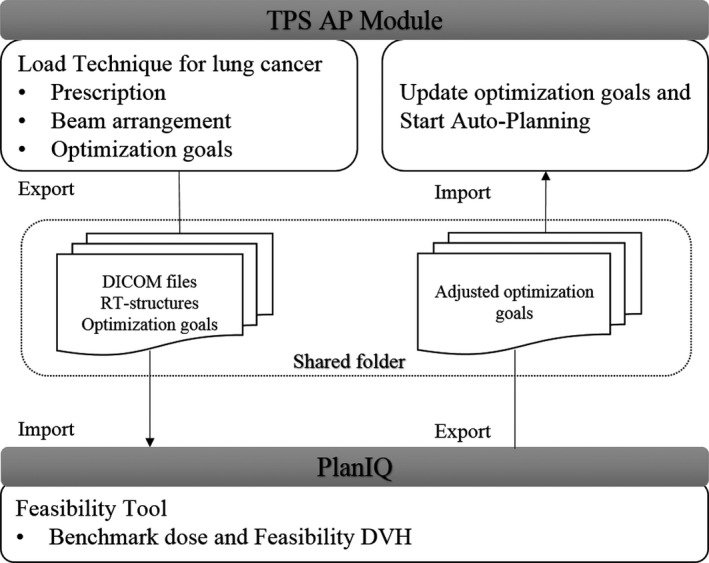
The personalized setting of plan parameters in the Auto-Planning module of the Pinnacle treatment planning system (TPS) using the PlanIQ feasibility tool was evaluated for lung cancer conventional fractionated radiotherapy (CFRT).
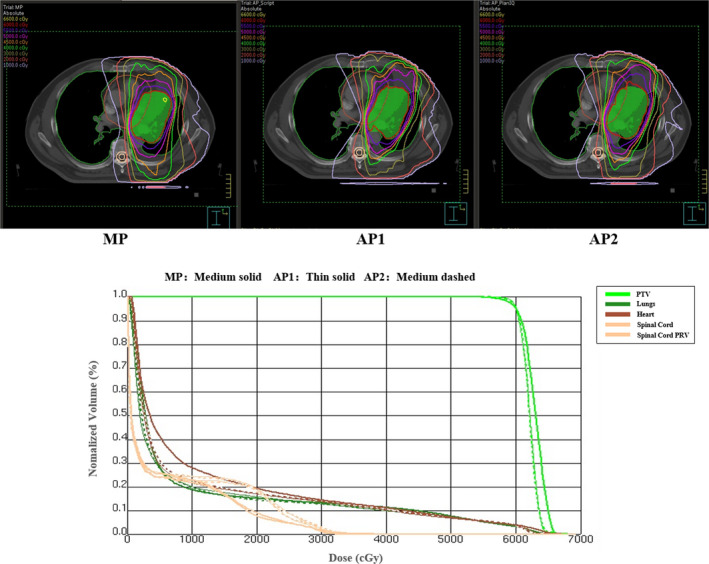
We reviewed the records of ten patients with lung cancer who were treated with volumetric modulated arc therapy (VMAT). Three plans were designed for each patient: the clinically accepted manual plan (MP) and two automatic plans including one generated using the generic plan parameters in technique script (AP1) and the other generated using personalized plan parameters derived based on feasibility dose volume histogram (FDVH) in PlanIQ (AP2). The plans were assessed according to the dosimetric parameters, monitor units, and planning time. A plan quality metric (PQM) was defined according to the clinical requirements for plan assessment.
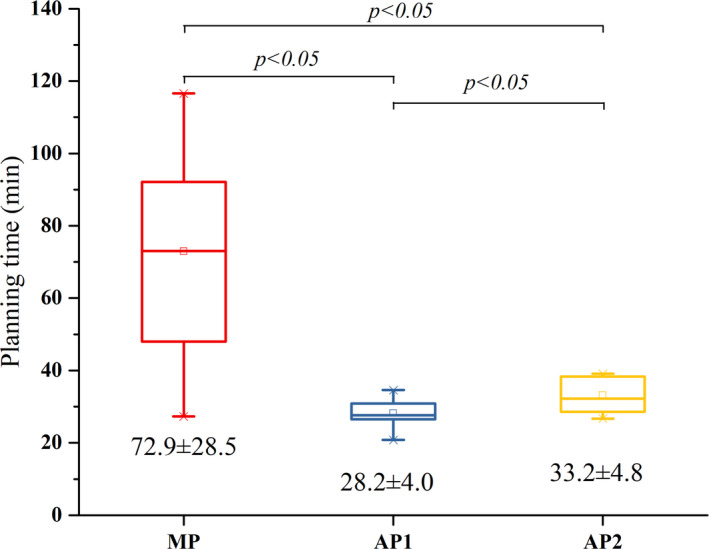
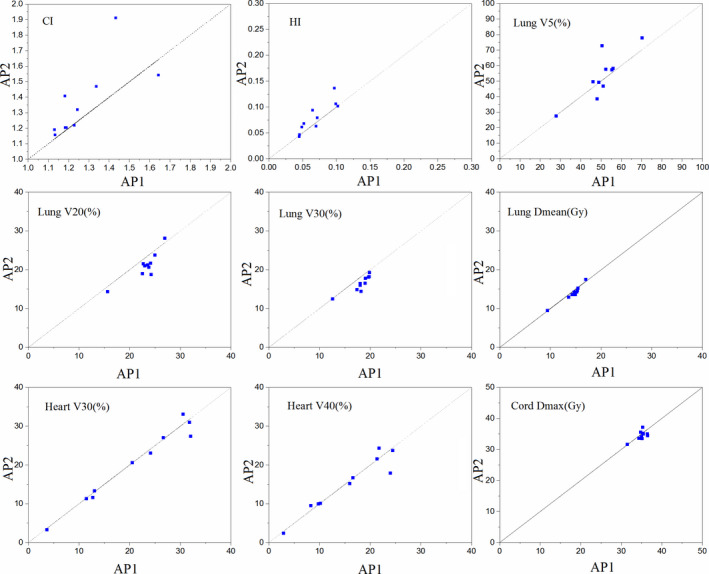
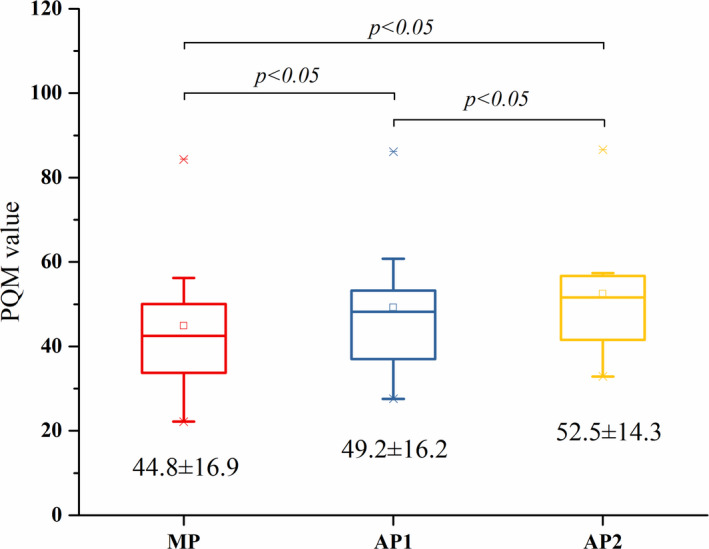
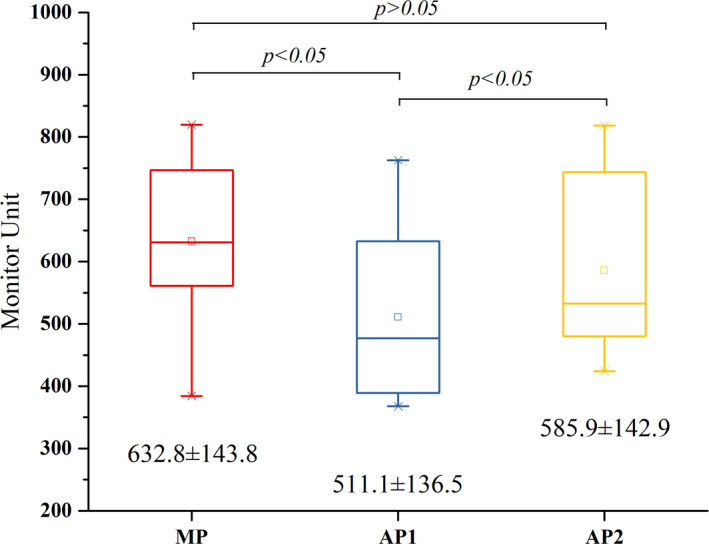
AP2 achieved better lung sparing than AP1 and MP. The PQM value of AP2 (52.5 ± 14.3) was higher than those of AP1 (49.2 ± 16.2) and MP (44.8 ± 16.9) with P < 0.05. The monitor units of AP2 (585.9 ± 142.9 MU) was higher than that of AP1 (511.1 ± 136.5 MU) and lower than that of MP (632.8 ± 143.8 MU) with p < 0.05. The planning time of AP2 (33.2 ± 4.8 min) was slightly higher than that of AP1 (28.2 ± 4.0 min) and substantially lower than that of MP (72.9 ± 28.5 min) with P < 0.05.
The Auto-Planning module of the Pinnacle system using personalized plan parameters suggested by the PlanIQ Feasibility tool provides superior quality for lung cancer plans, especially in terms of lung sparing. The time consumption of Auto-Planning was slightly higher with the personalized parameters compared to that with the generic parameters, but significantly lower than that for the manual plan.
使用 PlanIQ 可行性工具,在 Pinnacle 治疗计划系统(TPS)的 Auto-Planning 模块中对肺癌常规分割放疗(CFRT)进行计划参数的个性化设置。
我们回顾了 10 例接受容积旋转调强弧形治疗(VMAT)的肺癌患者的病历。为每位患者设计了 3 个计划:临床可接受的手动计划(MP)和两个自动计划,包括一个使用技术脚本中的通用计划参数生成的计划(AP1),另一个使用 PlanIQ 中的可行性剂量体积直方图(FDVH)生成的个性化计划参数生成的计划(AP2)。根据剂量学参数、监测单位和计划时间对这些计划进行评估。根据计划评估的临床要求,定义了一个计划质量指标(PQM)。
AP2 比 AP1 和 MP 更好地保护了肺。AP2 的 PQM 值(52.5±14.3)高于 AP1(49.2±16.2)和 MP(44.8±16.9),差异有统计学意义(P<0.05)。AP2 的监测单位(585.9±142.9 MU)高于 AP1(511.1±136.5 MU),低于 MP(632.8±143.8 MU),差异有统计学意义(P<0.05)。AP2 的计划时间(33.2±4.8 min)略高于 AP1(28.2±4.0 min),显著低于 MP(72.9±28.5 min),差异有统计学意义(P<0.05)。
Pinnacle 系统的 Auto-Planning 模块使用 PlanIQ 可行性工具提供的个性化计划参数为肺癌计划提供了更高的质量,特别是在保护肺方面。与使用通用参数相比,使用个性化参数进行 Auto-Planning 的时间消耗略高,但明显低于手动计划。