Marin Elba, Teixido Cristina, Carmona-Rocha Elena, Reyes Roxana, Arcocha Ainara, Viñolas Nuria, Rodríguez-Mues MªCarmen, Cabrera Carlos, Sánchez Marcelo, Vollmer Ivan, Castillo Sergi, Muñoz Silvia, Sullivan Ivana G, Rodriguez Adela, Garcia Mireia, Alos Silvia, Jares Pedro, Martinez Antonio, Prat Aleix, Molina-Vila Miguel Ángel, Reguart Noemi
Division of Medical Oncology, Hospital Clínic, 08036 Barcelona, Spain.
Translational Genomics and Targeted Therapeutics in Solid Tumors, Institut d'Investigacions Biomèdiques August Pi I Sunyer, 08036 Barcelona, Spain.
Cancers (Basel). 2020 Apr 30;12(5):1124. doi: 10.3390/cancers12051124.
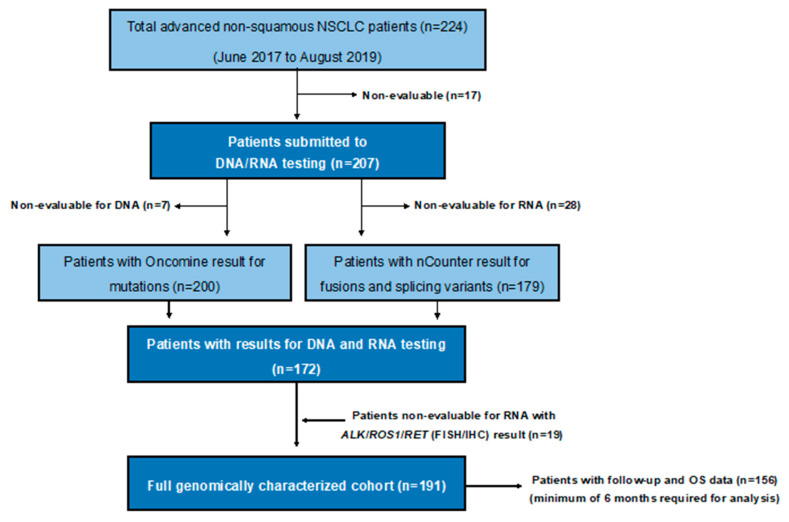
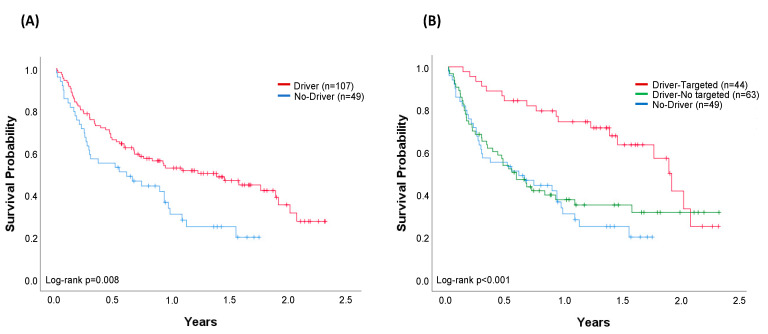
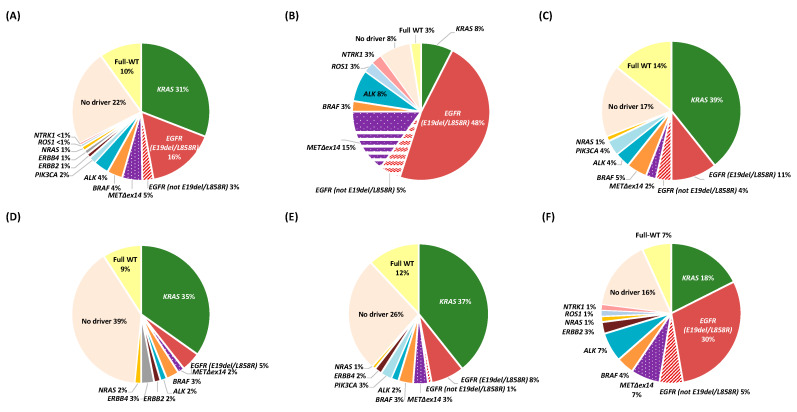
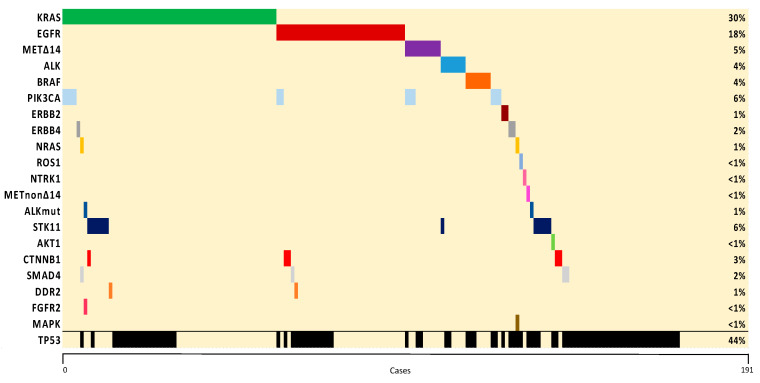
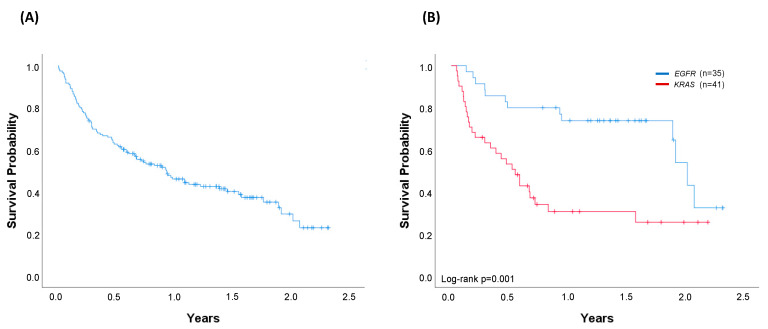
Personalized medicine is nowadays a paradigm in lung cancer management, offering important benefits to patients. This study aimed to test the feasibility and utility of embedding two multiplexed genomic platforms as the routine workup of advanced non-squamous non-small cell lung cancer (NSCLC) patients. Two parallel multiplexed approaches were performed based on DNA sequencing and direct digital detection of RNA with nCounter technology to evaluate gene mutations and fusions. The results were used to guide genotype-directed therapies and patient outcomes were collected. A total of 224 advanced non-squamous NSCLC patients were prospectively included in the study. Overall, 85% of samples were successfully characterized at DNA and RNA levels and oncogenic drivers were found in 68% of patients, with , , Δex14, , and being the most frequent (31%, 19%, 5%, 4%, and 4%, respectively). Among all patients with complete genotyping results and follow-up data ( = 156), the median overall survival (OS) was 1.90 years (confidence interval (CI) 95% 1.69-2.10) for individuals harbouring an actionable driver treated with a matched therapy, compared with 0.59 years (CI 95% 0.39-0.79) in those not eligible for any targeted therapy and 0.61 years (CI 95% 0.12-1.10) in patients with no drivers identified ( < 0.001). Integrating DNA and RNA multiplexing technologies into the routine molecular testing of advanced NSCLC patients is feasible and useful and highlights the necessity of widespread integrating comprehensive molecular diagnosis into lung cancer care.
如今,个性化医疗是肺癌治疗的一种模式,为患者带来了重要益处。本研究旨在测试将两个多重基因组平台作为晚期非鳞状非小细胞肺癌(NSCLC)患者常规检查方法的可行性和实用性。基于DNA测序和使用nCounter技术对RNA进行直接数字检测,进行了两种并行的多重方法,以评估基因突变和融合情况。结果用于指导基因型导向的治疗,并收集患者的预后数据。共有224例晚期非鳞状NSCLC患者前瞻性纳入本研究。总体而言,85%的样本在DNA和RNA水平上成功进行了特征分析,68%的患者发现了致癌驱动因素,其中 、 、Δex14、 和 最为常见(分别为31%、19%、5%、4%和4%)。在所有具有完整基因分型结果和随访数据的患者( = 156)中,接受匹配治疗的具有可操作驱动因素的个体的中位总生存期(OS)为1.90年(95%置信区间(CI)1.69 - 2.10),相比之下,不符合任何靶向治疗条件的患者为0.59年(CI 95% 0.39 - 0.79),未发现驱动因素的患者为0.61年(CI 95% 0.12 - 1.10)( < 0.001)。将DNA和RNA多重技术整合到晚期NSCLC患者的常规分子检测中是可行且有用的,并突出了将全面分子诊断广泛整合到肺癌治疗中的必要性。