School of Pharmacy, Shanghai University of Traditional Chinese Medicine, Shanghai 201203, People's Republic of China.
Engineering Research Center of Modern Preparation Technology of Traditional Chinese Medicine of Ministry of Education, Shanghai University of Traditional Chinese Medicine, Shanghai 201203, People's Republic of China.
Drug Des Devel Ther. 2020 Apr 16;14:1481-1491. doi: 10.2147/DDDT.S236997. eCollection 2020.
"Unification of medicines and excipients" is the special principle which means fatty oil with pharmacodynamic activity derived from traditional Chinese medicine are taken as liquid lipids in perparation for dual-drug delivery, which improve the treatment effect and reduce unnecessary excipients.
The aim of this study was to prepare a nanostructured lipid carrier (NLC) with naringin (NG) containing coix seed oil (CSO) as liquid lipid based on the theory (NCNLC) in order to achieve synergistic antitumor activity against hepatocellular carcinoma.
We developed NCNLCs using ultrasonic melt-emulsification method. The antitumor effect in vivo/in vitro and drug release ability were compared to NLC prepared with conventional liquid lipids: neodecanoate triglycerides (NDNLC) and oleic acid (NONLC).
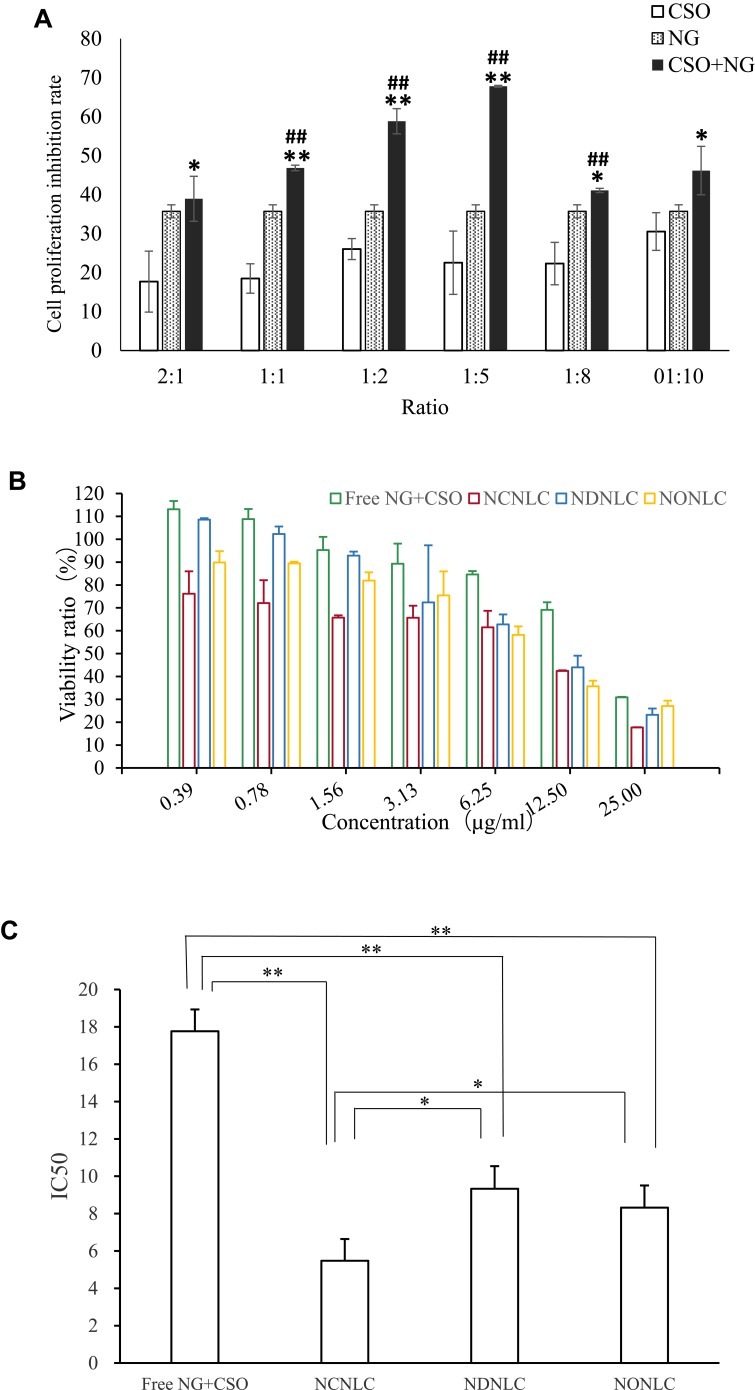
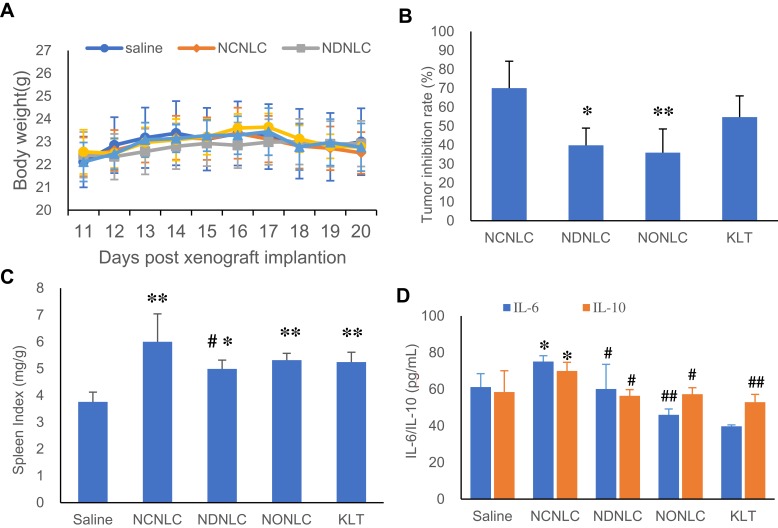
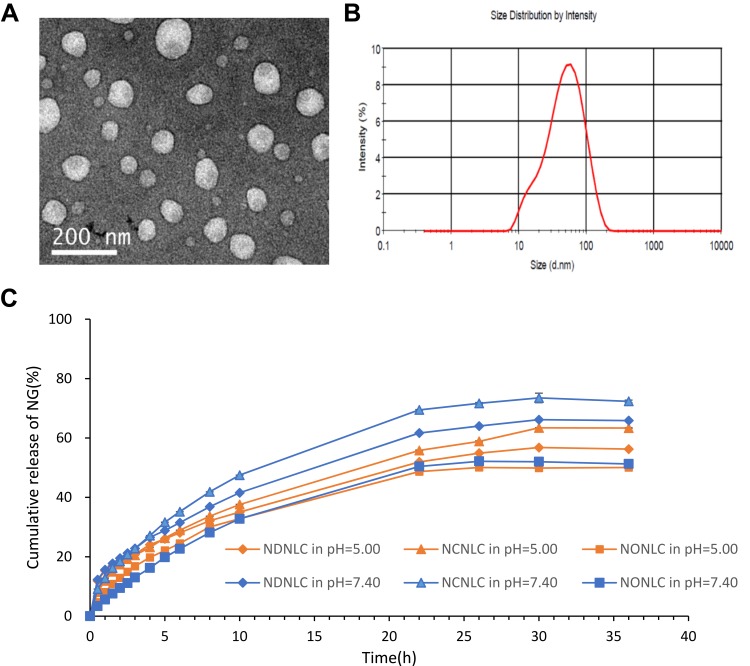
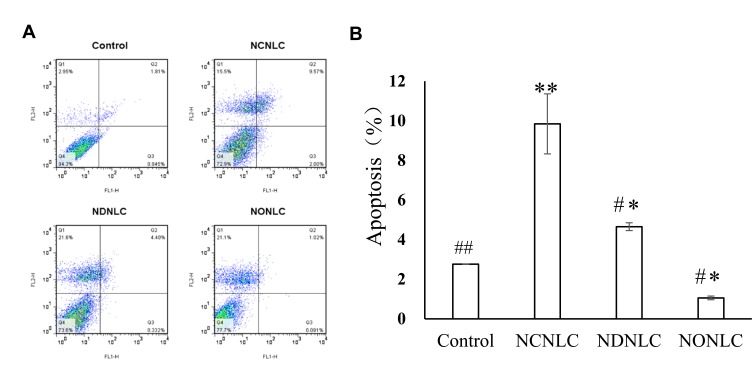
Transmission electron microscopy showed that NCNLCs had a well-defined spherical shape, small size, and narrow polydispersity index. Importantly, the release of drugs from NDNLCs and NONLCs was slower than NCNLCs. In the cell study, the result showed a significantly greater antiproliferative effect towards HepG2 cells, and the half-maximal inhibitory concentration of NCNLCs was 3.24-fold, 1.70-fold and 1.52-fold lower to that of free drug, NDNLCs and NONLCs, respectively. Moreover, NCNLCs significantly induced HepG2 cells apoptosis by being 2.12-fold and 9.28-fold higher to that of NDNLCs and NONLCs, respectively. In the study of antitumor efficacy in vivo, the synergistic effect of NCNLCs formulation showed markedly enhanced antitumor efficacy in a xenograft model of liver cancer.
The advantages of "unification of medicines and excipients" in formulation characters, drug release and synergistic antitumor effect provide a new idea for the application of the fatty oil of traditional Chinese medicine in the nano-drug delivery for cancer therapy.
“药辅合一”是特殊的原则,它意味着来源于中药的具有药效学活性的油脂被用作双载药制剂中的液体脂质,以提高治疗效果并减少不必要的辅料。
本研究旨在基于理论(NCNLC),用含有薏苡仁油的柚皮苷(NG)制备纳米结构脂质载体(NLC)作为液体脂质,以实现对肝癌的协同抗肿瘤活性。
我们采用超声熔融乳化法制备 NCNLC。比较了体内/体外抗肿瘤效果和药物释放能力与用常规液体脂质制备的 NLC:癸酸三甘油酯(NDNLC)和油酸(NONLC)。
透射电子显微镜显示,NCNLC 具有明确的球形、小尺寸和窄的多分散指数。重要的是,NDNLC 和 NONLC 中的药物释放速度比 NCNLC 慢。在细胞研究中,结果表明对 HepG2 细胞的增殖抑制作用明显增强,NCNLC 的半数最大抑制浓度分别比游离药物、NDNLC 和 NONLC 低 3.24 倍、1.70 倍和 1.52 倍。此外,NCNLC 显著诱导 HepG2 细胞凋亡,比 NDNLC 和 NONLC 分别高 2.12 倍和 9.28 倍。在体内抗肿瘤功效研究中,NCNLC 制剂的协同作用在肝癌异种移植模型中表现出明显增强的抗肿瘤功效。
制剂特征、药物释放和协同抗肿瘤效果的“药辅合一”优势为中药油脂在癌症治疗的纳米药物传递中的应用提供了新的思路。