Hammill Joanne A, Kwiecien Jacek M, Dvorkin-Gheva Anna, Lau Vivian W C, Baker Christopher, Wu Ying, Bezverbnaya Ksenia, Aarts Craig, Heslen Christopher W, Denisova Galina F, Derocher Heather, Milne Katy, Nelson Brad H, Bramson Jonathan L
Department of Pathology and Molecular Medicine, McMaster University, Hamilton, ON L8S 4K1, Canada.
Deeley Research Centre, BC Cancer, Victoria, BC V8R 6V5, Canada.
Mol Ther Oncolytics. 2020 Apr 14;17:278-292. doi: 10.1016/j.omto.2020.04.001. eCollection 2020 Jun 26.
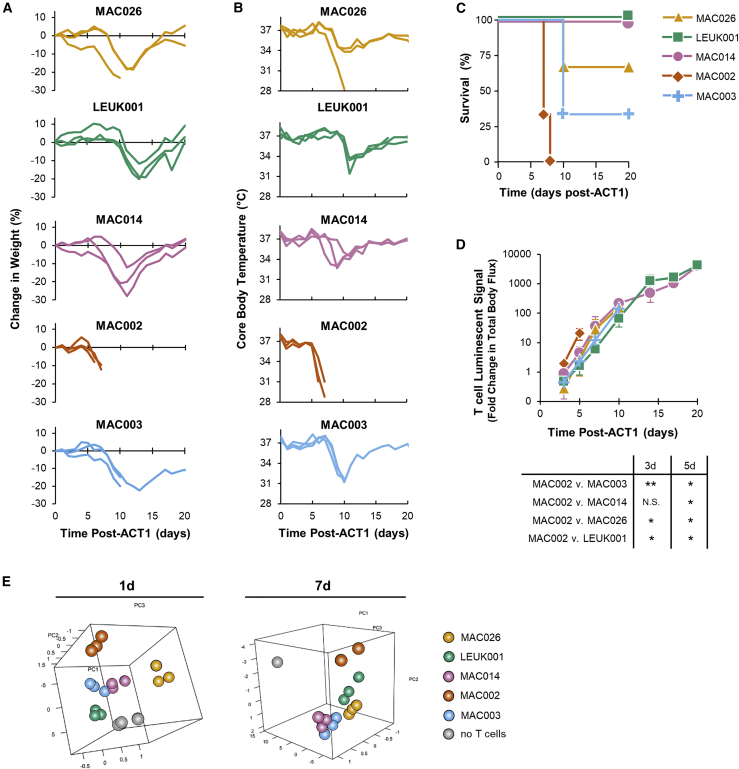
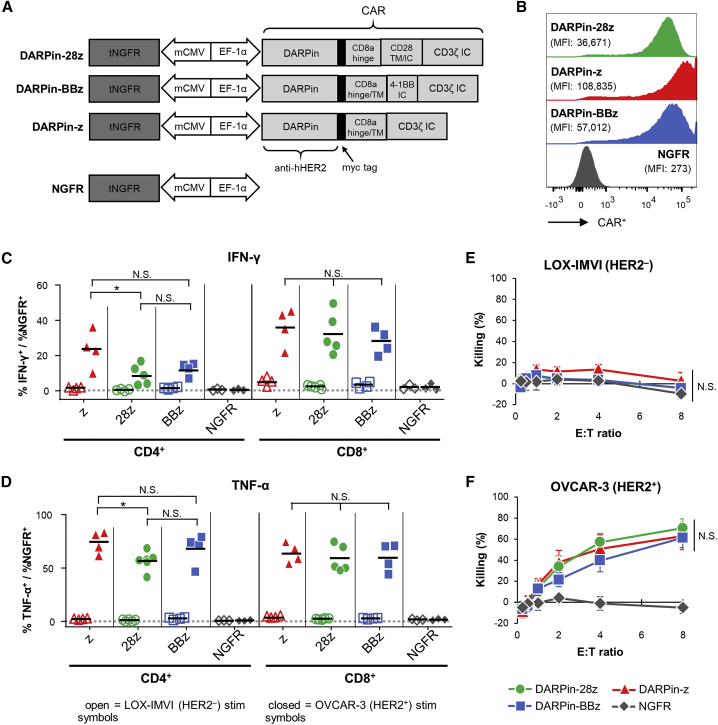
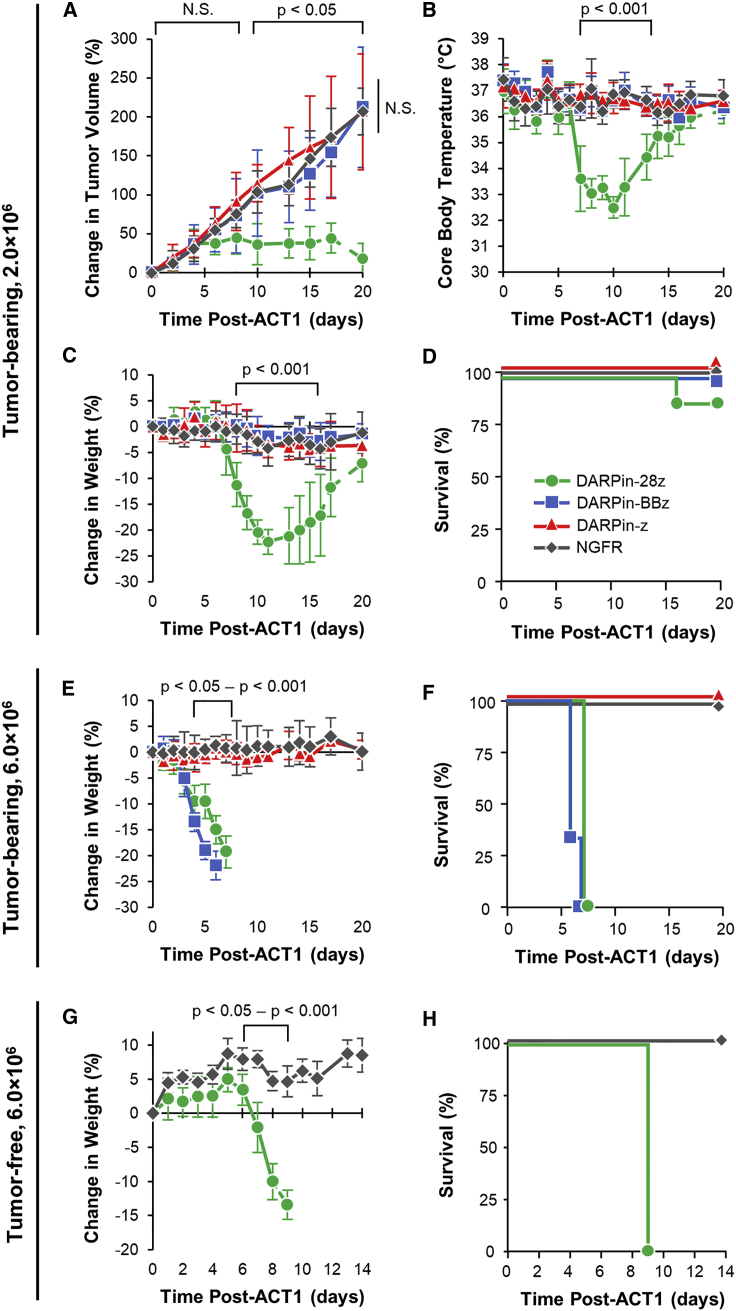
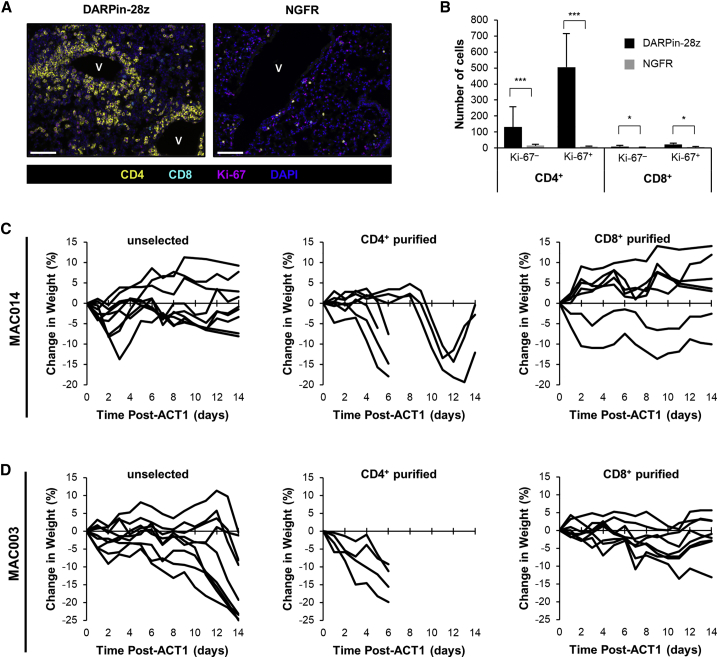
Tumor-targeted chimeric antigen receptor (CAR)-engineered T lymphocytes (CAR-T cells) have demonstrated striking clinical success, but their use has been associated with a constellation of toxicities. A better understanding of the pathogenesis of these toxicities is required to improve the safety profile of CAR-T cells. Herein, we describe a xenograft model of off-tumor CAR-T cell-associated toxicity. Human CAR-T cells targeted against HER2 using a small-protein binding domain induced acute, dose-dependent toxicities in mice. The inclusion of a CD28 or 4-1BB co-stimulatory domain in the CAR was required to produce toxicity; however, co-stimulation through CD28 was most toxic on a per-cell basis. CAR-T cell activation in the lungs and heart was associated with a systemic cytokine storm. The severity of observed toxicities was dependent upon the peripheral blood mononuclear cell (PBMC) donor used as a T cell source and paralleled the CD4-to-CD8 T cell ratio in the adoptive transfer product. CD4 CAR-T cells were determined to be the primary contributors to CAR-T cell-associated toxicity. However, donor-specific differences persisted after infusion of a purified CD4 CAR-T cell product, indicating a role for additional variables. This work highlights the contributions of CAR-T cell-intrinsic variables to the pathogenesis of off-tumor toxicity.
肿瘤靶向嵌合抗原受体(CAR)工程化T淋巴细胞(CAR-T细胞)已在临床取得显著成功,但其应用也伴随着一系列毒性反应。为改善CAR-T细胞的安全性,需要更好地了解这些毒性反应的发病机制。在此,我们描述了一种非肿瘤性CAR-T细胞相关毒性的异种移植模型。使用小蛋白结合域靶向HER2的人CAR-T细胞在小鼠中诱导了急性、剂量依赖性毒性。CAR中包含CD28或4-1BB共刺激域是产生毒性所必需的;然而,基于单个细胞而言,通过CD28的共刺激毒性最大。肺和心脏中的CAR-T细胞活化与全身性细胞因子风暴有关。观察到的毒性严重程度取决于用作T细胞来源的外周血单核细胞(PBMC)供体,并且与过继转移产物中的CD4与CD8 T细胞比率平行。已确定CD4 CAR-T细胞是CAR-T细胞相关毒性的主要促成因素。然而,在输注纯化的CD4 CAR-T细胞产物后,供体特异性差异仍然存在,这表明其他变量也起作用。这项工作突出了CAR-T细胞内在变量在非肿瘤毒性发病机制中的作用。