Rawtaer Iris, Mahendran Rathi, Kua Ee Heok, Tan Hwee Pink, Tan Hwee Xian, Lee Tih-Shih, Ng Tze Pin
Department of Psychiatry, Sengkang General Hospital, Singhealth Duke NUS Academic Medical Centre, Singapore, Singapore.
Department of Psychological Medicine, Yong Loo Lin School of Medicine, National University of Singapore, Singapore, Singapore.
J Med Internet Res. 2020 May 5;22(5):e16854. doi: 10.2196/16854.
Dementia is a global epidemic and incurs substantial burden on the affected families and the health care system. A window of opportunity for intervention is the predementia stage known as mild cognitive impairment (MCI). Individuals often present to services late in the course of their disease and more needs to be done for early detection; sensor technology is a potential method for detection.
The aim of this cross-sectional study was to establish the feasibility and acceptability of utilizing sensors in the homes of senior citizens to detect changes in behaviors unobtrusively.
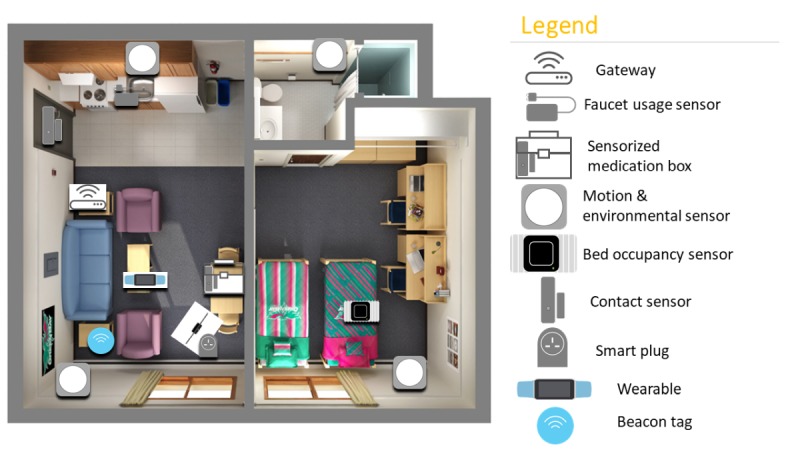
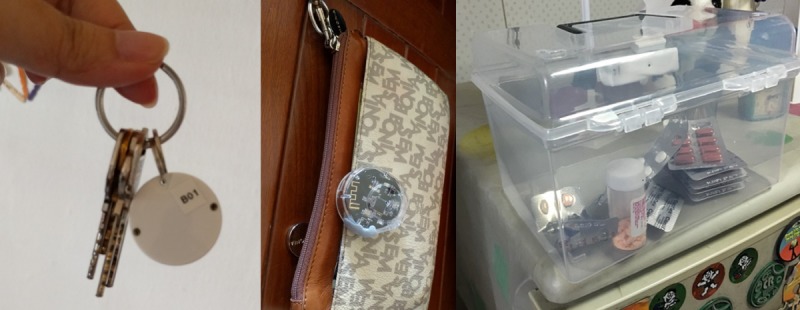
We recruited 59 community-dwelling seniors (aged >65 years who live alone) with and without MCI and observed them over the course of 2 months. The frequency of forgetfulness was monitored by tagging personal items and tracking missed doses of medication. Activities such as step count, time spent away from home, television use, sleep duration, and quality were tracked with passive infrared motion sensors, smart plugs, bed sensors, and a wearable activity band. Measures of cognition, depression, sleep, and social connectedness were also administered.
Of the 49 participants who completed the study, 28 had MCI and 21 had healthy cognition (HC). Frequencies of various sensor-derived behavior metrics were computed and compared between MCI and HC groups. MCI participants were less active than their HC counterparts and had more sleep interruptions per night. MCI participants had forgotten their medications more times per month compared with HC participants. The sensor system was acceptable to over 80% (40/49) of study participants, with many requesting for permanent installation of the system.
We demonstrated that it was both feasible and acceptable to set up these sensors in the community and unobtrusively collect data. Further studies evaluating such digital biomarkers in the homes in the community are needed to improve the ecological validity of sensor technology. We need to refine the system to yield more clinically impactful information.
痴呆症是一种全球性流行病,给受影响的家庭和医疗保健系统带来了沉重负担。干预的一个机会窗口是被称为轻度认知障碍(MCI)的痴呆前阶段。个体往往在疾病进程的后期才去就医,因此需要采取更多措施进行早期检测;传感器技术是一种潜在的检测方法。
本横断面研究的目的是确定在老年人家庭中使用传感器来不引人注意地检测行为变化的可行性和可接受性。
我们招募了59名独居的社区老年人(年龄>65岁),其中有无MCI患者,对他们进行了为期2个月的观察。通过给个人物品贴上标签并追踪漏服药物的情况来监测遗忘频率。使用被动红外运动传感器、智能插头、床传感器和可穿戴活动手环来追踪步数、离家时间、看电视时间、睡眠时间和质量等活动。还进行了认知、抑郁、睡眠和社交联系方面的测量。
在完成研究的49名参与者中,28名患有MCI,21名认知健康(HC)。计算并比较了MCI组和HC组之间各种传感器衍生行为指标的频率。MCI参与者比HC参与者活动量少,每晚睡眠中断次数更多。与HC参与者相比,MCI参与者每月忘记服药的次数更多。超过80%(40/49)的研究参与者接受该传感器系统,许多人要求永久安装该系统。
我们证明了在社区中设置这些传感器并在不引人注意的情况下收集数据是可行且可接受的。需要进一步开展研究,在社区家庭中评估此类数字生物标志物,以提高传感器技术的生态效度。我们需要改进该系统,以产生更具临床影响力的信息。