Tanoh Evelyne Amenan, Boué Guy Blanchard, Nea Fatimata, Genva Manon, Wognin Esse Leon, Ledoux Allison, Martin Henri, Tonzibo Zanahi Felix, Frederich Michel, Fauconnier Marie-Laure
Laboratory of Biological Organic Chemistry, UFR-SSMT, University Felix Houphouet-Boigny, 01 BP 582 Abidjan 01, Ivory Coast.
Laboratory of Chemistry of Natural Molecules, University of Liège, Gembloux Agro-Bio Tech, 2, Passage des Déportés, 5030 Gembloux, Belgium.
Foods. 2020 May 1;9(5):550. doi: 10.3390/foods9050550.
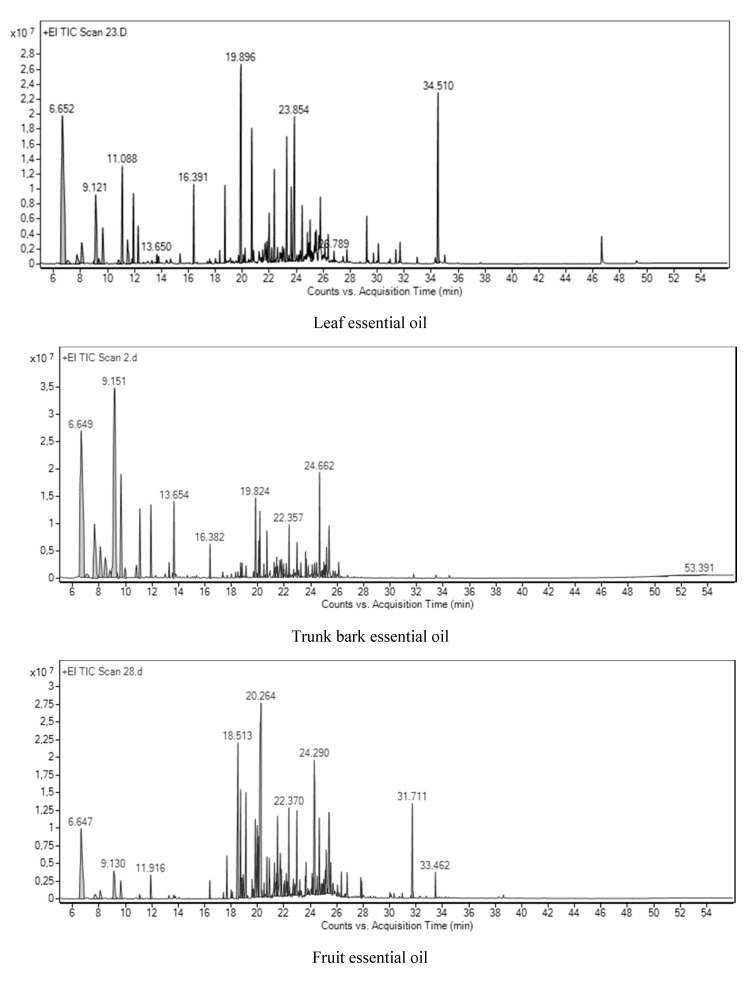
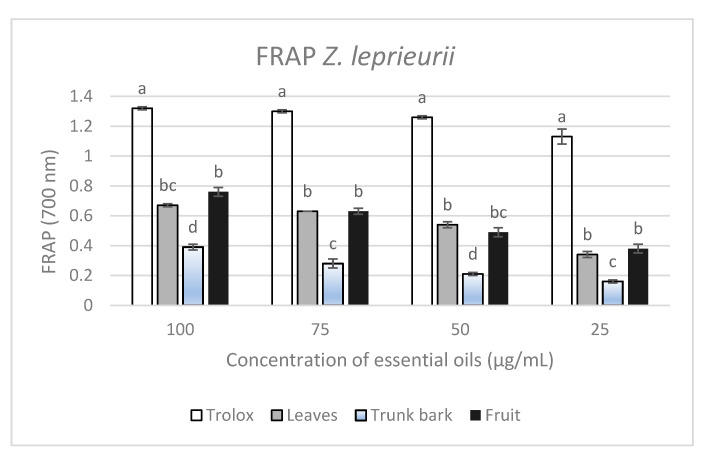
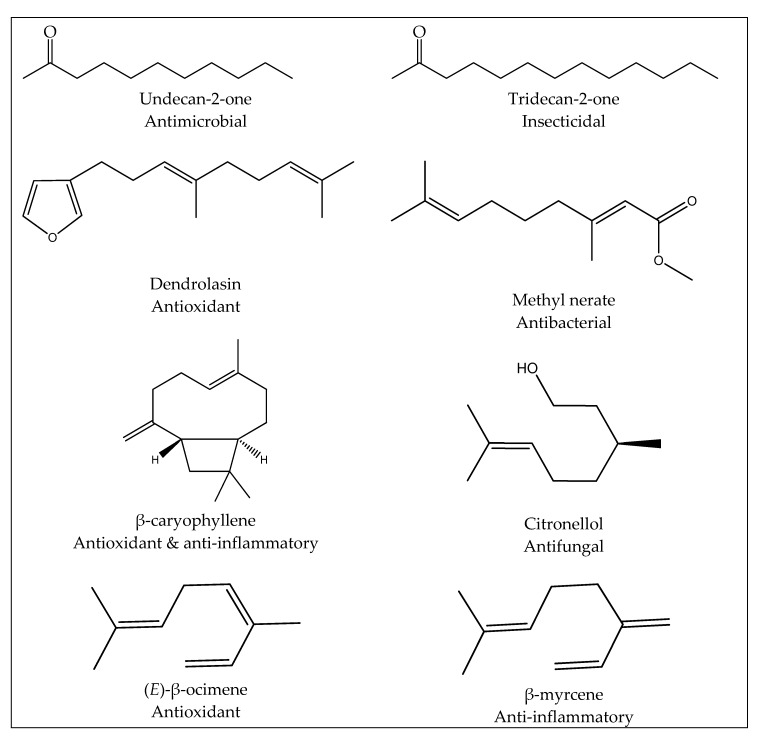
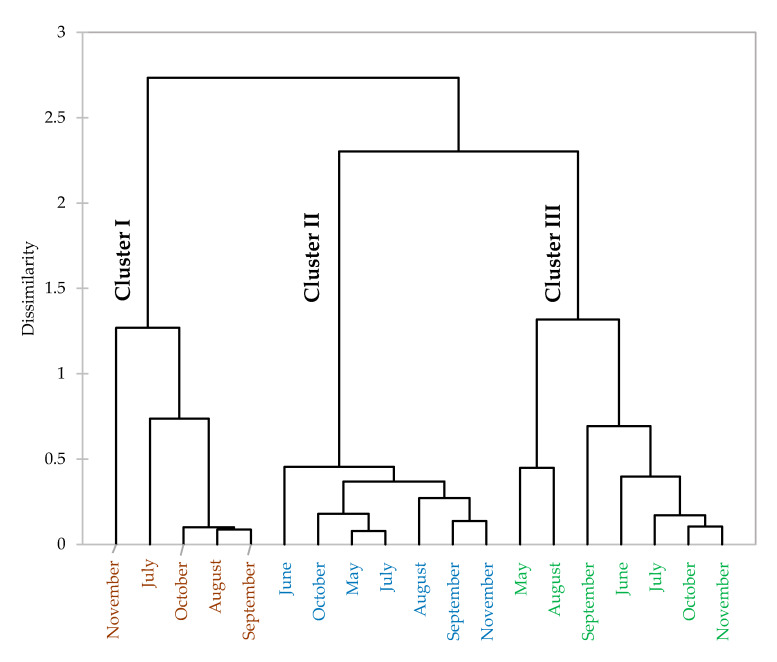
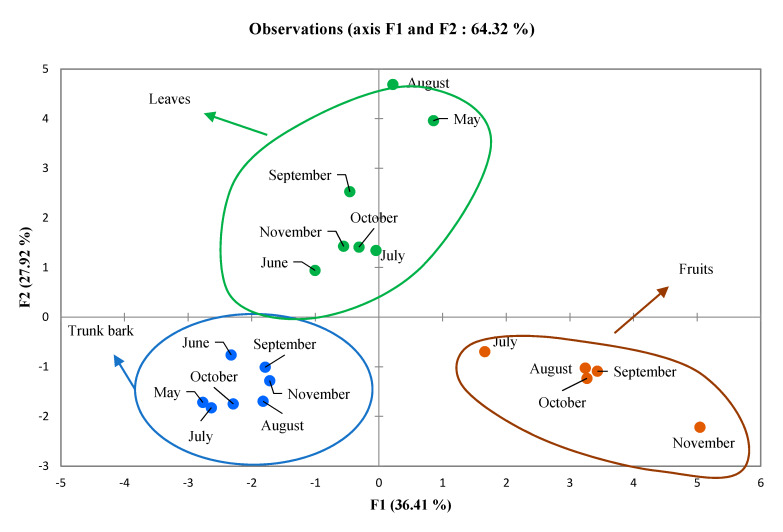
This study focused, for the first time, on the evaluation of the seasonal effect on the chemical composition and biological activities of essential oils hydrodistillated from leaves, trunk bark and fruits of (), a traditional medicinal wild plant growing in Côte d'Ivoire. The essential oils were obtained by hydrodistillation from fresh organs of growing on the same site over several months using a Clevenger-type apparatus and analyzed by gas chromatography-mass spectrometry (GC/MS). Leaf essential oils were dominated by tridecan-2-one (9.00 ± 0.02-36.80 ± 0.06%), ()-β-ocimene (1.30 ± 0.50-23.57 ± 0.47%), β-caryophyllene (7.00 ± 1.02-19.85 ± 0.48%), dendrolasin (1.79 ± 0.08-16.40 ± 0.85%) and undecan-2-one (1.20 ± 0.03-8.51 ± 0.35%). Fruit essential oils were rich in β-myrcene (16.40 ± 0.91-48.27 ± 0.26%), citronellol (1.90 ± 0.02-28.24 ± 0.10%) and geranial (5.30 ± 0.53-12.50 ± 0.47%). Tridecan-2-one (45.26 ± 0.96-78.80 ± 0.55%), β-caryophyllene (1.80 ± 0.23-13.20 ± 0.33%), ?-humulene (4.30 ±1.09-12.73 ± 1.41%) and tridecan-2-ol (2.23 ± 0.17-10.10 ± 0.61%) were identified as major components of trunk bark oils. Statistical analyses of essential oil compositions showed that the variability mainly comes from the organs. Indeed, principal component analysis (PCA) and hierarchical cluster analysis (HCA) allowed us to cluster the samples into three groups, each one consisting of one different organ, showing that essential oils hydrodistillated from the different organs do not display the same chemical composition. However, significant differences in essential oil compositions for the same organ were highlighted during the studied period, showing the impact of the seasonal effect on essential oil compositions. Biological activities of the produced essential oils were also investigated. Essential oils exhibited high insecticidal activities against , as well as antioxidant, anti-inflammatory and moderate anti-plasmodial properties.
本研究首次聚焦于对一种生长在科特迪瓦的传统药用野生植物()的叶、树干皮和果实经水蒸馏得到的挥发油的化学成分和生物活性的季节效应评估。使用克莱文杰型装置,通过对生长在同一地点数月的该植物新鲜器官进行水蒸馏获得挥发油,并采用气相色谱 - 质谱联用(GC/MS)进行分析。叶挥发油以2 - 十三酮(9.00±0.02 - 36.80±0.06%)、()-β-罗勒烯(1.30±0.50 - 23.57±0.47%)、β-石竹烯(7.00±1.02 - 19.85±0.48%)、松油烯(1.79±0.08 - 16.40±0.85%)和2 - 十一酮(1.20±0.03 - 8.51±0.35%)为主。果实挥发油富含β-月桂烯(16.40±0.91 - 48.27±0.26%)、香茅醇(1.90±0.02 - 28.24±0.10%)和香叶醛(5.30±0.53 - 12.50±0.47%)。2 - 十三酮(45.26±0.96 - 78.80±0.55%)、β-石竹烯(1.80±0.23 - 13.20±0.33%)、α-葎草烯(4.30±1.09 - 12.73±1.41%)和2 - 十三醇(2.23±0.17 - 10.10±0.61%)被鉴定为树干皮挥发油的主要成分。挥发油成分的统计分析表明,变异性主要源于器官。实际上,主成分分析(PCA)和层次聚类分析(HCA)使我们能够将样品聚为三组,每组由一个不同的器官组成,表明从不同器官经水蒸馏得到的挥发油不具有相同的化学成分。然而,在研究期间,同一器官的挥发油成分也存在显著差异,表明季节效应对挥发油成分有影响。还对所制备挥发油的生物活性进行了研究。挥发油对表现出高杀虫活性,以及抗氧化、抗炎和中等抗疟特性。