• 文献检索
  • 文档翻译
  • 深度研究
  • 学术资讯
  • Suppr Zotero 插件Zotero 插件
  • 邀请有礼
  • 套餐&价格
  • 历史记录
应用&插件
Suppr Zotero 插件Zotero 插件浏览器插件Mac 客户端Windows 客户端微信小程序
定价
高级版会员购买积分包购买API积分包
服务
文献检索文档翻译深度研究API 文档MCP 服务
关于我们
关于 Suppr公司介绍联系我们用户协议隐私条款
关注我们

Suppr 超能文献

核心技术专利:CN118964589B侵权必究
粤ICP备2023148730 号-1Suppr @ 2026

文献检索

告别复杂PubMed语法,用中文像聊天一样搜索,搜遍4000万医学文献。AI智能推荐,让科研检索更轻松。

立即免费搜索

文件翻译

保留排版,准确专业,支持PDF/Word/PPT等文件格式,支持 12+语言互译。

免费翻译文档

深度研究

AI帮你快速写综述,25分钟生成高质量综述,智能提取关键信息,辅助科研写作。

立即免费体验

超声表面冲击对Ti3Zr2Sn3Mo25Nb疲劳性能的影响

Effect of Ultrasonic Surface Impact on the Fatigue Properties of Ti3Zr2Sn3Mo25Nb.

作者信息

Cheng Zhangjianing, Cao Xiaojian, Xu Xiaoli, Shen Qiangru, Yu Tianchong, Jin Jiang

机构信息

College of Civil Engineering, Tongji University, Shanghai 200092, China.

School of Transportation & Civil engineering, Nantong University, Nantong 226019, China.

出版信息

Materials (Basel). 2020 May 2;13(9):2107. doi: 10.3390/ma13092107.

DOI:10.3390/ma13092107
PMID:32370179
原文链接:https://pmc.ncbi.nlm.nih.gov/articles/PMC7254257/
Abstract

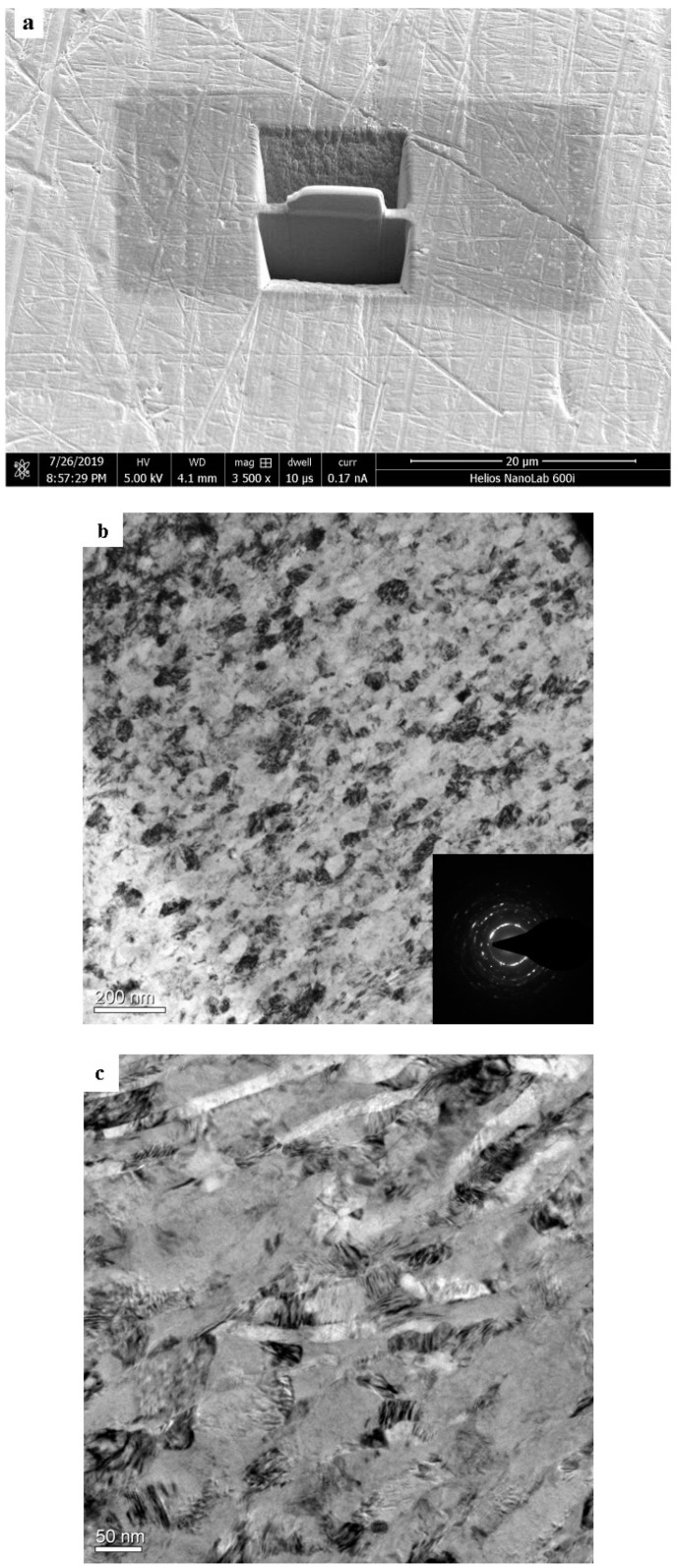
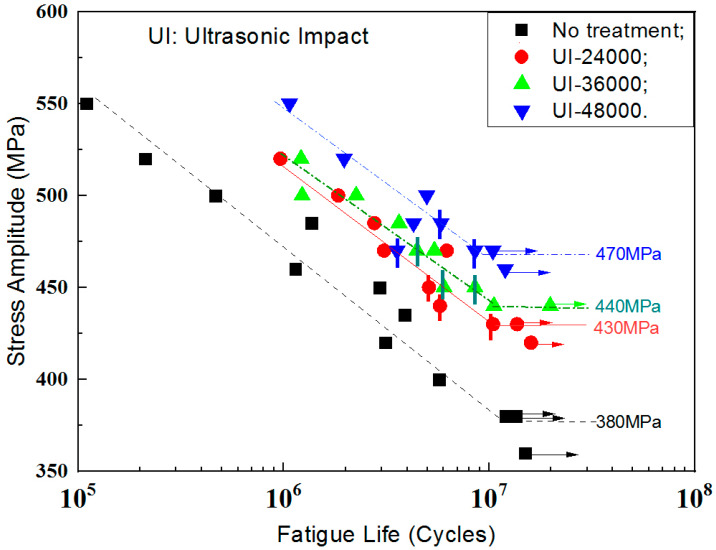
The effect of nano grain surface layer generated by ultrasonic impact on the fatigue behaviors of a titanium alloy Ti3Zr2Sn3Mo25Nb (TLM) was investigated. Three vibration strike-numbers of 24,000 times, 36,000 times and 48,000 times per unit are chosen to treat the surface of TLM specimens. Nanocrystals with an average size of 30 nm are generated. The dislocation motion plays an important role in the transformation of nanograins. Ultrasonic surface impact improves the mechanical properties of TLM, such as hardness, surface residual stress, tensile strength and fatigue strength. More vibration strike numbers will cause a higher enhancement. With a vibration strike number of 48,000 times per square millimeter the rotating-bending fatigue strength of TLM at 10 cycles is improved by 23.7%. All the fatigue cracks initiate from the surface of untreated specimens, while inner cracks appear after the fatigue life of 10 cycles with the ultrasonic surface impact. The crystal slip in the crack initiation zone is the main way of growth for microcracks. Crack cores are usually formed at the junction of crystals. The stress intensity factor of TLM titanium alloy is approximately 7.0 MPa·m.

摘要

研究了超声冲击产生的纳米晶粒表层对钛合金Ti3Zr2Sn3Mo25Nb(TLM)疲劳行为的影响。选择每单位24000次、36000次和48000次三种振动冲击次数来处理TLM试样表面。生成了平均尺寸为30nm的纳米晶体。位错运动在纳米晶粒的转变中起重要作用。超声表面冲击改善了TLM的力学性能,如硬度、表面残余应力、抗拉强度和疲劳强度。更多的振动冲击次数会带来更高的提升。每平方毫米振动冲击次数为48000次时,TLM在10次循环下的旋转弯曲疲劳强度提高了23.7%。所有疲劳裂纹均从未处理试样表面萌生,而在超声表面冲击作用下,经过10次循环疲劳寿命后出现内部裂纹。裂纹萌生区的晶体滑移是微裂纹扩展的主要方式。裂纹核心通常在晶体交界处形成。TLM钛合金的应力强度因子约为7.0MPa·m。
https://cdn.ncbi.nlm.nih.gov/pmc/blobs/a92a/7254257/1afd8bc28488/materials-13-02107-g010.jpg
https://cdn.ncbi.nlm.nih.gov/pmc/blobs/a92a/7254257/2269079e633d/materials-13-02107-g001.jpg
https://cdn.ncbi.nlm.nih.gov/pmc/blobs/a92a/7254257/78929753b828/materials-13-02107-g002.jpg
https://cdn.ncbi.nlm.nih.gov/pmc/blobs/a92a/7254257/faaa45b9c7a6/materials-13-02107-g003.jpg
https://cdn.ncbi.nlm.nih.gov/pmc/blobs/a92a/7254257/34aea776dd14/materials-13-02107-g004.jpg
https://cdn.ncbi.nlm.nih.gov/pmc/blobs/a92a/7254257/c08f8a5e8cf1/materials-13-02107-g005.jpg
https://cdn.ncbi.nlm.nih.gov/pmc/blobs/a92a/7254257/225863abfc4f/materials-13-02107-g006.jpg
https://cdn.ncbi.nlm.nih.gov/pmc/blobs/a92a/7254257/7f127c376fa4/materials-13-02107-g007.jpg
https://cdn.ncbi.nlm.nih.gov/pmc/blobs/a92a/7254257/8d31a8413c60/materials-13-02107-g008a.jpg
https://cdn.ncbi.nlm.nih.gov/pmc/blobs/a92a/7254257/55c28df93225/materials-13-02107-g009.jpg
https://cdn.ncbi.nlm.nih.gov/pmc/blobs/a92a/7254257/1afd8bc28488/materials-13-02107-g010.jpg
https://cdn.ncbi.nlm.nih.gov/pmc/blobs/a92a/7254257/2269079e633d/materials-13-02107-g001.jpg
https://cdn.ncbi.nlm.nih.gov/pmc/blobs/a92a/7254257/78929753b828/materials-13-02107-g002.jpg
https://cdn.ncbi.nlm.nih.gov/pmc/blobs/a92a/7254257/faaa45b9c7a6/materials-13-02107-g003.jpg
https://cdn.ncbi.nlm.nih.gov/pmc/blobs/a92a/7254257/34aea776dd14/materials-13-02107-g004.jpg
https://cdn.ncbi.nlm.nih.gov/pmc/blobs/a92a/7254257/c08f8a5e8cf1/materials-13-02107-g005.jpg
https://cdn.ncbi.nlm.nih.gov/pmc/blobs/a92a/7254257/225863abfc4f/materials-13-02107-g006.jpg
https://cdn.ncbi.nlm.nih.gov/pmc/blobs/a92a/7254257/7f127c376fa4/materials-13-02107-g007.jpg
https://cdn.ncbi.nlm.nih.gov/pmc/blobs/a92a/7254257/8d31a8413c60/materials-13-02107-g008a.jpg
https://cdn.ncbi.nlm.nih.gov/pmc/blobs/a92a/7254257/55c28df93225/materials-13-02107-g009.jpg
https://cdn.ncbi.nlm.nih.gov/pmc/blobs/a92a/7254257/1afd8bc28488/materials-13-02107-g010.jpg

相似文献

1
Effect of Ultrasonic Surface Impact on the Fatigue Properties of Ti3Zr2Sn3Mo25Nb.超声表面冲击对Ti3Zr2Sn3Mo25Nb疲劳性能的影响
Materials (Basel). 2020 May 2;13(9):2107. doi: 10.3390/ma13092107.
2
Influence of Fine Grains on the Bending Fatigue Behavior of Two Implant Titanium Alloys.细晶粒对两种种植体钛合金弯曲疲劳行为的影响。
Materials (Basel). 2020 Dec 31;14(1):171. doi: 10.3390/ma14010171.
3
Study on Surface Integrity and Fatigue Properties of TC4 Titanium Alloy by Surface Ultrasonic Rolling.基于表面超声滚压的TC4钛合金表面完整性及疲劳性能研究
Materials (Basel). 2023 Jan 4;16(2):485. doi: 10.3390/ma16020485.
4
Fatigue Behaviour of 7N01-T4 Aluminium Alloy Welded by Ultrasonic-Assisted Friction Stir Welding.超声辅助搅拌摩擦焊焊接7N01-T4铝合金的疲劳行为
Materials (Basel). 2020 Oct 14;13(20):4582. doi: 10.3390/ma13204582.
5
Mechanism of Precipitate Microstructure Affecting Fatigue Behavior of 7020 Aluminum Alloy.析出相微观结构对7020铝合金疲劳行为的影响机制
Materials (Basel). 2020 Jul 22;13(15):3248. doi: 10.3390/ma13153248.
6
Fatigue characteristics of SAE52100 steel via ultrasonic nanocrystal surface modification technology.基于超声纳米晶表面改性技术的SAE52100钢疲劳特性
J Nanosci Nanotechnol. 2012 Jul;12(7):6089-95. doi: 10.1166/jnn.2012.6331.
7
Effect of Multi-Pass Ultrasonic Surface Rolling on the Mechanical and Fatigue Properties of HIP Ti-6Al-4V Alloy.多道次超声表面滚压对热等静压Ti-6Al-4V合金力学性能和疲劳性能的影响
Materials (Basel). 2017 Feb 6;10(2):133. doi: 10.3390/ma10020133.
8
Effects of WC-17Co Coating Combined with Shot Peening Treatment on Fatigue Behaviors of TC21 Titanium Alloy.WC-17Co涂层结合喷丸处理对TC21钛合金疲劳行为的影响
Materials (Basel). 2016 Oct 25;9(11):865. doi: 10.3390/ma9110865.
9
Crack Initiation Mechanism and Life Prediction of Ti60 Titanium Alloy Considering Stress Ratios Effect in Very High Cycle Fatigue Regime.考虑应力比效应的Ti60钛合金在超高周疲劳 regime下的裂纹萌生机制及寿命预测
Materials (Basel). 2022 Apr 11;15(8):2800. doi: 10.3390/ma15082800.
10
Fatigue properties of magnesium alloy AZ91 processed by severe plastic deformation.通过剧烈塑性变形加工的AZ91镁合金的疲劳性能
J Mech Behav Biomed Mater. 2015 Feb;42:219-28. doi: 10.1016/j.jmbbm.2014.11.019. Epub 2014 Nov 29.

引用本文的文献

1
Influence of Fine Grains on the Bending Fatigue Behavior of Two Implant Titanium Alloys.细晶粒对两种种植体钛合金弯曲疲劳行为的影响。
Materials (Basel). 2020 Dec 31;14(1):171. doi: 10.3390/ma14010171.

本文引用的文献

1
Biomechanical Evaluation of Nano-Zirconia Coatings on Ti-6Al-7Nb Implant Screws in Rabbit Tibias.纳米氧化锆涂层对兔胫骨中 Ti-6Al-7Nb 种植体螺钉的生物力学评价。
Curr Med Sci. 2018 Jun;38(3):530-537. doi: 10.1007/s11596-018-1911-4. Epub 2018 Jun 22.
2
A nanocrystalline-amorphous mixed layer obtained by ultrasonic shot peening on pure titanium at room temperature.室温下通过超声喷丸在纯钛上获得的纳米晶-非晶混合层。
Ultrason Sonochem. 2018 Oct;47:68-74. doi: 10.1016/j.ultsonch.2018.04.017. Epub 2018 Apr 27.
3
Grain boundary stability governs hardening and softening in extremely fine nanograined metals.
晶界稳定性控制着极细纳米晶粒金属的硬化和软化。
Science. 2017 Mar 24;355(6331):1292-1296. doi: 10.1126/science.aal5166.
4
Corrosion-wear of β-Ti alloy TMZF (Ti-12Mo-6Zr-2Fe) in simulated body fluid.β钛合金TMZF(Ti-12Mo-6Zr-2Fe)在模拟体液中的腐蚀磨损
Acta Biomater. 2016 Sep 15;42:429-439. doi: 10.1016/j.actbio.2016.07.008. Epub 2016 Jul 7.
5
Fatigue performance of medical Ti6Al4V alloy after mechanical surface treatments.机械表面处理后医用Ti6Al4V合金的疲劳性能
PLoS One. 2015 Mar 30;10(3):e0121963. doi: 10.1371/journal.pone.0121963. eCollection 2015.
6
Cytocompatibility and early osseointegration of nanoTiO2-modified Ti-24 Nb-4 Zr-7.9 Sn surfaces.纳米 TiO2 改性 Ti-24Nb-4Zr-7.9Sn 表面的细胞相容性和早期骨整合。
Mater Sci Eng C Mater Biol Appl. 2015 Mar;48:256-62. doi: 10.1016/j.msec.2014.12.011. Epub 2014 Dec 6.
7
Intra-osseous anchorage of dental prostheses. I. Experimental studies.牙修复体的骨内固位。I. 实验研究。
Scand J Plast Reconstr Surg. 1969;3(2):81-100. doi: 10.3109/02844316909036699.