Teixeira Alves Mickael, Taylor Nick G H
Centre for Environment, Fisheries and Aquaculture Science (Cefas), Barrack Road, Weymouth, Dorset, DT4 8UB, UK.
Sci Rep. 2020 May 5;10(1):7513. doi: 10.1038/s41598-020-64023-2.
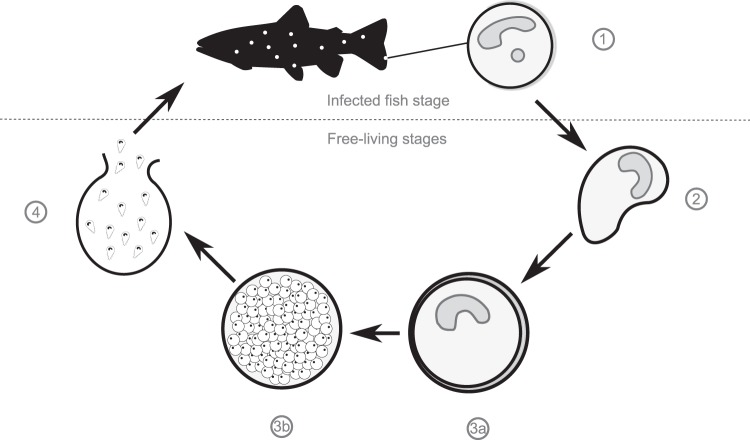
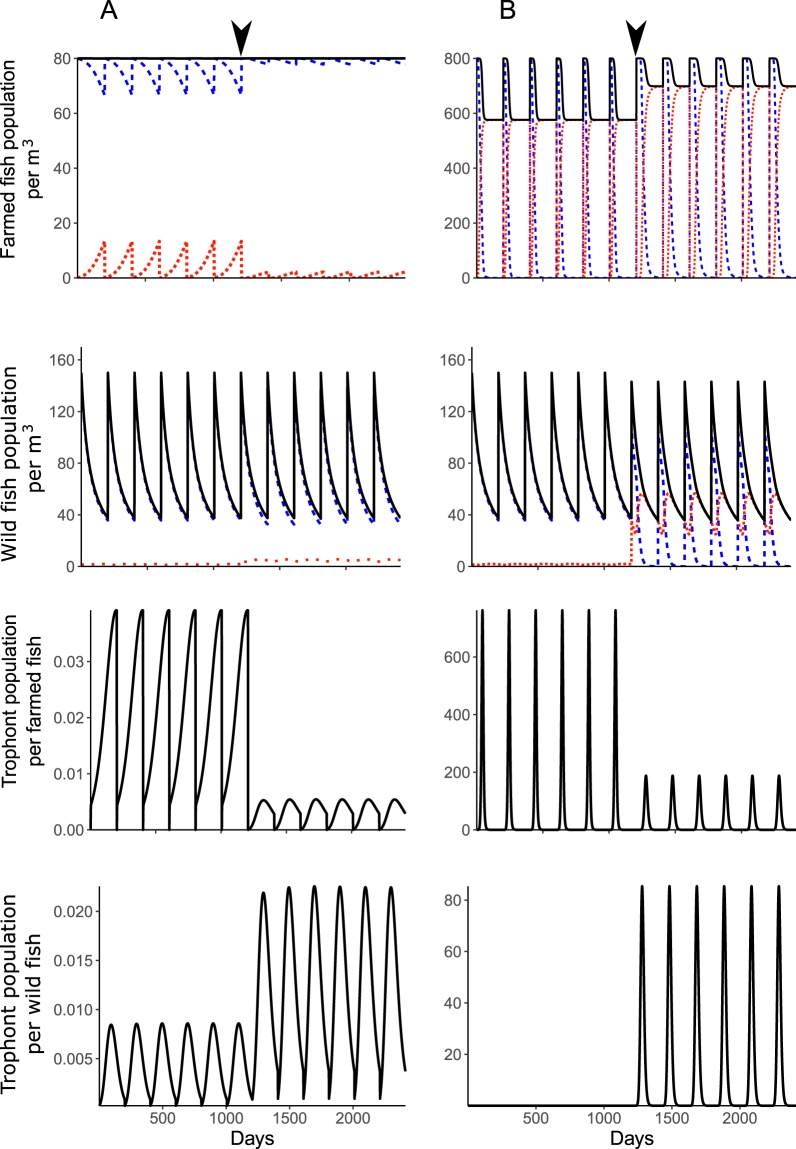
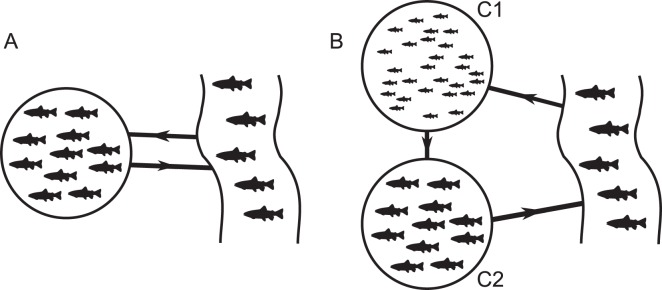
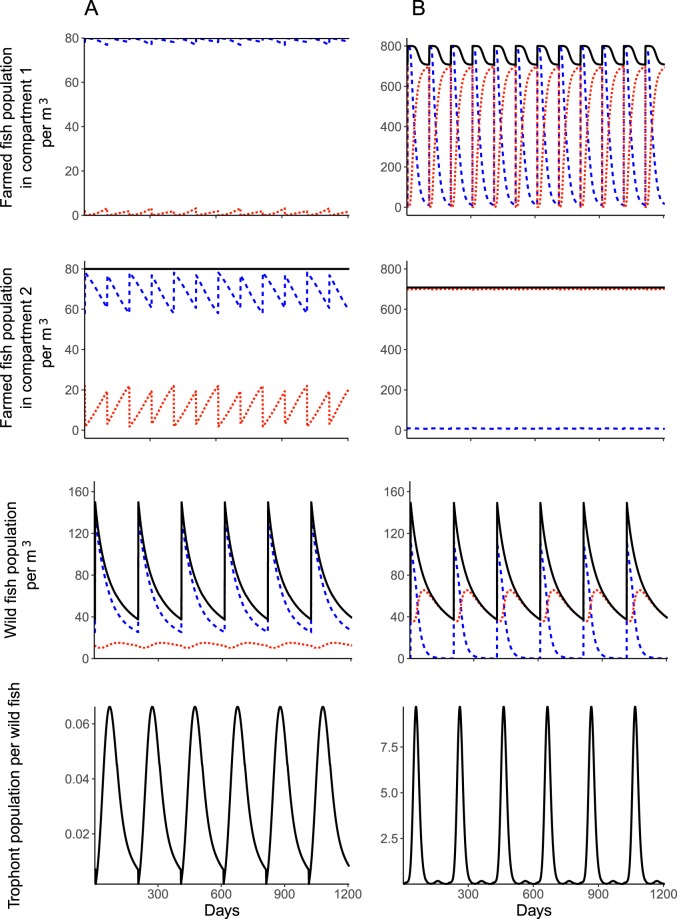
The interaction of pathogens between wild and farmed aquatic animal populations is a concern that remains unclear and controversial. Ichthyophthirius multifiliis, a ciliated protozoan parasite, is a pathogen of freshwater finfish species with geographic and host range that causes significant economic losses in aquaculture. Flow-through farming systems may facilitate the transfer of such a parasite with free-living stages between farmed and wild stocks. Here, experimental and field study infection data are used to describe the infection dynamics of Ichthyophthirius multifiliis in rainbow trout using a simple macroparasite model by including host resistance. The study considered flow-through farming systems with a single or two age-class compartments and simulated the transfer of the parasite between farmed and wild fish populations. Results suggest that aquaculture can promote the prevalence of the resistance in wild stocks by increasing the parasite population in the wild environment. At the same time, acquired resistance in the farmed fish population may protect the wild fish population from lethal effects of the parasite by reducing the total parasite population. This study offers a promising mathematical basis for understanding the effects of freshwater aquaculture in disease spread in wildlife, developing risk assessment modeling, and exploring new ways of aquaculture management.
野生和养殖水生动物种群之间病原体的相互作用是一个尚不清楚且存在争议的问题。多子小瓜虫,一种纤毛原生动物寄生虫,是淡水鳍鱼类的病原体,其地理分布和宿主范围广,给水产养殖造成重大经济损失。流水养殖系统可能会促使这种具有自由生活阶段的寄生虫在养殖种群和野生种群之间传播。在此,通过纳入宿主抗性,利用简单的大型寄生虫模型,使用实验和实地研究感染数据来描述多子小瓜虫在虹鳟中的感染动态。该研究考虑了具有一个或两个年龄组隔室的流水养殖系统,并模拟了寄生虫在养殖和野生鱼类种群之间的传播。结果表明,水产养殖可通过增加野生环境中的寄生虫数量来促进野生种群中抗性的流行。同时,养殖鱼类种群中获得的抗性可能通过减少寄生虫总数来保护野生鱼类种群免受寄生虫的致死影响。这项研究为理解淡水养殖对野生动物疾病传播的影响、开发风险评估模型以及探索水产养殖管理新方法提供了一个有前景的数学基础。