Ho Valerie Pui Yoong, Ma Eric, Liew Hui Min, Ng Michelle Si Ying, Koh Mark Jean Aan
Dermatology Service, KK Women's and Children's Hospital, Singapore, Singapore.
Dermatol Ther (Heidelb). 2020 Aug;10(4):807-813. doi: 10.1007/s13555-020-00388-6. Epub 2020 May 6.
Moisturizers are one of the mainstays of the topical treatment of atopic dermatitis (AD). One of the adverse effects of moisturizers is skin irritation, especially on excoriated AD skin. We compared the potential for irritation of two commercially available moisturizer products for the treatment of AD: a ceramide-based moisturizer (Ceradan Cream; Hyphens Pharma Pte Ltd, Singapore) and a urea 5% moisturizer (Aqurea Lite Cream; ICA Pharma Pte Ltd, Singapore).
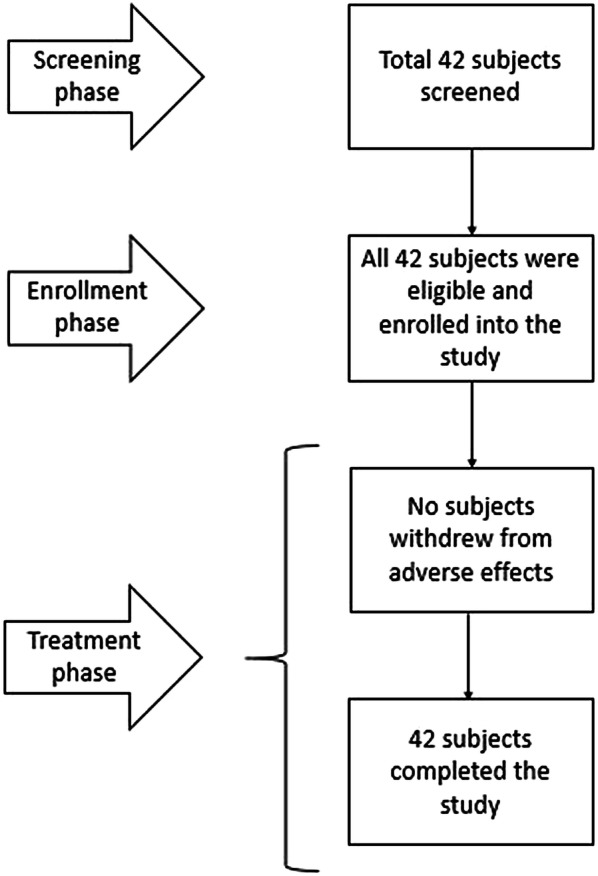
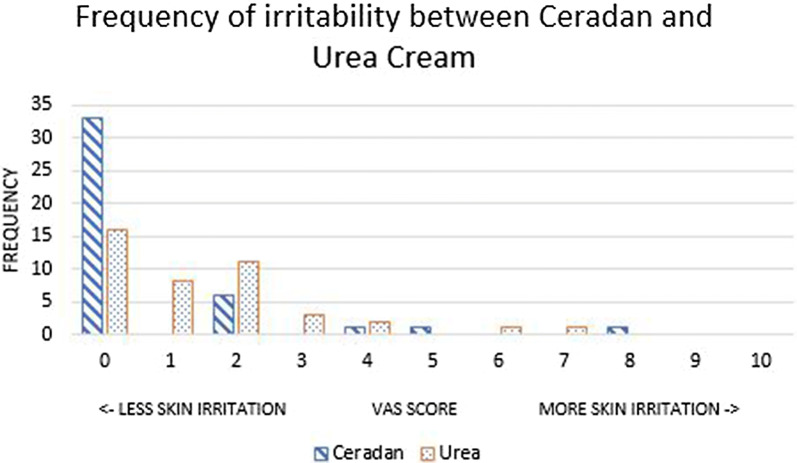
We performed a prospective single-blind randomized controlled study recruiting AD patients aged between 8 and 16 years with symmetrical or near symmetrical scratch marks (excoriations) of at least grade 2 to 3 severity score, according to the Eczema Area and Severity Index (EASI), over bilateral antecubital fossae. Subjects were randomized to receive the ceramide-based moisturizer to either the left or right antecubital fossa or urea 5% cream to the other antecubital fossa. Subjects were asked to grade the immediate skin irritation of both creams on a standard visual analogue scale (VAS) and which cream they would prefer to use as a daily moisturizer. Primary outcome was the mean irritant score of each cream, and secondary outcome was the subjects' preference of either cream as their daily moisturizer.
A total of 42 participants were enrolled with a mean age of 11 years 5 months. The ceramide-based cream had a significantly lower mean VAS score (mean 0.69, SD = 1.63) for irritation compared with urea 5% cream (1.43, SD = 1.64) (p = 0.035). More participants also preferred the ceramide-based cream over urea 5% cream (62% versus 38%) as their daily moisturizer, but this did not reach statistical significance (p = 0.164).
A ceramide-based moisturizer may be considered as a suitable choice for children to minimize irritation from moisturizer treatment for AD.
保湿剂是特应性皮炎(AD)局部治疗的主要手段之一。保湿剂的不良反应之一是皮肤刺激,尤其是在有皮肤破损的AD皮肤上。我们比较了两种市售用于治疗AD的保湿产品的刺激性:一种基于神经酰胺的保湿剂(Ceradan乳膏;Hyphens制药私人有限公司,新加坡)和一种含5%尿素的保湿剂(Aqurea Lite乳膏;ICA制药私人有限公司,新加坡)。
我们进行了一项前瞻性单盲随机对照研究,招募年龄在8至16岁之间、双侧肘前窝有对称或近乎对称的抓痕(皮肤破损)且根据湿疹面积和严重程度指数(EASI)严重程度评分至少为2至3级的AD患者。受试者被随机分配在左或右肘前窝使用基于神经酰胺的保湿剂,在另一个肘前窝使用含5%尿素的乳膏。要求受试者用标准视觉模拟量表(VAS)对两种乳膏的即时皮肤刺激性进行评分,并表明他们更愿意将哪种乳膏用作日常保湿剂。主要结局是每种乳膏的平均刺激评分,次要结局是受试者对两种乳膏中任一种作为日常保湿剂的偏好。
共招募了42名参与者,平均年龄为11岁5个月。与含5%尿素的乳膏(平均1.43,标准差=1.64)相比,基于神经酰胺的乳膏的刺激性平均VAS评分显著更低(平均0.69,标准差=1.63)(p=0.035)。也有更多参与者更喜欢将基于神经酰胺的乳膏而非含5%尿素 的乳膏用作日常保湿剂(62%对38%),但这未达到统计学显著性(p=0.164)。
对于儿童而言,基于神经酰胺的保湿剂可能是一种合适的选择,可将AD保湿治疗的刺激性降至最低。