Department of Pathology, Peking Union Medical College Hospital, Peking Union Medical College, Chinese Academy of Medical Science, Beijing, China.
Department of Pathology, Heilongjiang Province Land Reclamation Headquarter General Hospital, Harbin, China.
Cancer Med. 2020 Jul;9(13):4581-4592. doi: 10.1002/cam4.3098. Epub 2020 May 5.
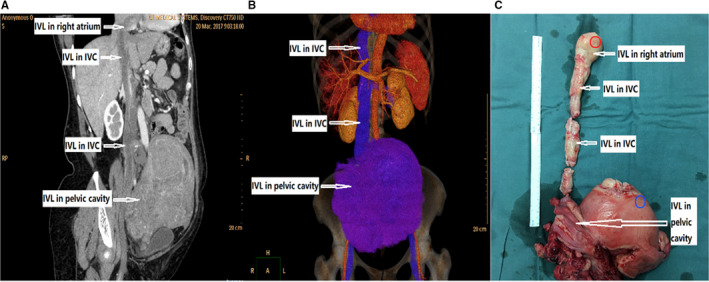
Intravenous leiomyomatosis (IVL) is currently regarded as a special variant of the common uterine leiomyoma (LM). Though IVL shows a similar histological morphology to LM, IVL is characterized by unique intravenous growth patterns and low-grade malignant potential, which are quite different from LM. There are currently few studies underlying the molecular alterations of IVL, though this information is important for understanding the pathogenesis of the disease, and for identifying potential biomarkers.
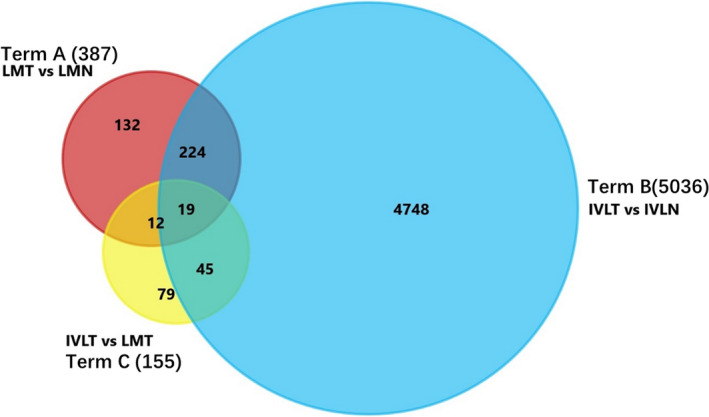
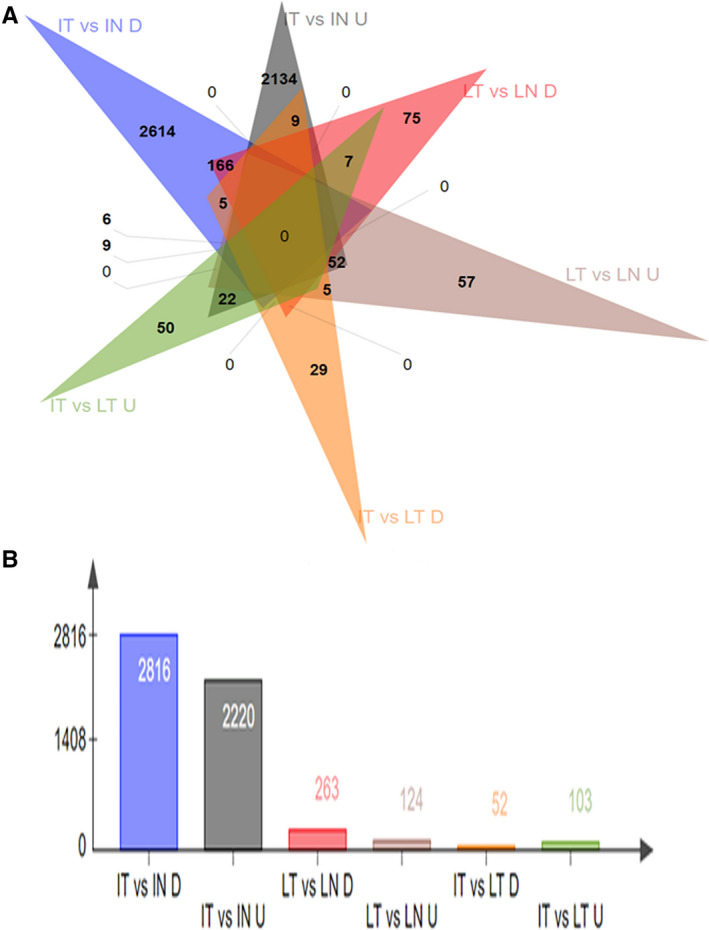
We carried out a high-throughput whole transcriptome sequencing of tumor and normal tissue samples from five IVL patients and five LM patients and compared the differentially expressed genes (DEGs) between IVL and leiomyoma. We performed multiple different enrichment and target analyses, and the expression of selected DEGs was validated using RT-qPCR in formalin-fixed samples.
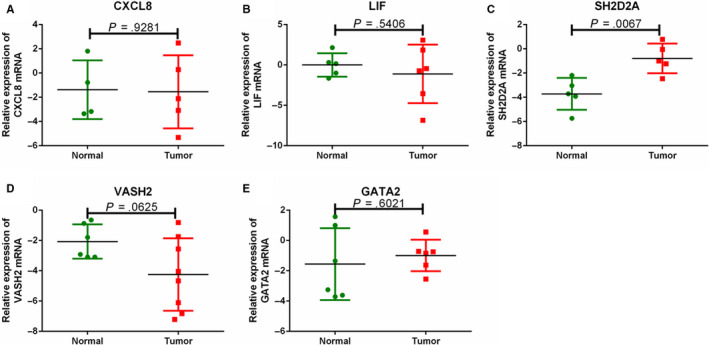
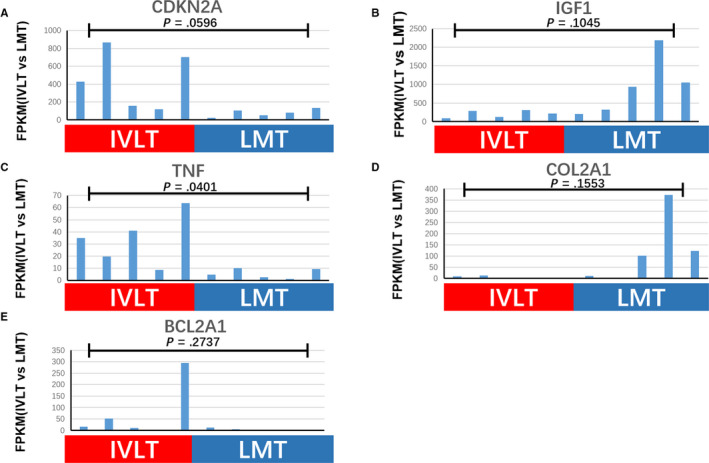
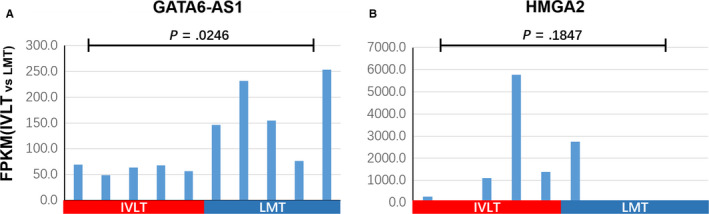
Our study identified substantial different genes and pathways between IVL and LM, and functional enrichment analyses found several important pathways, such as angiogenesis and antiapoptosis pathways, as well as important related genes, including SH2D2A, VASH2, ADAM8, GATA2, TNF, and the lncRNA GATA6-AS1, as being significantly different between IVL and LM (P = .0024, P = .0195, P = .0212, P = .0435, P = .0401, and P = .0246, respectively). CXCL8, LIF, CDKN2A, BCL2A1, COL2A1, IGF1, and HMGA2 were also differently expressed between IVL and LM groups, but showed no statistical difference (P = .2409, P = .1773, P = .0596, P = .2737, P = .1553, P = .1045, and P = .1847, respectively) due to the large differences among individuals. Furthermore, RT-qPCR results for five selected DEGs in IVL tissues and adjacent nontumor tissues were mainly consistent with our sequencing results.
Our results indicated that IVL may be a solid entity that is unique and different from LM, proving consistent with previous studies. Furthermore, we identified DEGs, particularly within angiogenesis and antiapoptosis pathway-related genes that may play crucial roles in the development and pathogenesis of IVL and may be potential specific biomarkers.
静脉内平滑肌瘤病(IVL)目前被认为是常见的子宫平滑肌瘤(LM)的一种特殊变异。虽然 IVL 具有与 LM 相似的组织学形态,但 IVL 具有独特的静脉内生长模式和低度恶性潜能,这与 LM 有很大的不同。目前关于 IVL 的分子改变的研究较少,尽管这些信息对于了解疾病的发病机制和识别潜在的生物标志物非常重要。
我们对 5 例 IVL 患者和 5 例 LM 患者的肿瘤和正常组织样本进行了高通量全转录组测序,并比较了 IVL 和平滑肌瘤之间的差异表达基因(DEGs)。我们进行了多种不同的富集和靶标分析,并使用 RT-qPCR 在福尔马林固定的样本中验证了选定的 DEGs 的表达。
我们的研究发现 IVL 和 LM 之间存在大量不同的基因和途径,功能富集分析发现了几个重要的途径,如血管生成和抗凋亡途径,以及几个重要的相关基因,包括 SH2D2A、VASH2、ADAM8、GATA2、TNF 和 lncRNA GATA6-AS1,它们在 IVL 和 LM 之间有显著差异(P=0.0024,P=0.0195,P=0.0212,P=0.0435,P=0.0401,P=0.0246)。CXCL8、LIF、CDKN2A、BCL2A1、COL2A1、IGF1 和 HMGA2 也在 IVL 和 LM 组之间表达不同,但由于个体差异较大,没有统计学差异(P=0.2409,P=0.1773,P=0.0596,P=0.2737,P=0.1553,P=0.1045,P=0.1847)。此外,我们对 IVL 组织和相邻非肿瘤组织中 5 个选定 DEGs 的 RT-qPCR 结果与我们的测序结果基本一致。
我们的结果表明,IVL 可能是一种独特的实体,与 LM 不同,这与之前的研究一致。此外,我们发现了 DEGs,特别是在血管生成和抗凋亡途径相关基因中,这些基因可能在 IVL 的发生和发病机制中发挥关键作用,可能是潜在的特异性生物标志物。