Lin Kaili, Liu Bin, Lim Sze-Lam, Fu Xiuqiong, Sze Stephen C-W, Yung Ken K-L, Zhang Shiqing
Department of Biology, Faculty of Science, Hong Kong Baptist University (HKBU), Kowloon Tong, Hong Kong Special Administrative Region (HKSAR), China.
HKBU Shenzhen Research Institute and Continuing Education, Shenzhen, China.
J Ginseng Res. 2020 May;44(3):475-482. doi: 10.1016/j.jgr.2019.03.001. Epub 2019 Mar 25.
Active natural ingredients, especially small molecules, have recently received wide attention as modifiers used to treat neurodegenerative disease by promoting neurogenic regeneration of neural stem cell (NSC) . 20(S)-protopanaxadiol (PPD), one of the bioactive ingredients in ginseng, possesses neuroprotective properties. However, the effect of PPD on NSC proliferation and differentiation and its mechanism of action are incompletely understood.
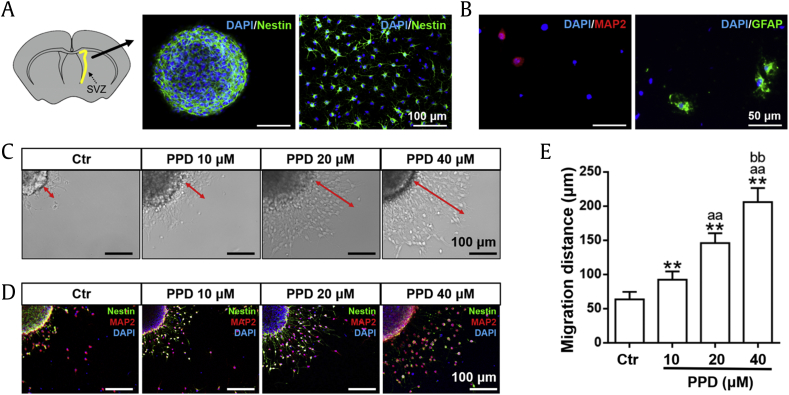
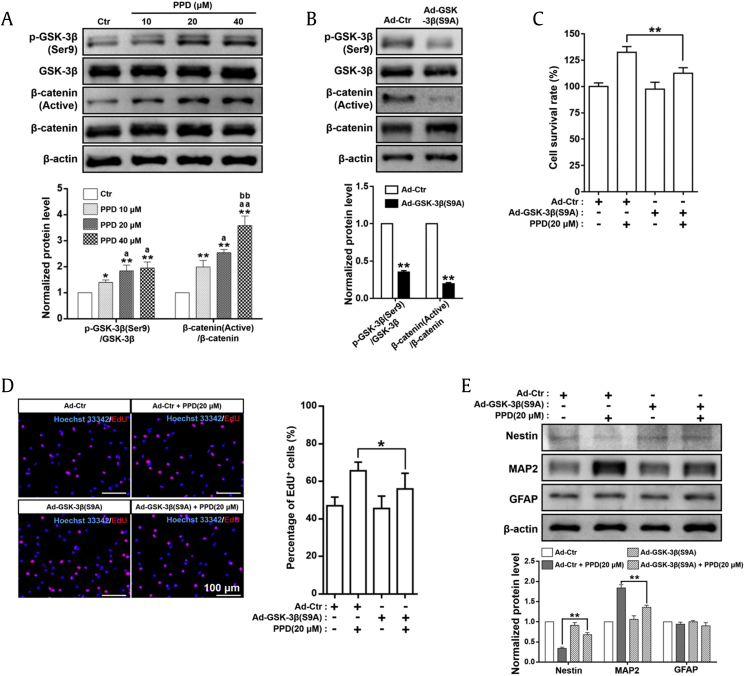
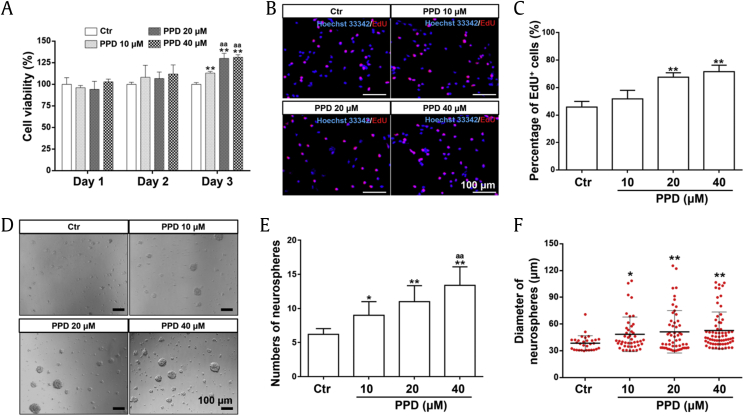
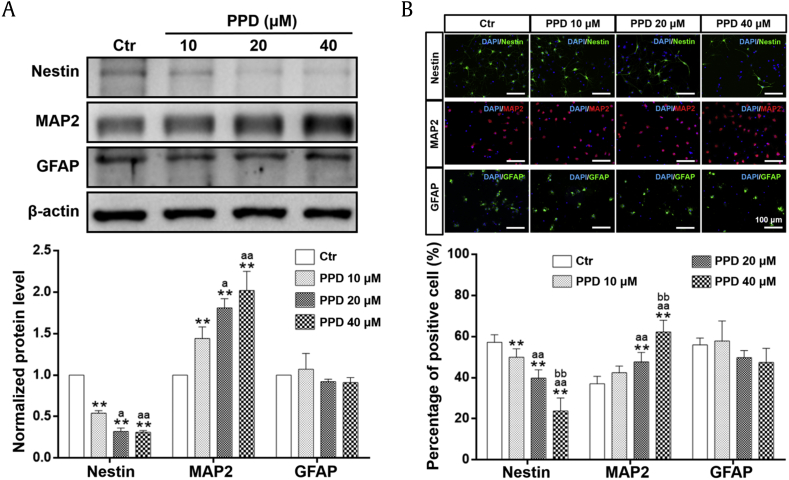
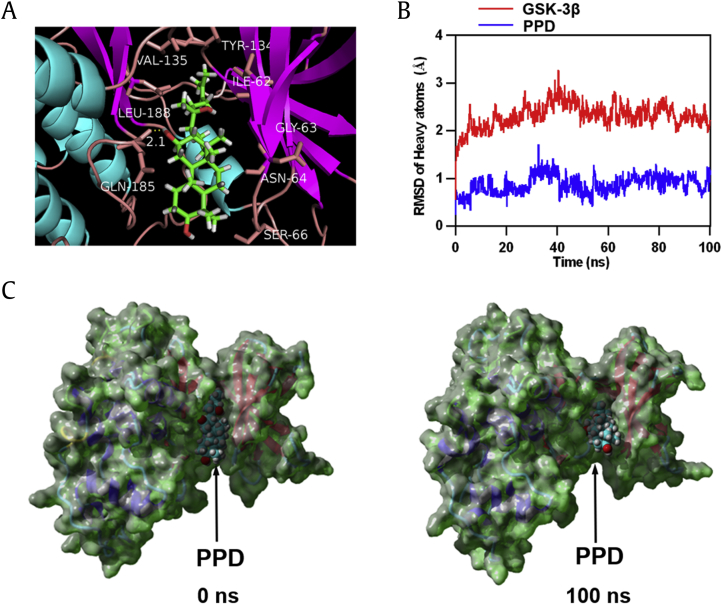
In this study, we investigated the impact of PPD on NSC proliferation and neuronal lineage differentiation through activation of the Wnt/glycogen synthase kinase (GSK)-3β/β-catenin pathway. NSC migration and proliferation were investigated by neurosphere assay, Cell Counting Kit-8 assay, and EdU assay. NSC differentiation was analyzed by Western blot and immunofluorescence staining. Involvement of the Wnt/GSK3β/β-catenin pathway was examined by molecular simulation and Western blot and verified using gene transfection.
PPD significantly promoted neural migration and induced a significant increase in NSC proliferation in a time- and dose-dependent manner. Furthermore, a remarkable increase in antimicrotubule-associated protein 2 expression and decrease in nestin protein expression were induced by PPD. During the differentiation process, PPD targeted and stimulated the phosphorylation of GSK-3β at Ser9 and the active forms of β-catenin, resulting in activation of the Wnt/GSK-3β/β-catenin pathway. Transfection of NSCs with a constitutively active GSK-3β mutant at S9A significantly hampered the proliferation and neural differentiation mediated by PPD.
PPD promotes NSC proliferation and neural differentiation via activation of the Wnt/GSK-3β/β-catenin pathway by targeting GSK-3β, potentially having great significance for the treatment of neurodegenerative diseases.
活性天然成分,尤其是小分子,最近作为促进神经干细胞(NSC)神经源性再生的治疗神经退行性疾病的修饰剂受到广泛关注。人参中的生物活性成分之一20(S)-原人参二醇(PPD)具有神经保护特性。然而,PPD对NSC增殖和分化的影响及其作用机制尚不完全清楚。
在本研究中,我们通过激活Wnt/糖原合酶激酶(GSK)-3β/β-连环蛋白通路,研究了PPD对NSC增殖和神经元谱系分化的影响。通过神经球测定、细胞计数试剂盒-8测定和EdU测定研究NSC迁移和增殖。通过蛋白质免疫印迹和免疫荧光染色分析NSC分化。通过分子模拟和蛋白质免疫印迹检测Wnt/GSK3β/β-连环蛋白通路的参与情况,并使用基因转染进行验证。
PPD以时间和剂量依赖性方式显著促进神经迁移并诱导NSC增殖显著增加。此外,PPD诱导抗微管相关蛋白2表达显著增加,巢蛋白表达降低。在分化过程中,PPD靶向并刺激GSK-3β在Ser9处的磷酸化以及β-连环蛋白的活性形式,从而激活Wnt/GSK-3β/β-连环蛋白通路。用S9A处的组成型活性GSK-3β突变体转染NSC显著阻碍了PPD介导的增殖和神经分化。
PPD通过靶向GSK-3β激活Wnt/GSK-3β/β-连环蛋白通路促进NSC增殖和神经分化,对神经退行性疾病的治疗可能具有重要意义。