Song Xiaohua, Long Dingxin
School of Public Health, University of South China, Hengyang, China.
Front Neurosci. 2020 Apr 21;14:267. doi: 10.3389/fnins.2020.00267. eCollection 2020.
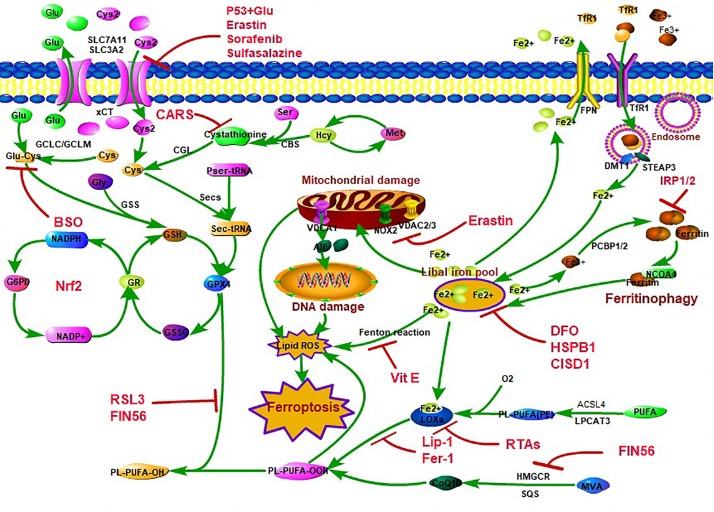
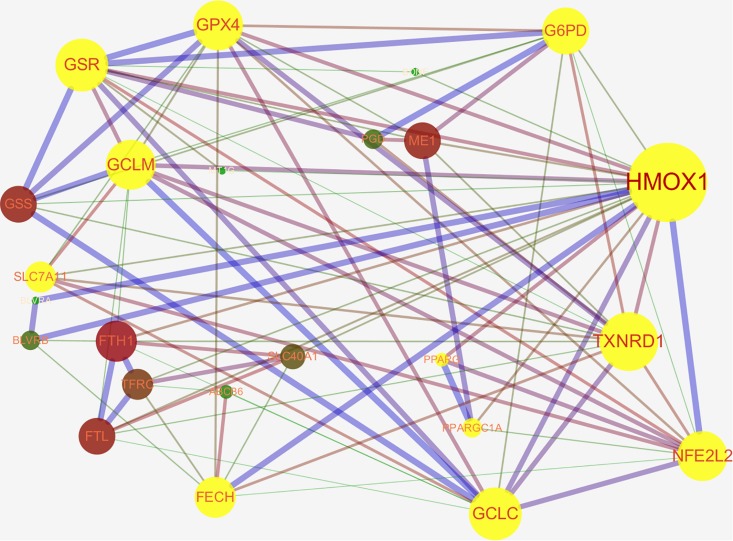
Ferroptosis is a kind of regulated cell death (RCD) caused by the redox state disorder of intracellular microenvironment controlled by glutathione (GSH) peroxidase 4 (GPX4), which is inhibited by iron chelators and lipophilic antioxidants. In addition to classical regulatory mechanisms, new regulatory factors for ferroptosis have been discovered in recent years, such as the P53 pathway, the activating transcription factor (ATF)3/4 pathway, Beclin 1 (BECN1) pathway, and some non-coding RNA. Ferroptosis is closely related to cancer treatment, neurodegenerative diseases, ischemia-reperfusion of organ, neurotoxicity, and others, in particular, in the field of neurodegenerative diseases treatment has aroused people's interest. The nuclear factor E2 related factor 2 (Nrf2/NFE2L2) has been proved to play a key role in neurodegenerative disease treatment and ferroptosis regulation. Ferroptosis promotes the progression of neurodegenerative diseases, while the expression of Nrf2 and its target genes (Ho-1, Nqo-1, and Trx) has been declined with aging; therefore, there is still insufficient evidence for ferroptosis and Nrf2 regulatory networks in the field of neurodegenerative diseases. In this review, we will provide a brief overview of ferroptosis regulatory mechanisms, as well as an emphasis on the mechanism of Nrf2 regulating ferroptosis. We also highlight the role of ferroptosis and Nrf2 during the process of neurodegenerative diseases and investigate a theoretical basis for further research on the relationship between Nrf2 and ferroptosis in the process of neurodegenerative diseases treatment.
铁死亡是一种由谷胱甘肽(GSH)过氧化物酶4(GPX4)控制的细胞内微环境氧化还原状态紊乱引起的调节性细胞死亡(RCD),铁螯合剂和亲脂性抗氧化剂可抑制这种细胞死亡。除了经典的调节机制外,近年来还发现了铁死亡的新调节因子,如P53途径、激活转录因子(ATF)3/4途径、Beclin 1(BECN1)途径和一些非编码RNA。铁死亡与癌症治疗、神经退行性疾病、器官缺血再灌注、神经毒性等密切相关,尤其是在神经退行性疾病治疗领域引起了人们的兴趣。核因子E2相关因子2(Nrf2/NFE2L2)已被证明在神经退行性疾病治疗和铁死亡调节中起关键作用。铁死亡促进神经退行性疾病的进展,而Nrf2及其靶基因(Ho-1、Nqo-1和Trx)的表达随衰老而下降;因此,在神经退行性疾病领域,关于铁死亡和Nrf2调节网络的证据仍然不足。在这篇综述中,我们将简要概述铁死亡的调节机制,并重点阐述Nrf2调节铁死亡的机制。我们还强调了铁死亡和Nrf2在神经退行性疾病过程中的作用,并为进一步研究神经退行性疾病治疗过程中Nrf2与铁死亡之间的关系提供理论依据。