Sanna Fabrizio, Bratzu Jessica, Serra Maria Pina, Leo Damiana, Quartu Marina, Boi Marianna, Espinoza Stefano, Gainetdinov Raul R, Melis Maria Rosaria, Argiolas Antonio
Department of Biomedical Sciences, Section of Neuroscience and Clinical Pharmacology, Centre of Excellence for the Neurobiology of Addictions, University of Cagliari, Cagliari, Italy.
Department of Biomedical Sciences, Section of Citomorphology, University of Cagliari, Cagliari, Italy.
Front Behav Neurosci. 2020 Apr 20;14:58. doi: 10.3389/fnbeh.2020.00058. eCollection 2020.
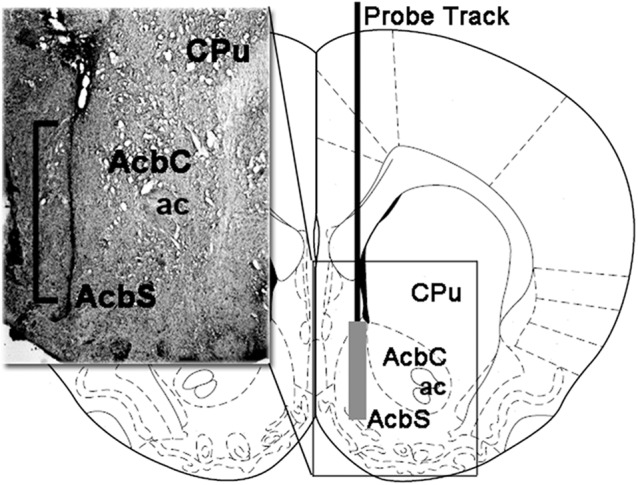
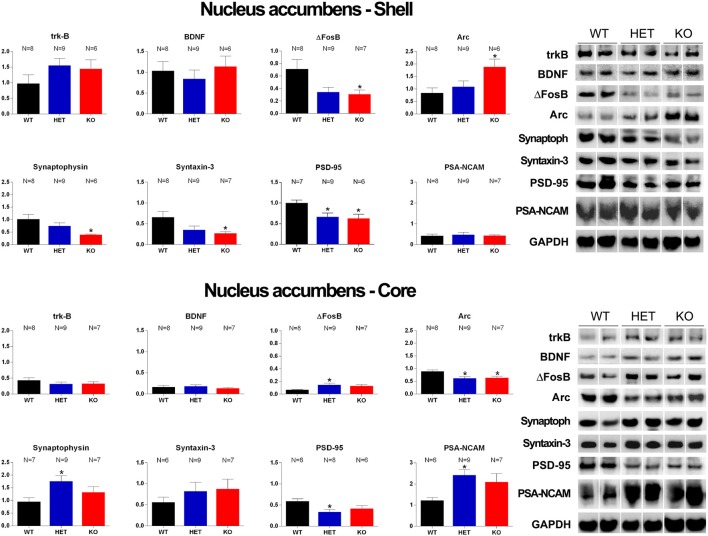
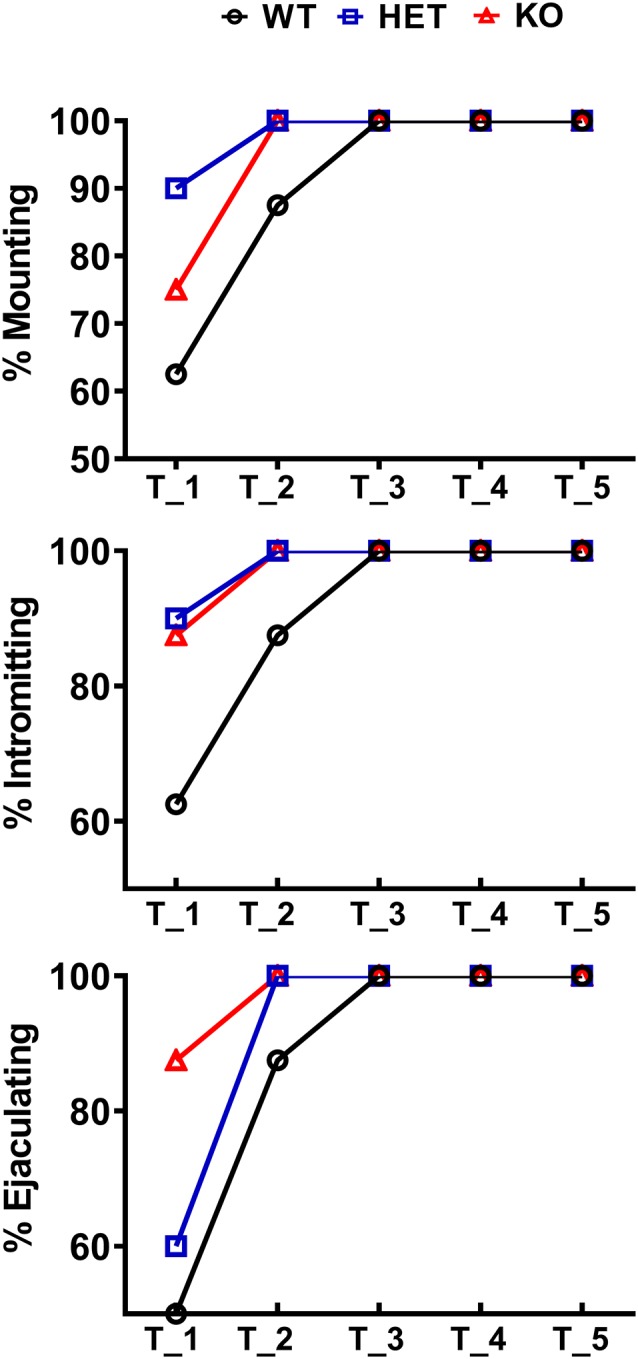
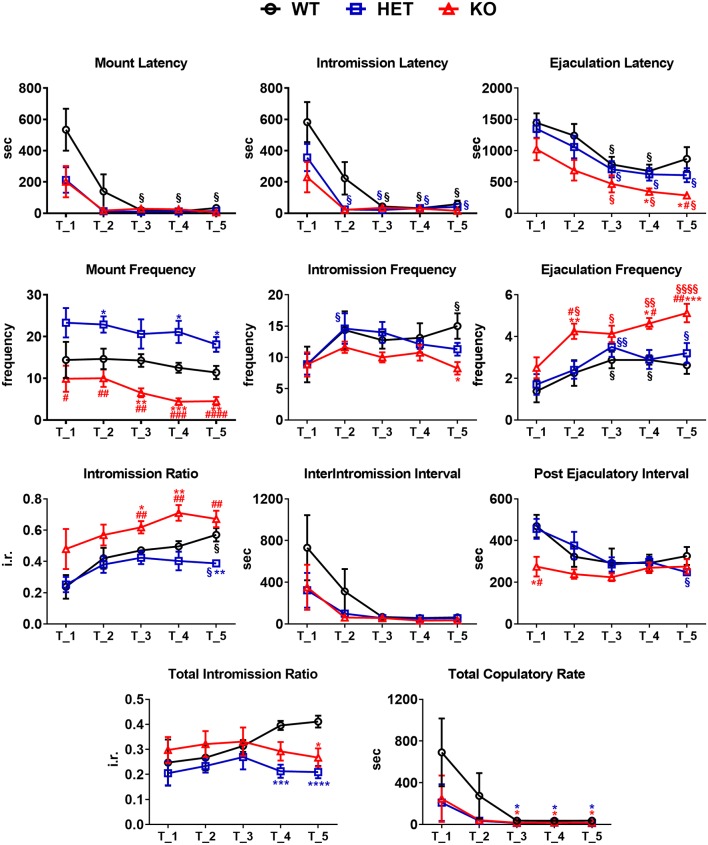
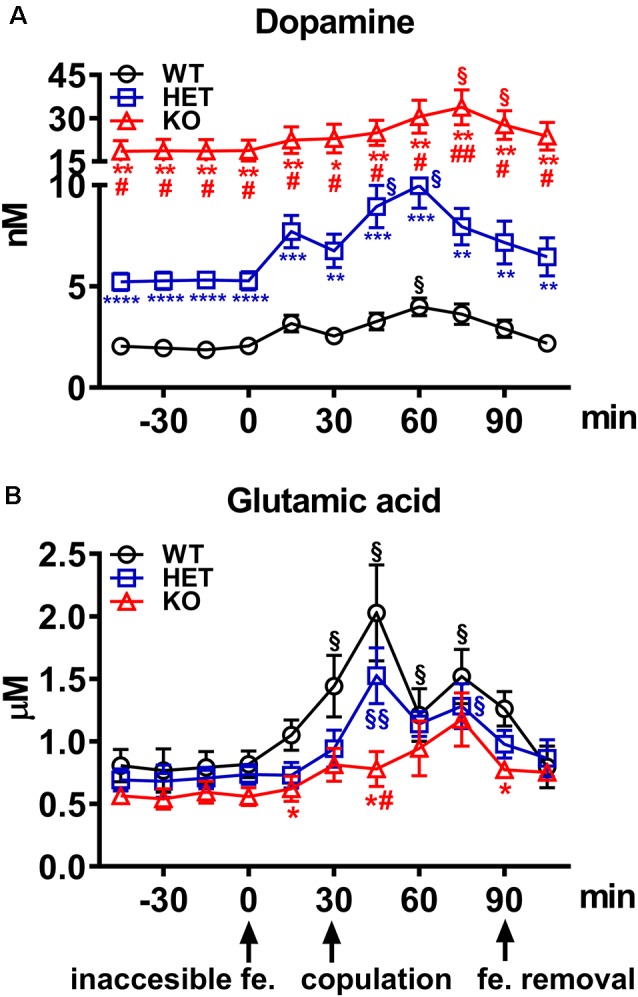
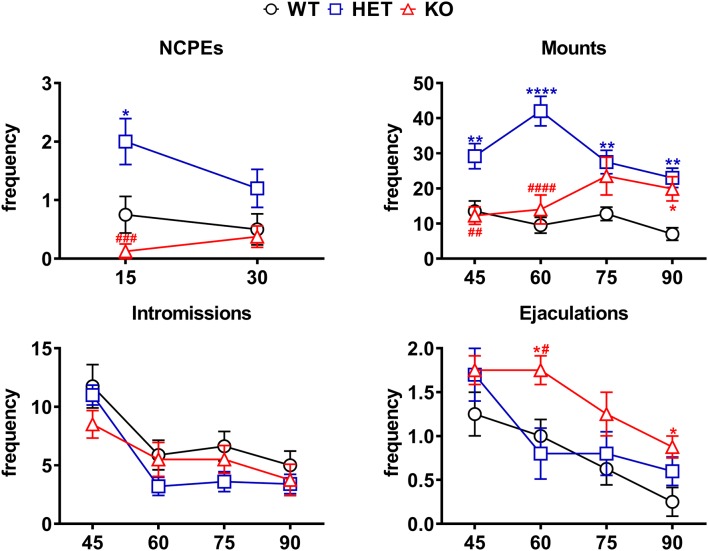
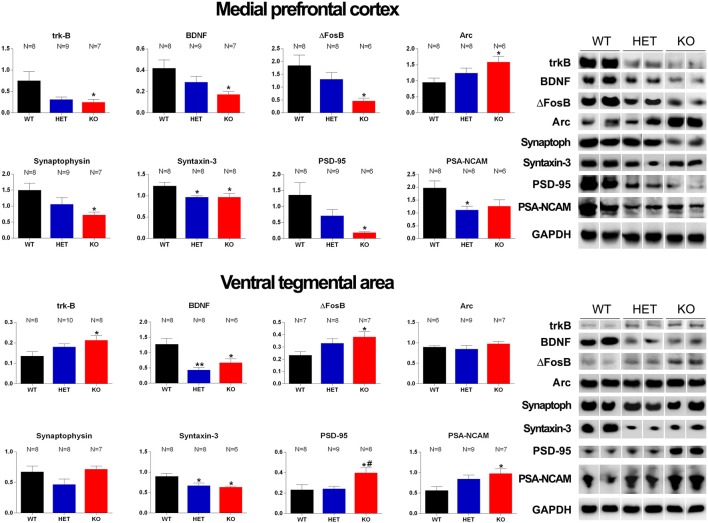
Central dopamine plays a key role in sexual behavior. Recently, a Dopamine Transporter knockout (DAT KO) rat has been developed, which displays several behavioral dysfunctions that have been related to increased extracellular dopamine levels and altered dopamine turnover secondary to DAT gene silencing. This prompted us to characterize the sexual behavior of these DAT KO rats and their heterozygote (HET) and wild type (WT) counterparts in classical copulatory tests with a sexually receptive female rat and to verify if and how the acquisition of sexual experience changes along five copulatory tests in these rat lines. Extracellular dopamine and glutamic acid concentrations were also measured in the dialysate obtained by intracerebral microdialysis from the nucleus accumbens (Acb) shell of DAT KO, HET and WT rats, which underwent five copulatory tests, when put in the presence of an inaccessible sexually receptive female rat and when copulation was allowed. Markers of neurotropism (BDNF, trkB), neural activation (Δ-FosB), functional (Arc and PSA-NCAM) and structural synaptic plasticity (synaptophysin, syntaxin-3, PSD-95) were also measured in the ventral tegmental area (VTA), Acb (shell and core) and medial prefrontal cortex (mPFC) by Western Blot assays. The results indicate that the sexual behavior of DAT KO vs. HET and WT rats shows peculiar differences, mainly due to a more rapid acquisition of stable sexual activity levels and to higher levels of sexual motivation and activity. These differences occurred with differential changes in dopamine and glutamic acid concentrations in Acb dialysates during sexual behavior, with lower increases of dopamine and glutamic acid in DAT KO vs. WT and HET rats, and a lower expression of the markers investigated, mainly in the mPFC, in DAT KO vs. WT rats. Together these findings confirm a key role of dopamine in sexual behavior and provide evidence that the permanently high levels of dopamine triggered by DAT gene silencing cause alterations in both the frontocortical glutamatergic neurons projecting to the Acb and VTA and in the mesolimbic dopaminergic neurons, leading to specific brain regional changes in trophic support and neuroplastic processes, which may have a role in the sexual behavior differences found among the three rat genotypes.
中枢多巴胺在性行为中起关键作用。最近,已培育出一种多巴胺转运体基因敲除(DAT KO)大鼠,其表现出多种行为功能障碍,这些障碍与细胞外多巴胺水平升高以及由于DAT基因沉默导致的多巴胺代谢改变有关。这促使我们在与性接受雌鼠进行的经典交配试验中,对这些DAT KO大鼠及其杂合子(HET)和野生型(WT)对应物的性行为进行表征,并验证在这些大鼠品系中,沿着五次交配试验,性经验的获得是否以及如何发生变化。还通过脑内微透析从经历五次交配试验的DAT KO、HET和WT大鼠的伏隔核(Acb)壳中获得的透析液中测量细胞外多巴胺和谷氨酸浓度,这些大鼠在面对无法接触的性接受雌鼠时以及允许交配时进行测量。还通过蛋白质免疫印迹分析在腹侧被盖区(VTA)、Acb(壳和核心)和内侧前额叶皮质(mPFC)中测量神经营养性标志物(BDNF、trkB)、神经激活标志物(Δ-FosB)、功能性标志物(Arc和PSA-NCAM)以及结构性突触可塑性标志物(突触素、Syntaxin-3、PSD-95)。结果表明,与HET和WT大鼠相比,DAT KO大鼠的性行为表现出独特差异,主要是由于更快速地获得稳定的性活动水平以及更高的性动机和活动水平。这些差异伴随着性行为期间Acb透析液中多巴胺和谷氨酸浓度的不同变化而出现,与WT和HET大鼠相比,DAT KO大鼠中多巴胺和谷氨酸的增加较低,并且与WT大鼠相比,DAT KO大鼠中所研究标志物的表达较低,主要在mPFC中。这些发现共同证实了多巴胺在性行为中的关键作用,并提供证据表明由DAT基因沉默引发的多巴胺持续高水平会导致投射到Acb和VTA的前额叶皮质谷氨酸能神经元以及中脑边缘多巴胺能神经元发生改变,从而导致在营养支持和神经可塑性过程中特定脑区的变化,这可能在三种大鼠基因型之间发现的性行为差异中起作用。