Christiaens Olivier, Whyard Steve, Vélez Ana M, Smagghe Guy
Department of Plants and Crops, Ghent University, Ghent, Belgium.
Department of Biological Sciences, University of Manitoba, Winnipeg, MB, Canada.
Front Plant Sci. 2020 Apr 21;11:451. doi: 10.3389/fpls.2020.00451. eCollection 2020.
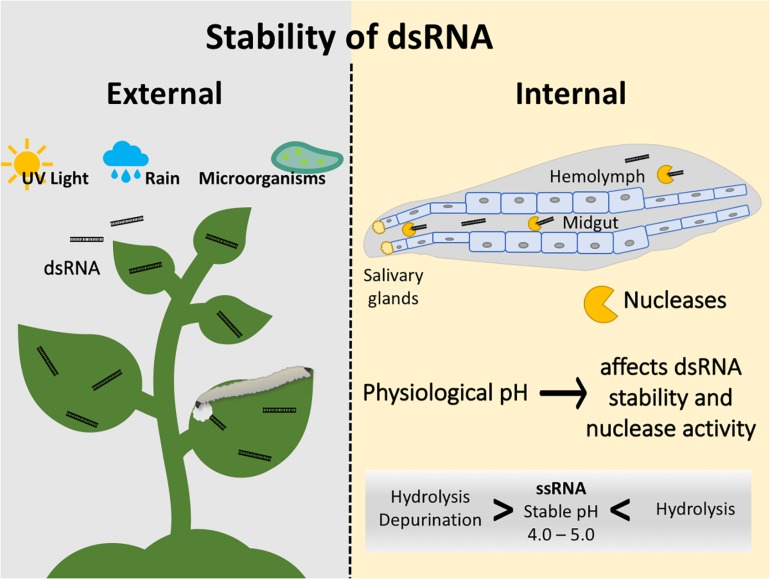
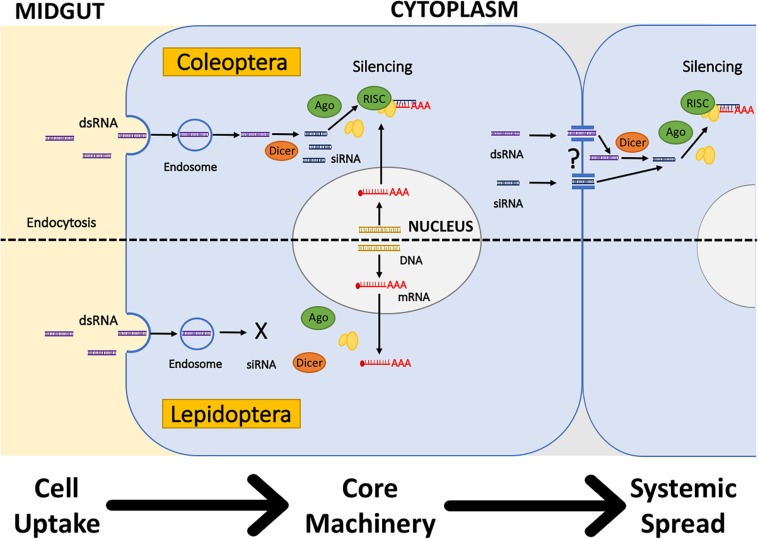
Exploiting the RNA interference (RNAi) gene mechanism to silence essential genes in pest insects, leading to toxic effects, has surfaced as a promising new control strategy in the past decade. While the first commercial RNAi-based products are currently coming to market, the application against a wide range of insect species is still hindered by a number of challenges. In this review, we discuss the current status of these RNAi-based products and the different delivery strategies by which insects can be targeted by the RNAi-triggering double-stranded RNA (dsRNA) molecules. Furthermore, this review also addresses a number of physiological and cellular barriers, which can lead to decreased RNAi efficacy in insects. Finally, novel non-transgenic delivery technologies, such as polymer or liposomic nanoparticles, peptide-based delivery vehicles and viral-like particles, are also discussed, as these could overcome these barriers and lead to effective RNAi-based pest control.
在过去十年中,利用RNA干扰(RNAi)基因机制使害虫中的必需基因沉默从而产生毒性效应,已成为一种有前景的新型防治策略。虽然首批基于RNAi的商业产品目前正在上市,但针对多种昆虫物种的应用仍受到一些挑战的阻碍。在本综述中,我们讨论了这些基于RNAi的产品的现状以及通过RNAi触发双链RNA(dsRNA)分子靶向昆虫的不同递送策略。此外,本综述还探讨了一些生理和细胞屏障,这些屏障可能导致昆虫体内RNAi功效降低。最后,还讨论了新型非转基因递送技术,如聚合物或脂质体纳米颗粒、基于肽的递送载体和病毒样颗粒,因为这些技术可以克服这些屏障并实现有效的基于RNAi的害虫防治。