Hien Le Thi Thu, Trang Phi Thi Thu, Phuong Pham Cam, Tam Pham Thi, Xuan Nguyen Thi
Institute of Genome Research, Vietnam Academy of Science and Technology, 18 Hoang Quoc Viet, Cau Giay, Hanoi, Vietnam.
Graduate University of Science and Technology, Vietnam Academy of Science and Technology, 18 Hoang Quoc Viet, Cau Giay, Hanoi, Vietnam.
Iran J Basic Med Sci. 2019 Jul;22(7):781-788. doi: 10.22038/ijbms.2019.35787.8526.
Copper (Cu) is an essential dietary supplement in animal feeds, which plays an important role in maintaining the balance of all living organisms. Copper nanoparticles (nCu) participate in catalysing activities of multiple antioxidant/defensive enzymes and exerts pro-inflammatory and pro-apoptotic effects on systemic organs and tissues. The present study explored whether nCu affects maize growth and yield and grain mineral nutrients as well as physiological functions in mice.
Maize seeds were treated with nCu (20 mg/kg and 1000 mg/kg dry weight (DW)) and their grain productions were used for mouse feed. For testing of autoimmune response, mice were treated with nCu at concentration of 2 mg/l and 1000 mg/l and ultimately serum biochemical indicators, numbers and activation of immune cells infiltrated in mouse spleens were examined.
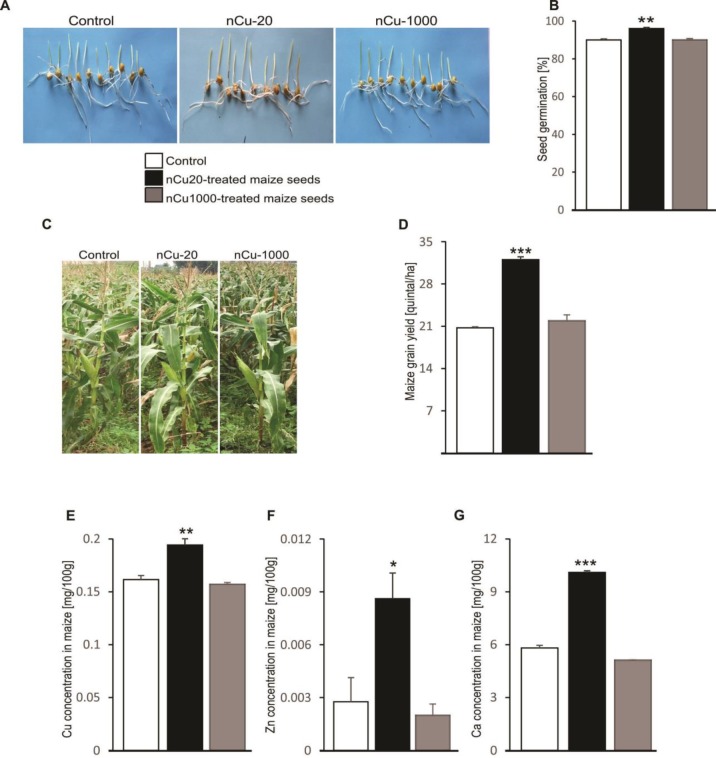
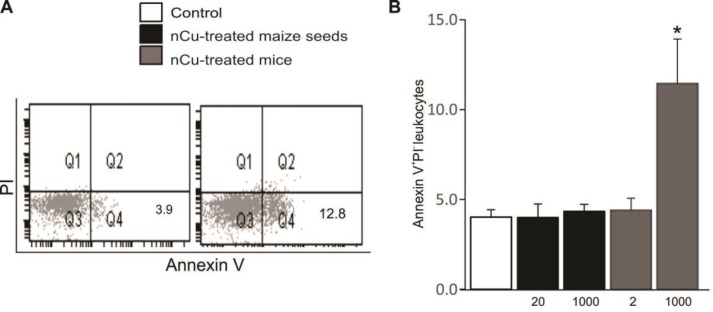
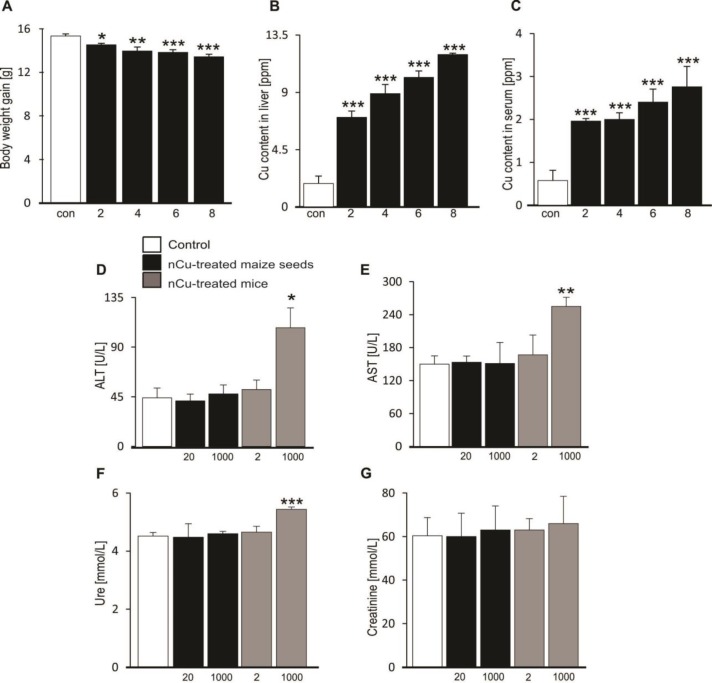
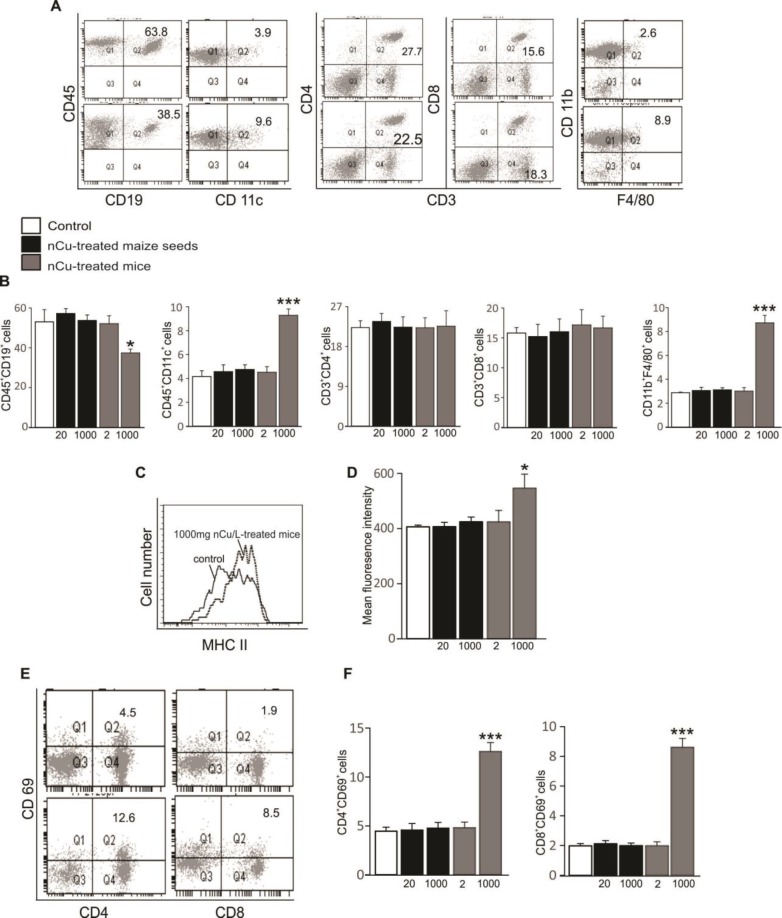
Treatment of maize seeds with nCu at dose of 20 mg/kg DW, but not 1000 mg/kg DW enhanced germination rate, plant growth and grain yield as well as grain mineral nutrients as compared to control group. Importantly, administration of mice with 1000 mg/l nCu resulted in their morphological change due to excessive accumulation of nCu in liver and blood, leading to inflammatory responses involved in upregulated expression of serum biochemical indicators of liver and kidney as well as increased infiltration and activation of splenic immune cells.
nCu concentration at 20 mg/kg DW facilitated the morphological and functional development of maize plants, whose production was safe to feed mice.
铜(Cu)是动物饲料中必需的膳食补充剂,在维持所有生物体的平衡中发挥重要作用。铜纳米颗粒(nCu)参与多种抗氧化/防御酶的催化活性,并对全身器官和组织产生促炎和促凋亡作用。本研究探讨了nCu是否会影响玉米生长、产量、籽粒矿物质营养以及小鼠的生理功能。
用nCu(20毫克/千克和1000毫克/千克干重(DW))处理玉米种子,其籽粒产量用于小鼠饲料。为了测试自身免疫反应,用浓度为2毫克/升和1000毫克/升的nCu处理小鼠,最终检测血清生化指标、小鼠脾脏中浸润的免疫细胞数量和活化情况。
与对照组相比,用20毫克/千克DW剂量的nCu处理玉米种子可提高发芽率、促进植株生长、增加籽粒产量和籽粒矿物质营养,但1000毫克/千克DW剂量则无此效果。重要的是,给小鼠施用1000毫克/升的nCu会导致其形态改变,因为nCu在肝脏和血液中过度积累,导致肝脏和肾脏血清生化指标表达上调所涉及的炎症反应,以及脾脏免疫细胞浸润和活化增加。
20毫克/千克DW的nCu浓度促进了玉米植株的形态和功能发育,其产量用于喂养小鼠是安全的。