Liang Xiaoli, Huang Yuan, Pan Xiping, Hao Yanbing, Chen Xiaowei, Jiang Haiming, Li Jing, Zhou Beixian, Yang Zifeng
State Key Laboratory of Respiratory Diseases, Guangzhou Institute of Respiratory Health, National Clinical Centre of Respiratory Disease, The First Affiliated Hospital, Guangzhou Medical University, Guangzhou, 510120, China.
Hutchison Whampoa Guangzhou Baiyunshan Chinese Medicine Co., Ltd, Guangzhou, 510515, China.
J Pharm Anal. 2020 Apr;10(2):130-146. doi: 10.1016/j.jpha.2019.09.005. Epub 2019 Oct 4.
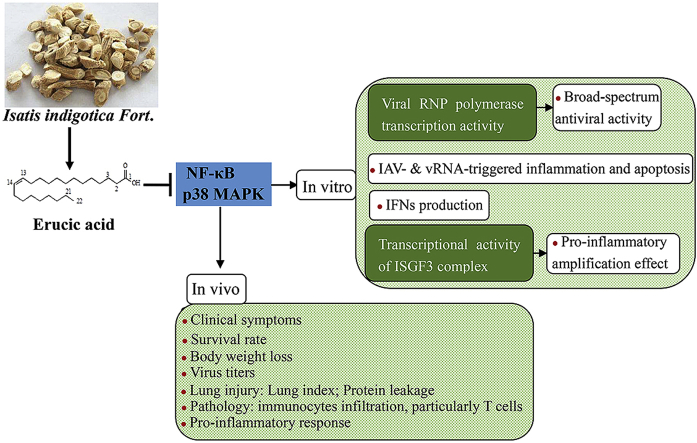
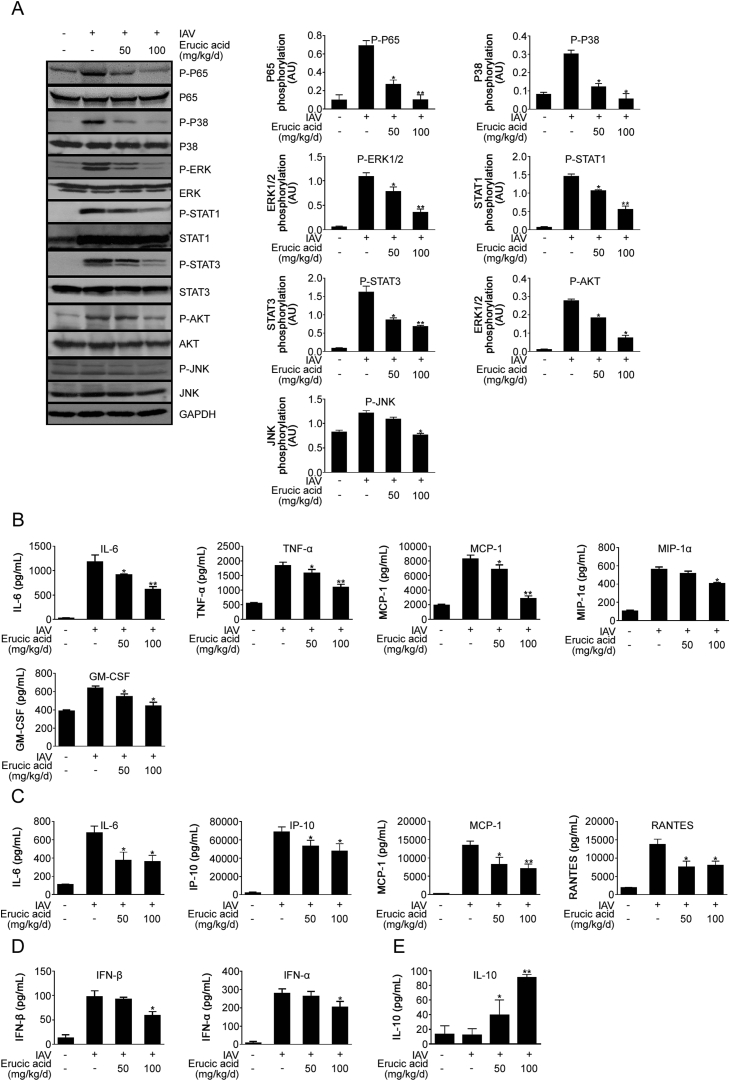
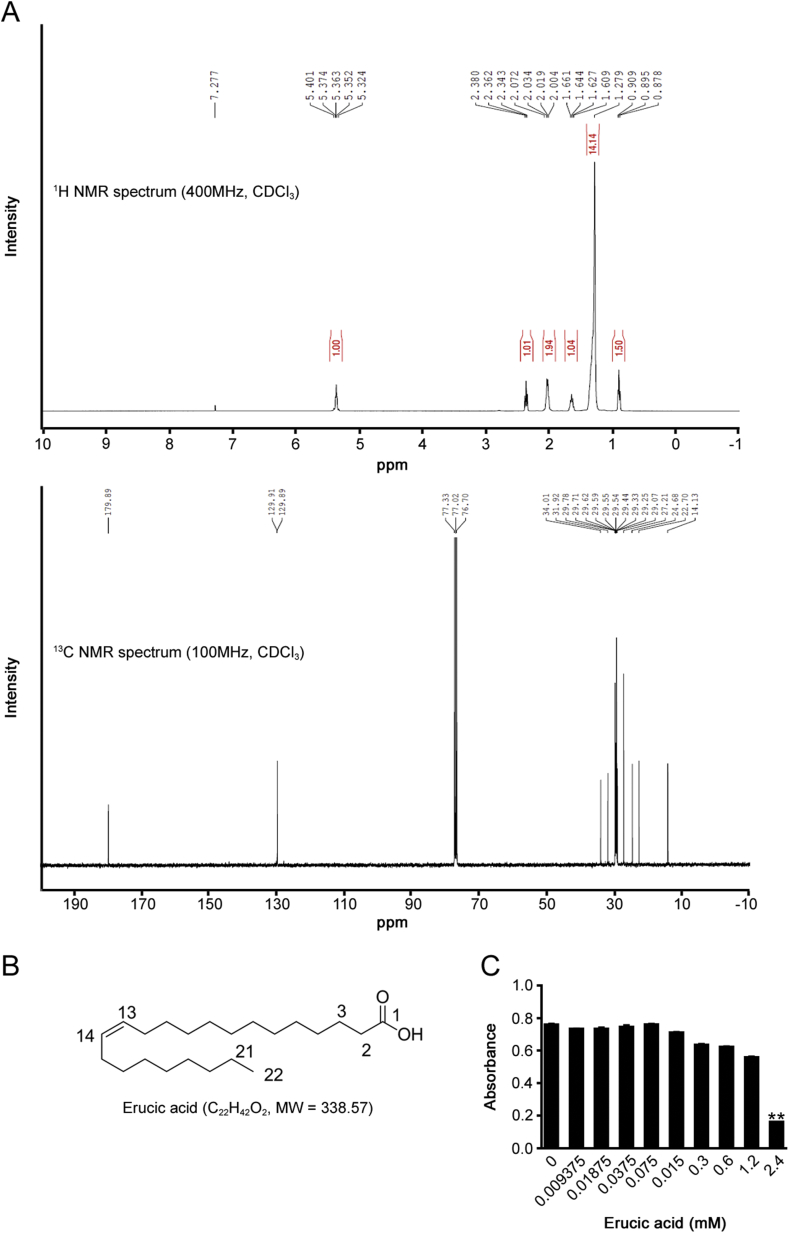
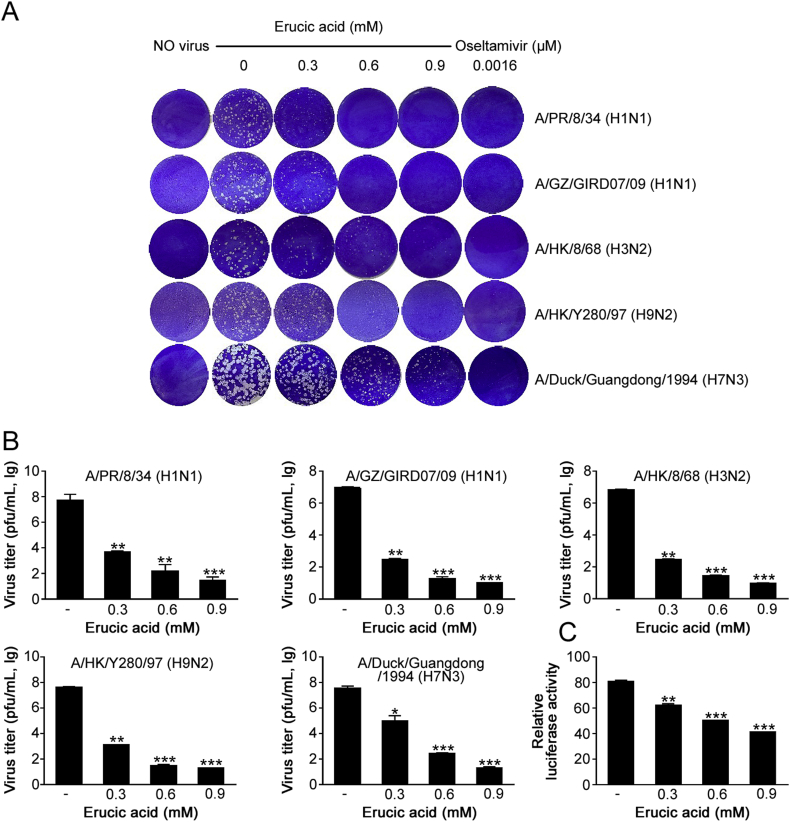
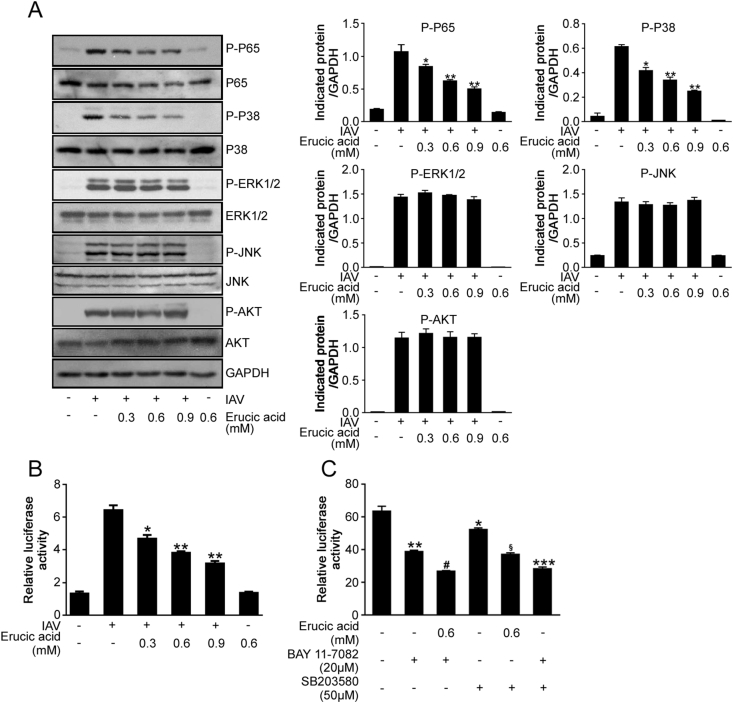
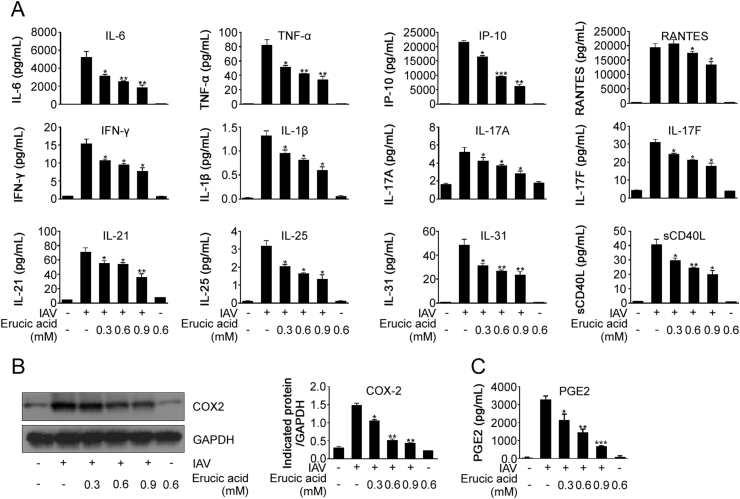
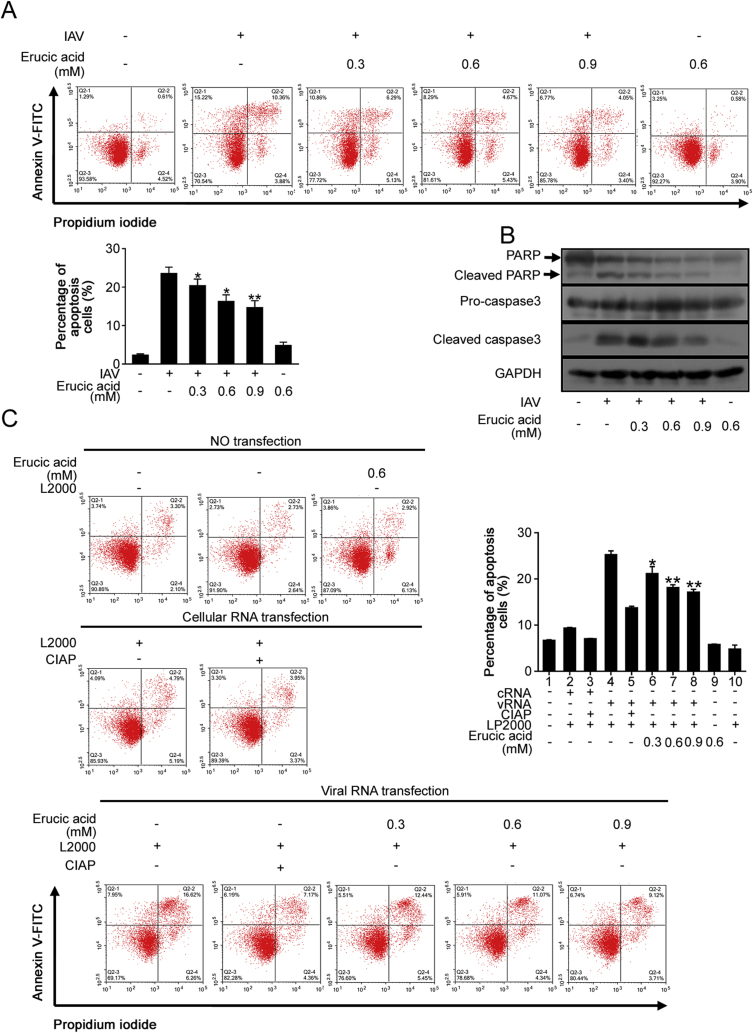
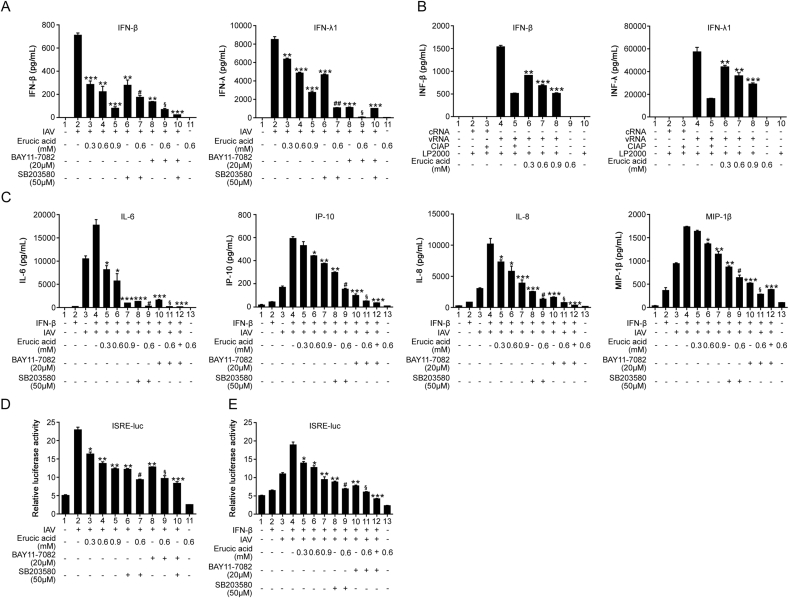
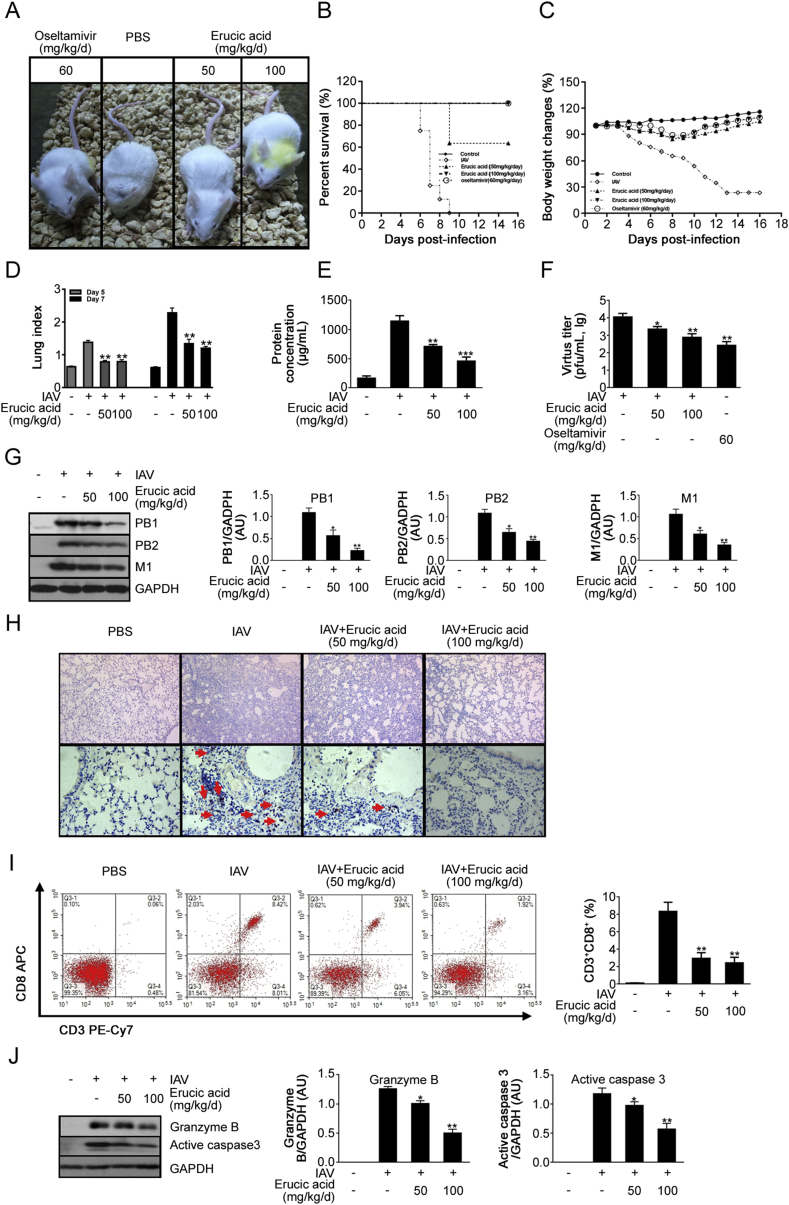
(Ban-Lan-Gen) is an herbal medicine prescribed for influenza treatment. However, its active components and mode of action remain mostly unknown. In the present study, erucic acid was isolated from , and subsequently its underlying mechanism against influenza A virus (IAV) infection was investigated in vitro and in vivo. Our results demonstrated that erucic acid exhibited broad-spectrum antiviral activity against IAV resulting from reduction of viral polymerase transcription activity. Erucic acid was found to exert inhibitory effects on IAV or viral (v) RNA-induced pro-inflammatory mediators as well as interferons (IFNs). The molecular mechanism by which erucic acid with antiviral and anti-inflammatory properties was attributed to inactivation of NF-κB and p38 MAPK signaling. Furthermore, the NF-κB and p38 MAPK inhibitory effect of erucic acid led to diminishing the transcriptional activity of interferon-stimulated gene factor 3 (ISGF-3), and thereby reducing IAV-triggered pro-inflammatory response amplification in IFN-β-sensitized cells. Additionally, IAV- or vRNA-triggered apoptosis of alveolar epithelial A549 cells was prevented by erucic acid. In vivo, erucic acid administration consistently displayed decreased lung viral load and viral antigens expression. Meanwhile, erucic acid markedly reduced CD8 cytotoxic T lymphocyte (CTL) recruitment, pro-apoptotic signaling, hyperactivity of multiple signaling pathways, and exacerbated immune inflammation in the lung, which resulted in decreased lung injury and mortality in mice with a mouse-adapted A/FM/1/47-MA(H1N1) strain infection. Our findings provided a mechanistic basis for the action of erucic acid against IAV-mediated inflammation and injury, suggesting that erucic acid may have a therapeutic potential in the treatment of influenza.
板蓝根是一种用于治疗流感的草药。然而,其活性成分和作用方式大多仍不为人知。在本研究中,从板蓝根中分离出芥酸,随后在体外和体内研究了其抗甲型流感病毒(IAV)感染的潜在机制。我们的结果表明,芥酸对IAV具有广谱抗病毒活性,这是由于病毒聚合酶转录活性降低所致。发现芥酸对IAV或病毒(v)RNA诱导的促炎介质以及干扰素(IFN)具有抑制作用。具有抗病毒和抗炎特性的芥酸的分子机制归因于NF-κB和p38 MAPK信号通路的失活。此外,芥酸对NF-κB和p38 MAPK的抑制作用导致干扰素刺激基因因子3(ISGF-3)的转录活性降低,从而减少了IFN-β致敏细胞中IAV触发的促炎反应放大。此外,芥酸可防止IAV或vRNA触发的肺泡上皮A549细胞凋亡。在体内,给予芥酸始终显示肺病毒载量和病毒抗原表达降低。同时,芥酸显著减少了CD8细胞毒性T淋巴细胞(CTL)募集、促凋亡信号传导、多个信号通路的过度激活以及肺部加剧的免疫炎症,这导致感染鼠适应的A/FM/1/47-MA(H1N1)株的小鼠肺损伤和死亡率降低。我们的研究结果为芥酸对抗IAV介导的炎症和损伤的作用提供了机制基础,表明芥酸可能在流感治疗中具有治疗潜力。