Villacís Anita G, Dujardin Jean-Pierre, Panzera Francisco, Yumiseva César A, Pita Sebastián, Santillán-Guayasamín Soledad, Orozco Marco I, Mosquera Katherine D, Grijalva Mario J
Center for Research on Health in Latin America (CISeAL), School of Biological Sciences, Pontificia Universidad Católica del Ecuador, Av. 12 de Octubre 1076 y Roca, Quito, Ecuador.
Infectious and Tropical Disease Institute, Department of Biomedical Sciences, Heritage College of Osteopathic Medicine, Ohio University, Athens, OH, 45701, USA.
Parasit Vectors. 2020 May 6;13(1):226. doi: 10.1186/s13071-020-04097-z.
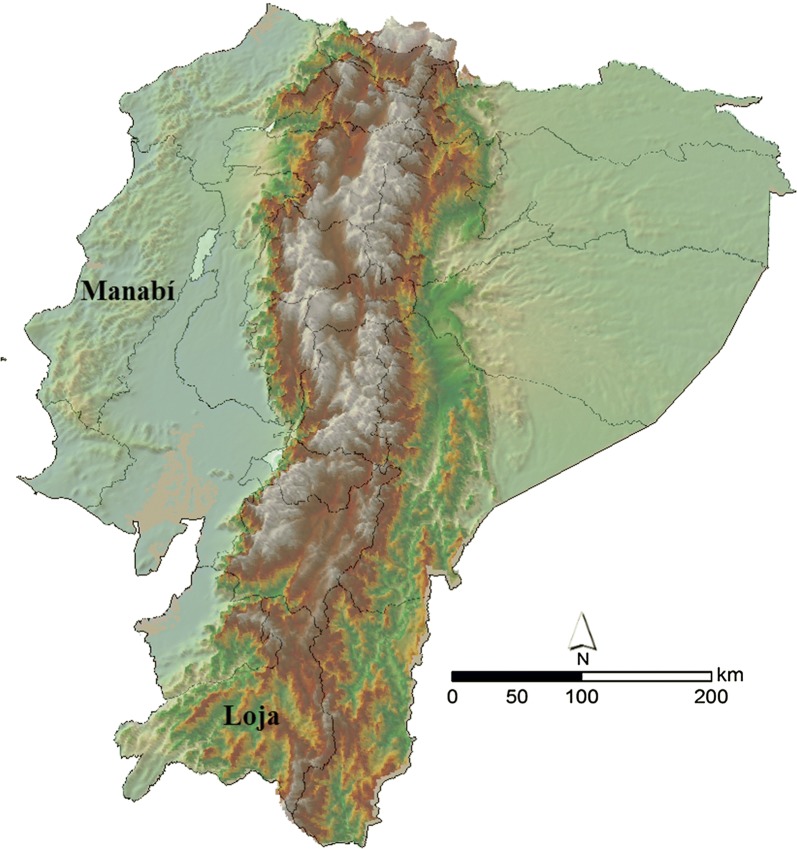
Chagas disease is a parasitic infection transmitted by "kissing bugs" (Hemiptera: Reduviidae: Triatominae) that has a huge economic impact in Latin American countries. The vector species with the upmost epidemiological importance in Ecuador are Rhodnius ecuadoriensis (Lent & Leon, 1958) and Triatoma dimidiata (Latreille, 1811). However, other species such as Panstrongylus howardi (Neiva, 1911) and Panstrongylus chinai (Del Ponte, 1929) act as secondary vectors due to their growing adaptation to domestic structures and their ability to transmit the parasite to humans. The latter two taxa are distributed in two different regions, they are allopatric and differ mainly by their general color. Their relative morphological similarity led some authors to suspect that P. chinai is a melanic form of P. howardi.
The present study explored this question using different approaches: antennal phenotype; geometric morphometrics of heads, wings and eggs; cytogenetics; molecular genetics; experimental crosses; and ecological niche modeling.
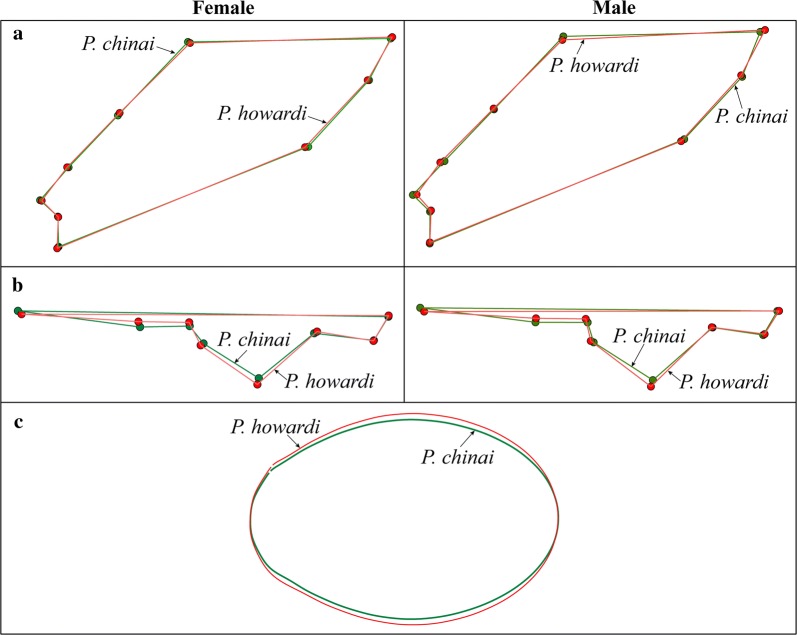
The antennal morphology, geometric morphometrics of head and wing shape and cytogenetic analysis were unable to show distinct differences between the two taxa. However, geometric morphometrics of the eggs, molecular genetics, ecological niche modeling and experimental crosses including chromosomal analyses of the F1 hybrids, in addition to their coloration and current distribution support the hypothesis that P. chinai and P. howardi are separate species.
Based on the evidence provided here, P. howardi and P. chinai should not be synonymized. They represent two valid, closely related species.
恰加斯病是一种由“接吻虫”(半翅目:猎蝽科:锥蝽亚科)传播的寄生虫感染病,在拉丁美洲国家造成了巨大的经济影响。在厄瓜多尔,具有最高流行病学重要性的病媒物种是厄瓜多尔红猎蝽(Lent & Leon,1958年)和二色锥蝽(Latreille,1811年)。然而,其他物种,如霍华德泛锥蝽(Neiva,1911年)和中华泛锥蝽(Del Ponte,1929年),由于它们对家庭环境的适应性不断增强以及将寄生虫传播给人类的能力,而成为次要病媒。后两个分类单元分布在两个不同的区域,它们是异域分布的,主要区别在于它们的整体颜色。它们相对的形态相似性导致一些作者怀疑中华泛锥蝽是霍华德泛锥蝽的黑化形态。
本研究采用不同方法探讨了这个问题:触角表型;头部、翅膀和卵的几何形态测量学;细胞遗传学;分子遗传学;实验杂交;以及生态位建模。
触角形态、头部和翅膀形状的几何形态测量学以及细胞遗传学分析均未能显示出这两个分类单元之间的明显差异。然而,卵的几何形态测量学、分子遗传学、生态位建模以及包括F1杂种染色体分析在内的实验杂交,除了它们的颜色和当前分布外,都支持中华泛锥蝽和霍华德泛锥蝽是不同物种的假设。
基于此处提供的证据,霍华德泛锥蝽和中华泛锥蝽不应被视为同义词。它们代表两个有效的、密切相关的物种。