Sheinberg Dallas L, Brunet Marie-Christine, Chen Stephanie H, Luther Evan, Starke Robert M
Neurological Surgery, University of Miami Miller School of Medicine, Miami, USA.
Cureus. 2020 Apr 3;12(4):e7524. doi: 10.7759/cureus.7524.
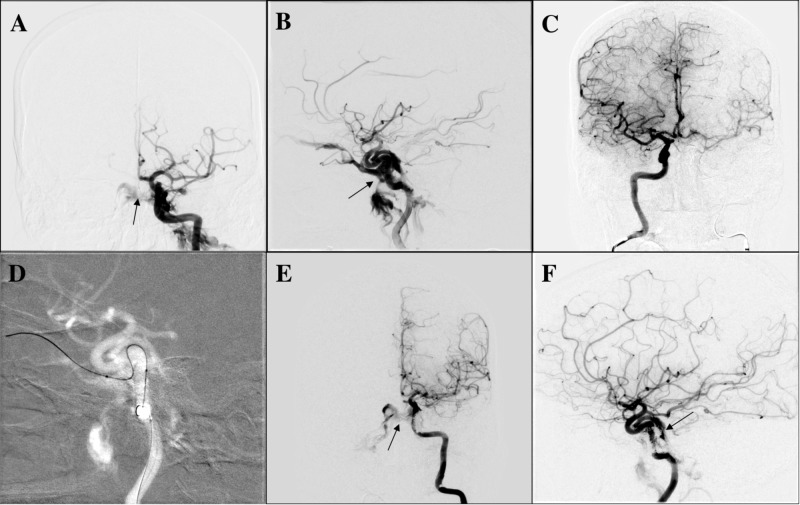
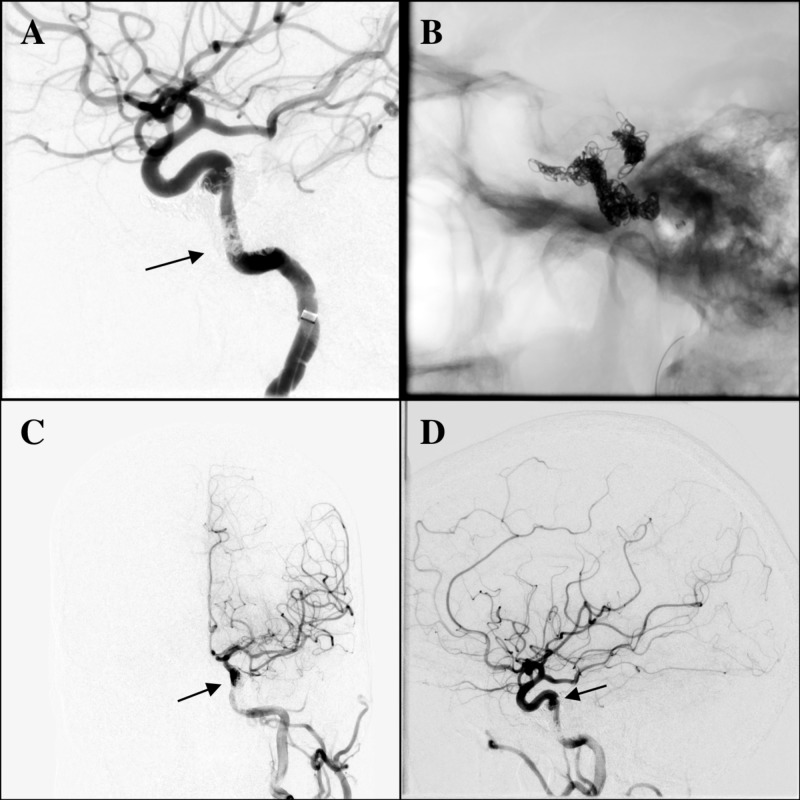
A carotid-cavernous fistula (CCF) is an abnormal connection between the arteries and veins of the cavernous sinus. Iatrogenic CCFs have been described as potential complications following aneurysm coiling, balloon angioplasty, and transsphenoidal surgery. In this case report, we describe a rare case of an iatrogenic direct CCF following mechanical thrombectomy (MT) for acute ischemic stroke. A 78-year-old female presented to an outside hospital with a new onset of right-sided weakness and aphasia and underwent emergency MT for a left middle cerebral artery (MCA) occlusion. The procedure was complicated by iatrogenic injury to the left cavernous internal carotid artery (ICA), which resulted in a direct high-flow CCF. The patient was transferred to our hospital and the fistula was closed with transarterial coils. Ten days later, she returned with diplopia and cranial nerve VI palsy due to residual pseudoaneurysm and was treated with a flow-diverting stent. On follow-up, the patient was neurologically intact and imaging showed no residual fistula. As the frequency of MTs performed for acute ischemic stroke continues to rise, neurointerventionalists should be aware of this potential rare complication and be prepared to manage patients who develop symptomatic CCF.
颈动脉海绵窦瘘(CCF)是海绵窦动静脉之间的异常连接。医源性CCF被认为是动脉瘤栓塞、球囊血管成形术和经蝶窦手术后的潜在并发症。在本病例报告中,我们描述了1例急性缺血性卒中机械取栓(MT)术后罕见的医源性直接CCF病例。1名78岁女性因新发右侧肢体无力和失语就诊于外院,因左侧大脑中动脉(MCA)闭塞接受了急诊MT。手术因医源性损伤左侧海绵窦段颈内动脉(ICA)而复杂化,导致直接的高流量CCF。患者被转至我院,通过经动脉弹簧圈栓塞封闭瘘口。10天后,患者因残余假性动脉瘤出现复视和Ⅵ 脑神经麻痹,接受了血流导向支架治疗。随访时,患者神经功能完好,影像学检查未显示残余瘘口。随着急性缺血性卒中MT治疗频率的持续上升,神经介入医生应意识到这种潜在的罕见并发症,并准备好处理出现症状性CCF的患者。