De Bondt Charlotte, Snoeckx Annemiek, Raskin Jo
Antwerp University Hospital and University of Antwerp, BE.
J Belg Soc Radiol. 2020 Apr 27;104(1):18. doi: 10.5334/jbsr.1907.
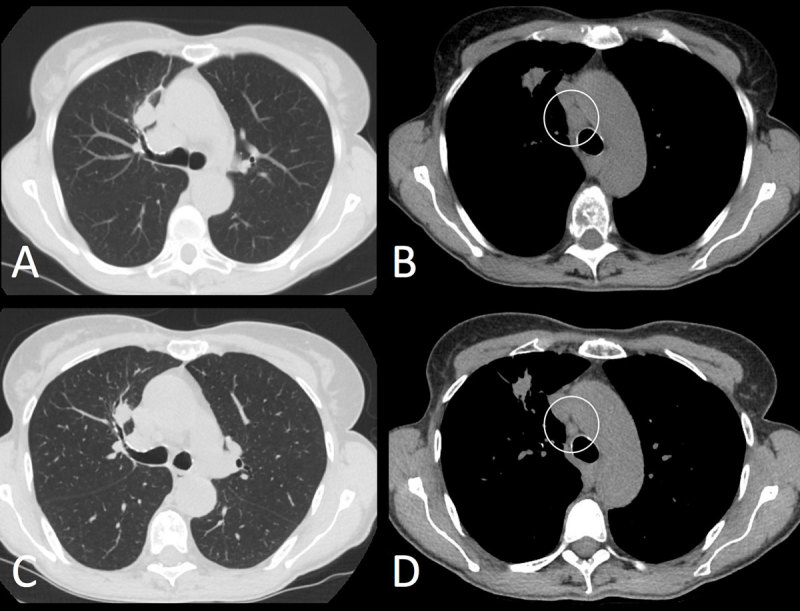
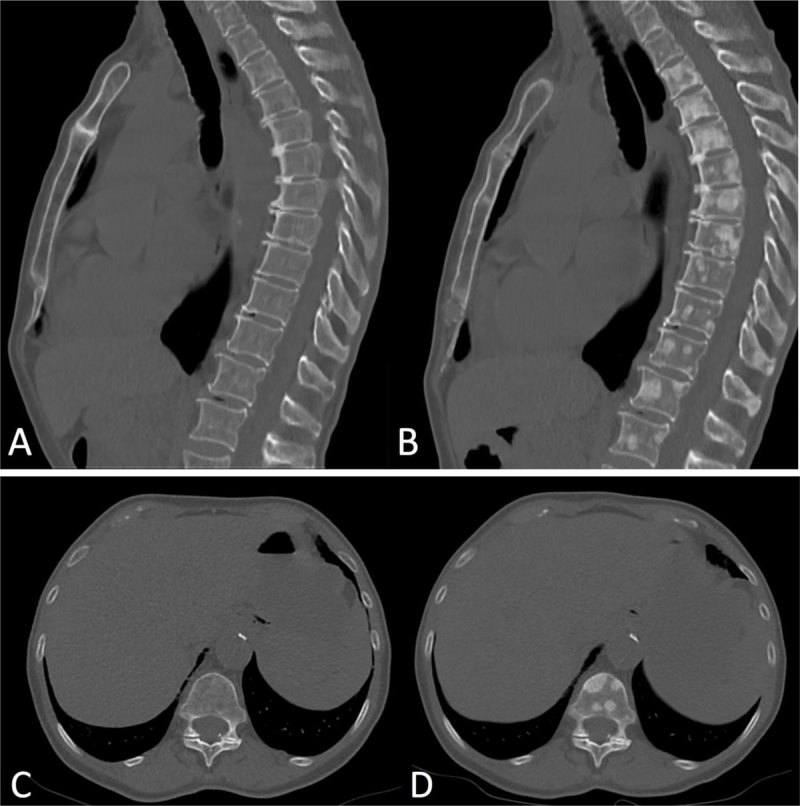
We report the case of a 72-year-old female never-smoker with stage IV endothelial growth factor receptor (EGFR) mutated lung adenocarcinoma. This patient was started on first line tyrosine kinase inhibitor (TKI) and seemingly developed new bone metastases under this treatment. As there was a remarkable discrepancy between the partial response seen in the primary tumor and non-osseous metastatic locations, the possibility of a bone flare phenomenon was considered. In this case report, we demonstrate that new bony lesions are not always synonymous with disease progression.
我们报告了一例72岁从不吸烟的女性患者,患有IV期内皮生长因子受体(EGFR)突变的肺腺癌。该患者开始接受一线酪氨酸激酶抑制剂(TKI)治疗,在此治疗过程中似乎出现了新的骨转移。由于原发肿瘤及非骨转移部位出现的部分缓解存在显著差异,因此考虑了骨闪烁现象的可能性。在本病例报告中,我们证明新出现的骨病变并不总是意味着疾病进展。