Biostatistics Collaboration Team, Research Core Center, National Cancer Center, Research Institute, Goyang, Korea.
Division of Translational Science, National Cancer Center, Research Institute, Goyang, Korea.
Cancer Sci. 2020 Jul;111(7):2579-2587. doi: 10.1111/cas.14446. Epub 2020 Jun 20.
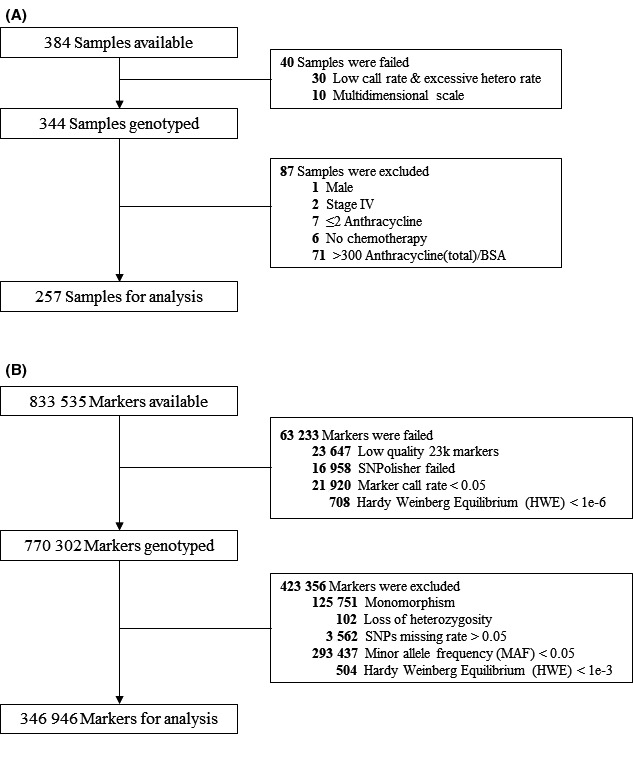
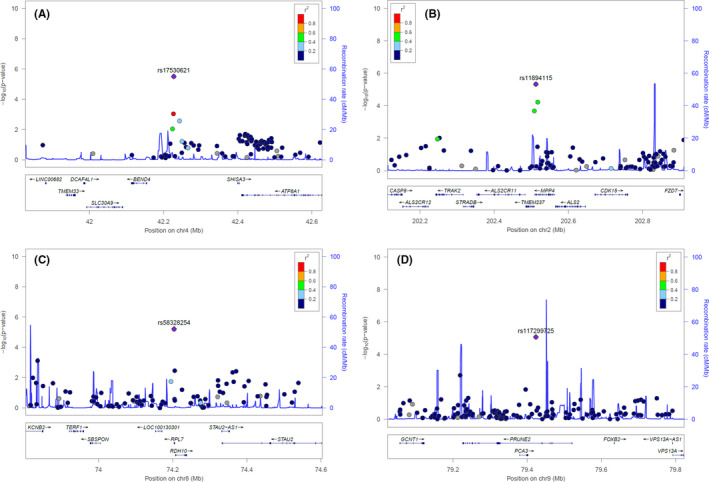
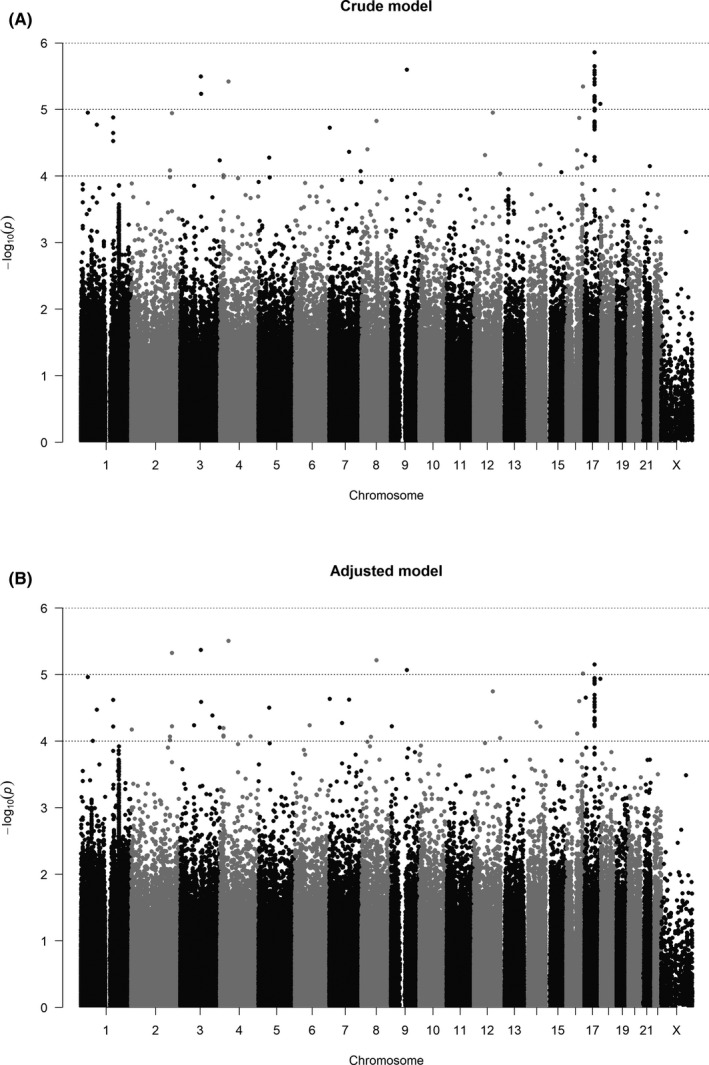
We performed a genome-wide association study to investigate the association between single nucleotide polymorphisms and anthracycline-induced cardiotoxicity (ACT) in patients diagnosed with early breast cancer. From January 2000 to December 2015, 8490 patients underwent breast surgery at the National Cancer Center in Korea. Patients who received doxorubicin (cumulative dose 240 mg/m -300 mg/m ) with or without trastuzumab as a neoadjuvant/adjuvant therapy were included in our cohort. Sixty-seven patients in our cohort were diagnosed with ACT. Clinical data, including age, body weight, height, cancer stage, trastuzumab treatment, comorbidities, and concomitant medications, were collected retrospectively. Patients were classified as having either persistent or transient ACT based on their clinical course. In total, 346 946 single nucleotide polymorphisms in 42 cases and 215 controls were tested in this study. Body mass index (BMI) ≥25 kg/m [odds ratio (OR) = 2.45, 95% confidence interval (CI), 1.23-4.88, P = .011] and trastuzumab use (OR = 2.40, 95% CI, 1.11-5.17, P = .026) were identified as significant risk factors. We found 7 genetic variants for ACT including rs17530621 (SHISA3, P = 3.10E-06), rs11894115 (MPP4, P = 4.71E-06), rs58328254 (RPL7, P = 6.09E-06), and rs117299725 (PRUNE2, P = 8.53E-06), although none of these variants reached the Bonferroni-corrected significance level when adjusted for BMI and trastuzumab use ( = α1.44E-07 based on 0.05/346 946). rs117299725 was a common variant when only the persistent ACT group was analyzed separately. It is meaningful that our study analyzed comprehensively the influence of genetic variation on ACT, along with some clinical factors in Asian breast cancer patients who received anthracycline with or without trastuzumab. Further research will be needed on candidate genetic variants found in this study.
我们进行了一项全基因组关联研究,以调查单核苷酸多态性与接受早期乳腺癌治疗的患者蒽环类药物诱导的心脏毒性(ACT)之间的关联。2000 年 1 月至 2015 年 12 月,韩国国家癌症中心有 8490 名患者接受了乳房手术。我们的队列包括接受多柔比星(累积剂量 240mg/m -300mg/m )联合或不联合曲妥珠单抗作为新辅助/辅助治疗的患者。我们的队列中有 67 名患者被诊断为 ACT。回顾性收集了包括年龄、体重、身高、癌症分期、曲妥珠单抗治疗、合并症和伴随药物在内的临床数据。根据临床过程,患者被分为持续性或短暂性 ACT。在这项研究中,共检测了 42 例病例和 215 例对照的 346946 个单核苷酸多态性。体重指数(BMI)≥25kg/m [比值比(OR)=2.45,95%置信区间(CI),1.23-4.88,P=0.011]和曲妥珠单抗的使用(OR=2.40,95%CI,1.11-5.17,P=0.026)被确定为显著危险因素。我们发现了 7 个与 ACT 相关的遗传变异,包括 rs17530621(SHISA3,P=3.10E-06)、rs11894115(MPP4,P=4.71E-06)、rs58328254(RPL7,P=6.09E-06)和 rs117299725(PRUNE2,P=8.53E-06),尽管当调整 BMI 和曲妥珠单抗的使用后,这些变异中没有一个达到 Bonferroni 校正的显著性水平(=α1.44E-07,基于 0.05/346946)。当单独分析持续性 ACT 组时,rs117299725 是一个常见的变异。我们的研究全面分析了遗传变异与亚洲接受蒽环类药物联合或不联合曲妥珠单抗治疗的乳腺癌患者 ACT 之间的关系,同时还分析了一些临床因素,这具有重要意义。还需要对本研究中发现的候选遗传变异进行进一步研究。