Department of Geriatric Center, Hainan General Hospital (Hainan Affiliated Hospital of Hainan Medical University), Haikou, 570311, PR China.
Department of General Surgery, Hainan General Hospital (Hainan Affiliated Hospital of Hainan Medical University), Haikou, 570311, PR China.
Complement Ther Clin Pract. 2020 May;39:101166. doi: 10.1016/j.ctcp.2020.101166. Epub 2020 Apr 1.
Different degrees of disorders are reported in respiratory function, physical function and psychological function in patients with corona virus disease 2019 (COVID-19), especially in elderly patients. With the experience of improved and discharged COVID-19 patients, timely respiratory rehabilitation intervention may improve prognosis, maximize functional preservation and improve quality of life (QoL), but there lacks of studies worldwide exploring the outcome of this intervention.
To investigate the effects of 6-week respiratory rehabilitation training on respiratory function, QoL, mobility and psychological function in elderly patients with COVID-19.
This paper reported the findings of an observational, prospective, quasi-experimental study, which totally recruited 72 participants, of which 36 patients underwent respiratory rehabilitation and the rest without any rehabilitation intervention. The following outcomes were measured: pulmonary function tests including plethysmography and diffusing lung capacity for carbon monoxide (DLCO), functional tests (6-min walk distance test), Quality of life (QoL) assessments (SF-36 scores), activities of daily living (Functional Independence Measure, FIM scores), and mental status tests (SAS anxiety and SDS depression scores).
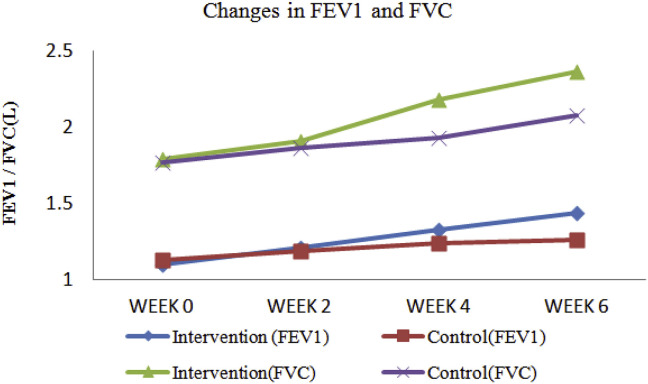
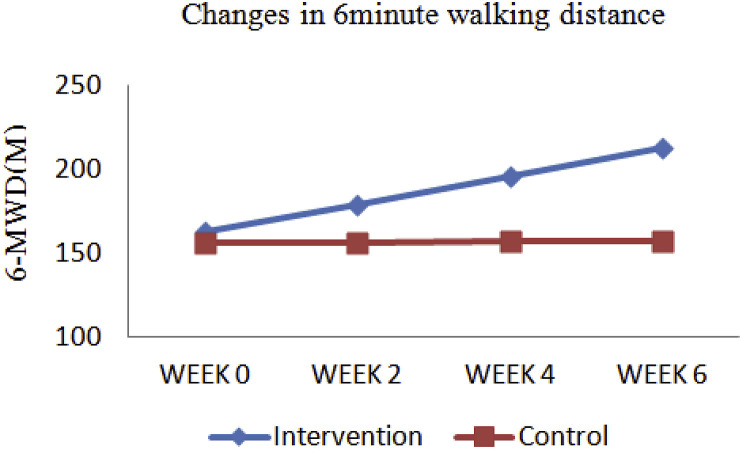
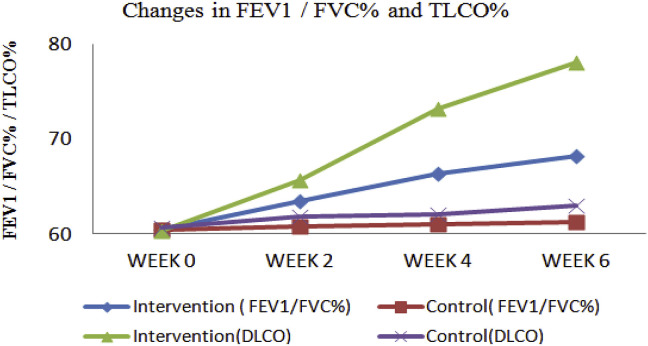
After 6 weeks of respiratory rehabilitation in the intervention group, there disclosed significant differences in FEV1(L), FVC(L), FEV1/FVC%, DLCO% and 6-min walk test. The SF-36 scores, in 8 dimensions, were statistically significant within the intervention group and between the two groups. SAS and SDS scores in the intervention group decreased after the intervention, but only anxiety had significant statistical significance within and between the two groups.
Six-week respiratory rehabilitation can improve respiratory function, QoL and anxiety of elderly patients with COVID-19, but it has little significant improvement on depression in the elderly.
新型冠状病毒病 2019(COVID-19)患者的呼吸功能、身体功能和心理功能存在不同程度的障碍,尤其是老年患者。随着 COVID-19 患者康复出院经验的增加,及时进行呼吸康复干预可能改善预后,最大限度地保留功能并提高生活质量(QoL),但全球范围内缺乏对这种干预效果的研究。
探讨 6 周呼吸康复训练对 COVID-19 老年患者呼吸功能、生活质量、活动能力和心理功能的影响。
本研究为观察性、前瞻性、准实验研究,共纳入 72 例患者,其中 36 例患者接受呼吸康复治疗,其余患者未接受任何康复干预。评估以下指标:肺功能测试(体描法和一氧化碳弥散量)、功能测试(6 分钟步行试验)、生活质量(SF-36 评分)、日常生活活动能力(功能独立性评定量表,FIM 评分)和心理状态测试(焦虑自评量表,SAS 评分和抑郁自评量表,SDS 评分)。
干预组在进行 6 周呼吸康复后,FEV1(L)、FVC(L)、FEV1/FVC%、DLCO%和 6 分钟步行试验均有显著差异。干预组的 SF-36 评分在 8 个维度上均有统计学意义,且组间比较也有统计学意义。干预组的 SAS 和 SDS 评分在干预后下降,但只有焦虑在组内和组间均有显著统计学意义。
6 周呼吸康复可改善 COVID-19 老年患者的呼吸功能、生活质量和焦虑,但对老年患者的抑郁改善作用不大。