Institut Universitaire de Cardiologie et de Pneumologie de Québec/Québec Heart and Lung Institute Université Laval Québec City Québec Canada.
J Am Heart Assoc. 2020 May 18;9(10):e015610. doi: 10.1161/JAHA.119.015610. Epub 2020 May 8.
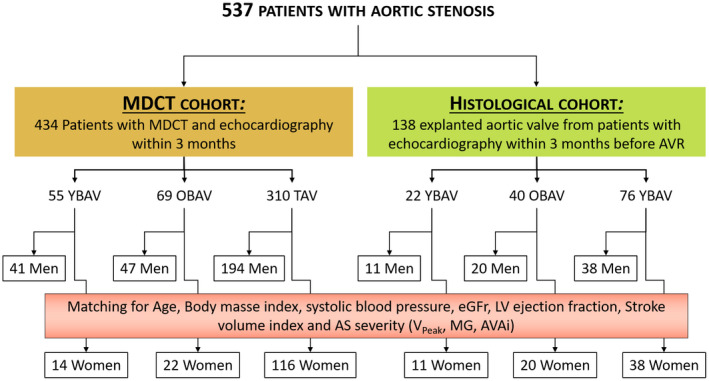
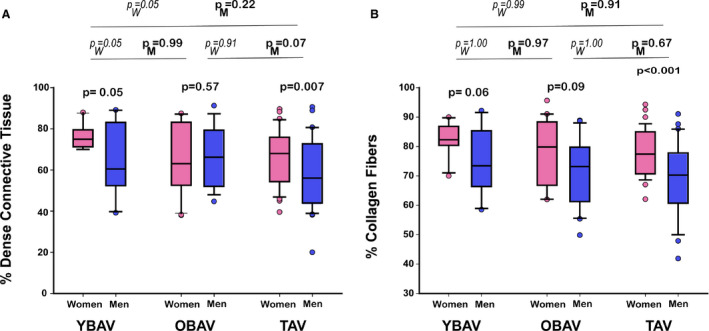
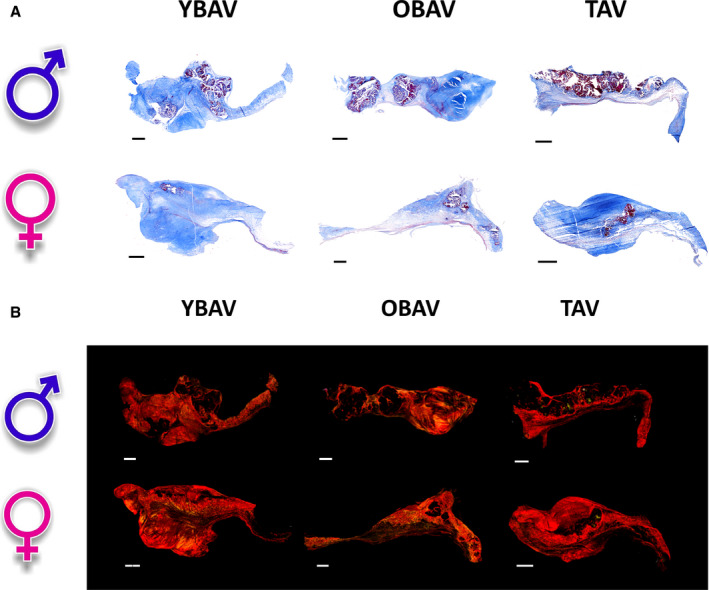
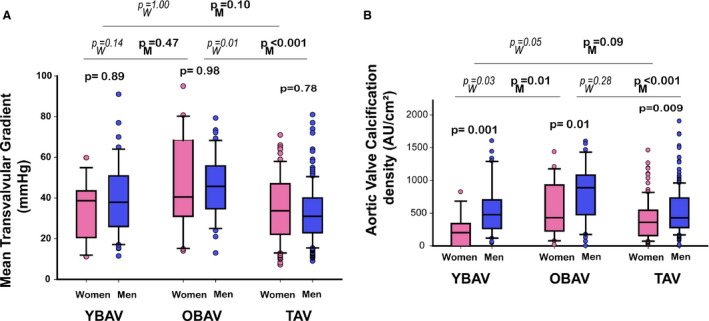
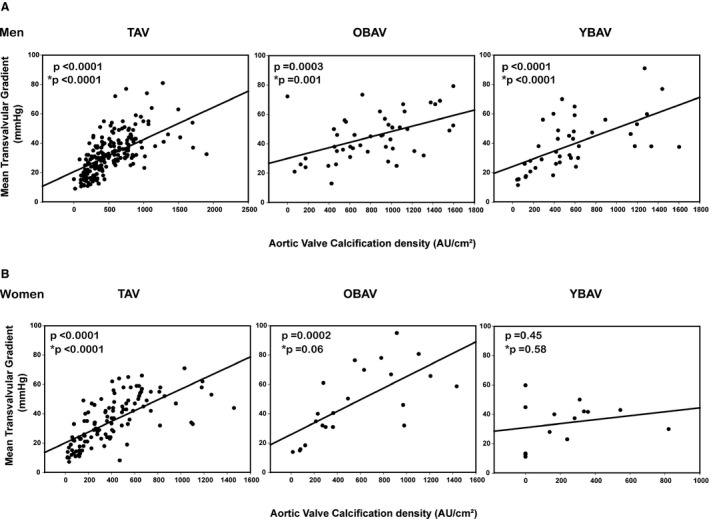
Background In calcific aortic valve disease on tricuspid aortic valves (TAVs), men have higher aortic valve calcification and less fibrosis than women. However, little is known in bicuspid aortic valves (BAV). We thus aimed to investigate the impact of age, sex, and valve phenotype (TAVs versus BAVs) on fibro-calcific remodeling in calcific aortic valve disease. Methods and Results We included 2 cohorts: 411 patients who underwent multidetector computed tomography (37% women) for aortic valve calcification density assessment and 138 explanted aortic valves (histological cohort; 50% women). The cohorts were divided in younger (<60 years old) or older patients with BAV (≥60 years old), and TAV patients. In each group, women and men were matched. Women presented less aortic valve calcification density than men in each group of the multidetector computed tomography cohort (all ≤0.01). Moreover, in women, younger patients with BAV had the lowest aortic valve calcification density (both =0.02). In multivariate analysis, aortic valve calcification density correlated with age (β estimate±standard error: 6.5±1.8; =0.0004) and male sex (109.2±18.4; <0.0001), and there was a trend with TAVs (41.5±23.0; =0.07). Women presented a higher collagen content than men (77.8±10.8 versus 69.9±12.9%; <0.001) in the entire cohort. In women, younger patients with BAV had denser connective tissue than TAV and older patients with BAV (both ≤0.05), while no difference was observed between men. Conclusions In calcific aortic valve disease, women had less calcification and more fibrotic remodeling than men, regardless of the phenotype of the valve or age of the patient. Moreover, younger women with BAVs had less valve calcification. Thus, mineralization/fibrosis of the aortic valve is likely to have sex/age-specific mechanisms and be influenced by the valve morphology.
在三尖瓣主动脉瓣(TAV)的钙化性主动脉瓣疾病中,男性的主动脉瓣钙化程度高于女性,但纤维化程度低于女性。然而,在二叶主动脉瓣(BAV)中知之甚少。因此,我们旨在研究年龄、性别和瓣膜表型(TAV 与 BAV)对钙化性主动脉瓣疾病中纤维-钙化重塑的影响。
我们纳入了两个队列:411 例接受多排螺旋 CT(37%为女性)评估主动脉瓣钙化密度的患者和 138 例主动脉瓣标本(组织学队列;50%为女性)。两个队列根据年龄(<60 岁与≥60 岁)和瓣膜表型(TAV 与 BAV)分为年轻和老年患者。在每组中,女性和男性进行匹配。在多排螺旋 CT 队列的每个组中,女性的主动脉瓣钙化密度均低于男性(均<0.01)。此外,在女性中,年轻的 BAV 患者的主动脉瓣钙化密度最低(均=0.02)。多变量分析显示,主动脉瓣钙化密度与年龄(β估计值±标准误差:6.5±1.8;=0.0004)和男性性别(109.2±18.4;<0.0001)相关,且与 TAV 呈趋势相关(41.5±23.0;=0.07)。在整个队列中,女性的胶原含量高于男性(77.8±10.8 与 69.9±12.9%;<0.001)。在女性中,年轻的 BAV 患者的结缔组织密度高于 TAV 和老年的 BAV 患者(均≤0.05),而男性之间无差异。
在钙化性主动脉瓣疾病中,无论瓣膜表型或患者年龄如何,女性的钙化程度低于男性,纤维化重塑程度高于男性。此外,年轻的 BAV 女性的瓣膜钙化程度较低。因此,主动脉瓣的矿化/纤维化可能具有性别/年龄特异性机制,并受瓣膜形态的影响。