Margolis Amy, Rice Tara, Banikya-Leaseburg Mousumi, Person Ann E, Clary Elizabeth, Zief Susan, Adamek Katie, Harding Jessica F
Division of Program Development and Operations, Office of Population Affairs, Department of Health and Human Services (HHS), 1101 Wootton Parkway, Suite 200, Rockville, MD, 20850, USA.
Mathematica, P.O. Box 2393, Princeton, NJ, 08543-2393, USA.
Matern Child Health J. 2020 Sep;24(Suppl 2):76-83. doi: 10.1007/s10995-020-02922-6.
The Pregnancy Assistance Fund (PAF) program funds states and tribes to provide a wide range of services to improve health, social, educational, and economic outcomes for expectant and parenting teens and young adults, their children, and their families. This introductory article to the Maternal and Child Health Journal supplement Supporting Expectant and Parenting Teens: The Pregnancy Assistance Fund provides a description of the PAF program, including the program goals and structure, participants and communities served, and services provided; presents data on the reach and success of the program; and describes lessons learned from PAF grantees on how to enhance programs and services to have the best outcomes for expectant and parenting young families.
Performance measure data are used to describe the reach and success of the PAF program, and implementation experiences and lessons learned from PAF grantees were gathered through a standardized review of grantee applications and from interviews with grant administrators.
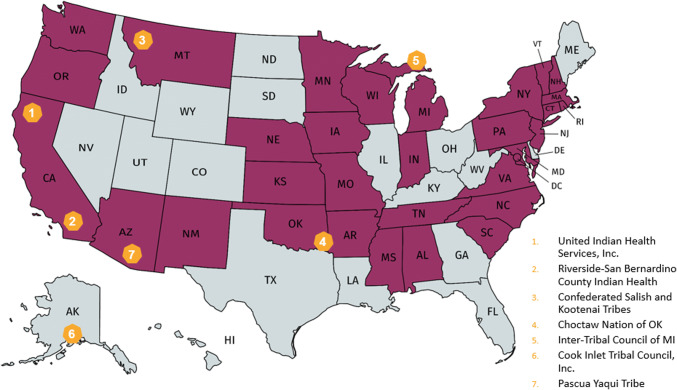
Since its establishment in 2010, the PAF program has served 109,661 expectant and parenting teens, young adults, and their families across 32 states, including the District of Columbia, and seven tribal organizations; established more than 3400 partnerships; and trained more than 7500 professionals. Expectant and parenting teens and young adults who participated in the PAF program stay in high school, make plans to attend college, and have low rates of repeat pregnancy within a year.
Expectant and parenting teens and young adults in the PAF program demonstrated success in meeting their educational goals and preventing repeat unintended pregnancies. In addition, the staff who implemented the PAF programs learned many lessons for how to enhance programs and services to have the best outcomes for expectant and parenting young families, including creating partnerships to meet the multifaceted needs of teen parents and using evidence-based programs to promote program sustainability.
怀孕援助基金(PAF)项目为各州和部落提供资金,以提供广泛的服务,改善准父母青少年和年轻成年人及其子女和家庭的健康、社会、教育和经济状况。这篇发表于《母婴健康杂志》增刊《支持准父母青少年:怀孕援助基金》的介绍性文章描述了PAF项目,包括项目目标和结构、服务的参与者和社区以及提供的服务;展示了该项目的覆盖范围和成功数据;并介绍了从PAF受助者那里学到的关于如何加强项目和服务,以便为准父母年轻家庭带来最佳结果的经验教训。
绩效衡量数据用于描述PAF项目的覆盖范围和成功情况,通过对受助者申请的标准化审查以及与拨款管理人员的访谈,收集了PAF受助者的实施经验和经验教训。
自2010年设立以来,PAF项目已为包括哥伦比亚特区在内的32个州的109,661名准父母青少年、年轻成年人及其家庭以及7个部落组织提供了服务;建立了3400多个合作伙伴关系;培训了7500多名专业人员。参与PAF项目的准父母青少年和年轻成年人继续留在高中,制定上大学的计划,并且一年内再次怀孕的比率较低。
参与PAF项目的准父母青少年和年轻成年人在实现其教育目标和预防意外再次怀孕方面取得了成功。此外,实施PAF项目的工作人员学到了许多关于如何加强项目和服务,以便为准父母年轻家庭带来最佳结果的经验教训,包括建立合作伙伴关系以满足青少年父母的多方面需求,以及使用循证项目来促进项目的可持续性。