Chakraborty Adri, Scogin Caroline K, Rizwan Kinza, Morley Thomas S, Rutkowski Joseph M
Division of Lymphatic Biology, Department of Medical Physiology, Texas A&M University College of Medicine, Bryan, TX, United States.
Touchstone Diabetes Center, Department of Internal Medicine, University of Texas Southwestern Medical Center, Dallas, TX, United States.
Front Physiol. 2020 Apr 22;11:363. doi: 10.3389/fphys.2020.00363. eCollection 2020.
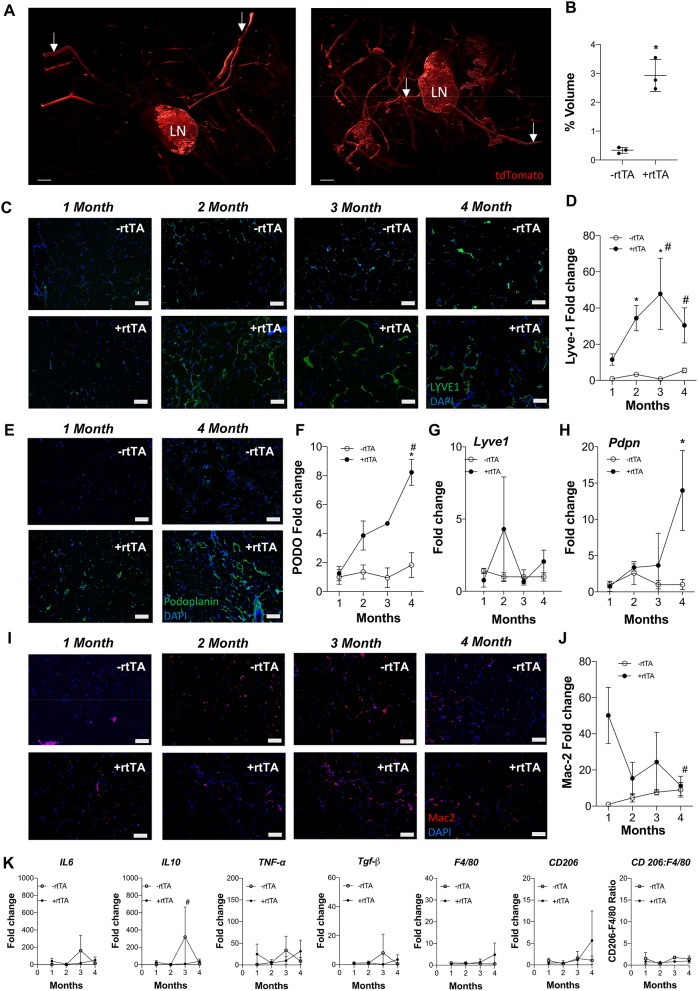
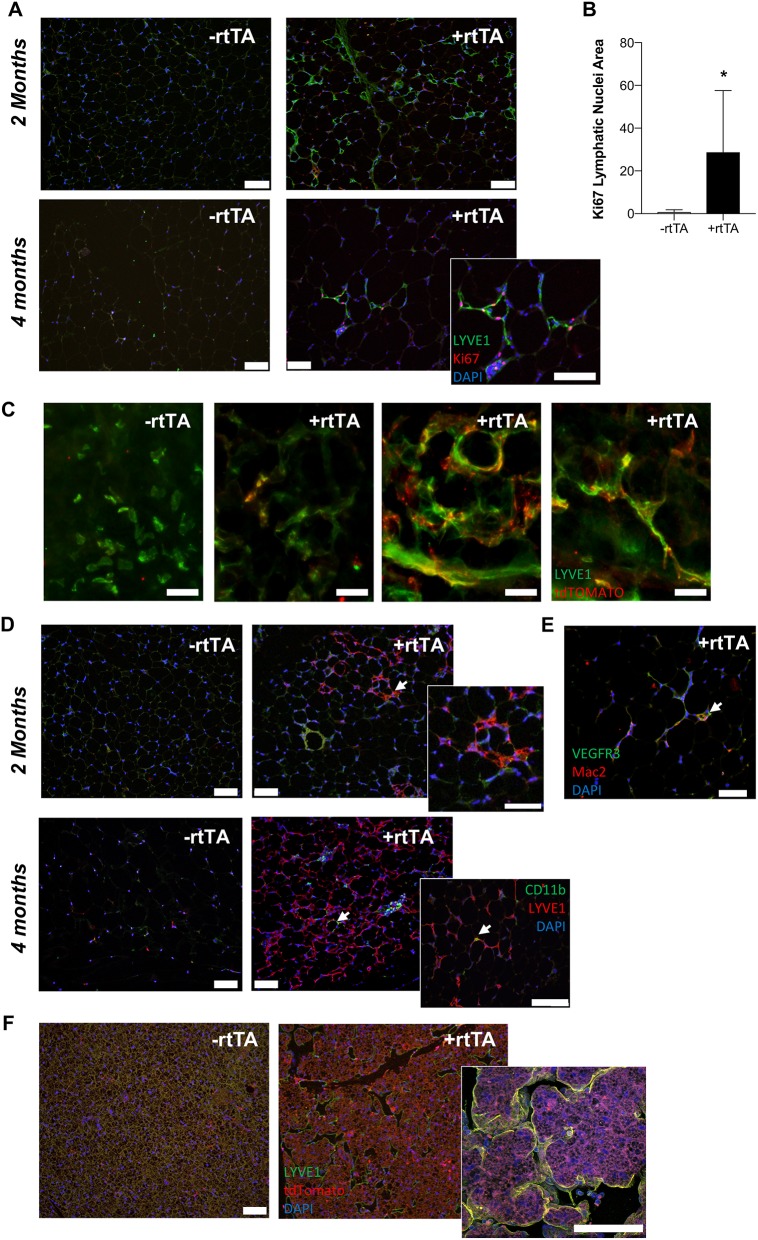
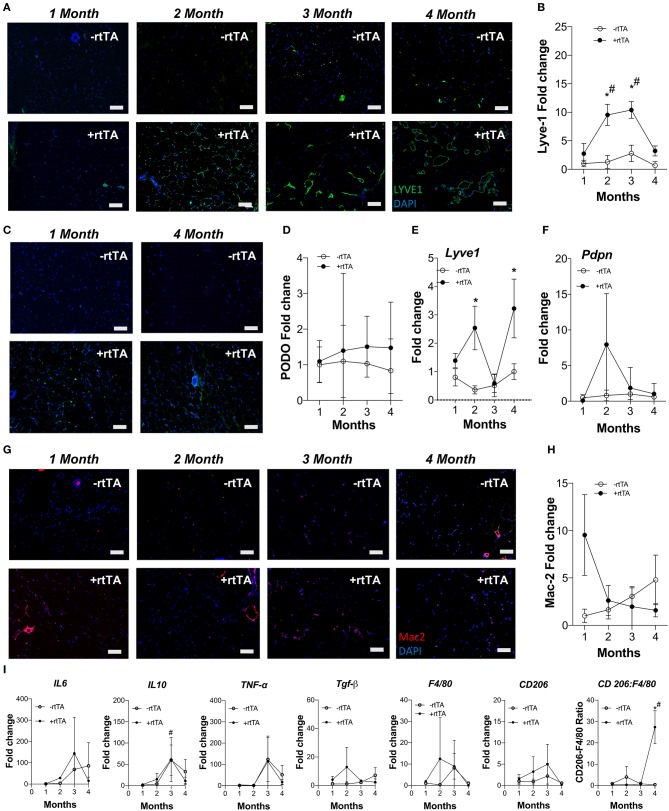
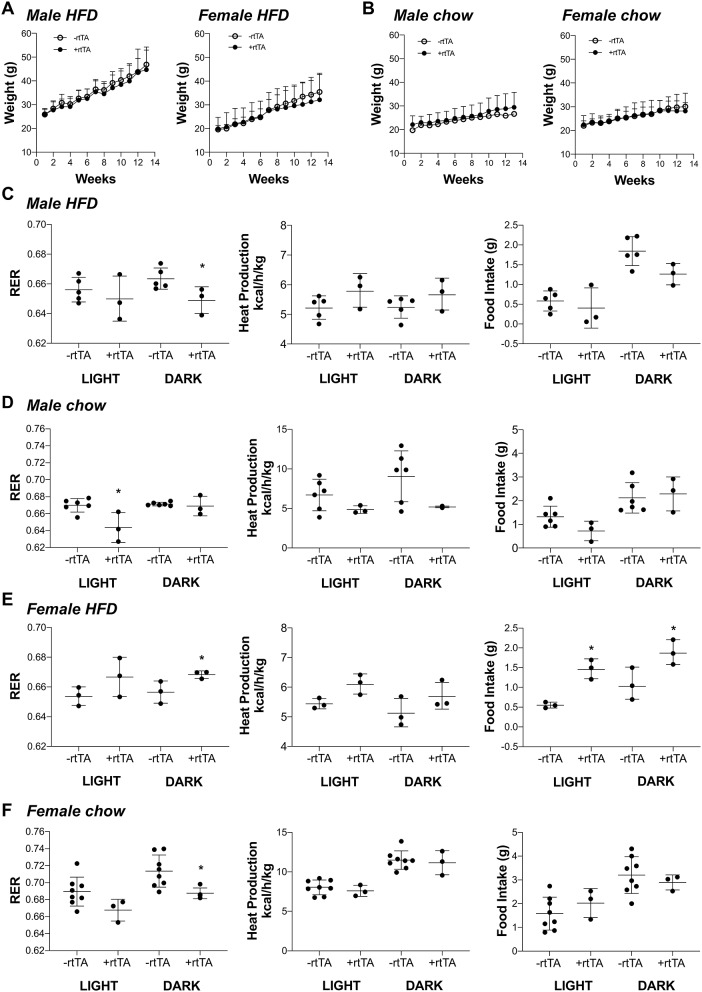
The metabolic consequences of obesity arise from local inflammation within expanding adipose tissue. In pre-clinical studies targeting various inflammatory factors, systemic metabolism can be improved through reduced adipose inflammation. Lymphatic vessels are a critical regulator of inflammation through roles in fluid and macromolecule transport and immune cell trafficking and immunomodulation. Lymphangiogenesis, the expansion of the lymphatic network, is often a necessary step in restoring tissue homeostasis. Using Adipo-VD mice, a model of adipocyte-specific, inducible overexpression of the potent lymphangiogenic factor vascular endothelial growth factor-D (VEGF-D), we previously identified that dense adipose lymphatics reduced immune accumulation and improved glucose homeostasis in obesity. On chow diet, however, Adipo-VD mice demonstrated increased adipose tissue immune cells, fibrosis, and inflammation. Here, we characterize the time course of resident macrophage accumulation and lymphangiogenesis in male and female Adipo-VD mice fed chow and high fat diets, examining multiple adipose depots over 4 months. We find that macrophage infiltration occurs early, but resolves with concurrent lymphatic expansion that begins robustly after 1 month of VEGF-D overexpression in white adipose tissue. In obesity, female Adipo-VD mice exhibit reduced lymphangiogenesis and maintain a more glycolytic metabolism compared to Adipo-VD males and their littermates. Adipose lymphatic structures appear to expand by a lymphvasculogenic mechanism involving lymphatic endothelial cell proliferation and organization with a cell source we that failed to identify; hematopoietic cells afford minimal structural contribution. While a net positive effect occurs in Adipo-VD mice, adipose tissue lymphangiogenesis demonstrates a dichotomous, and time-dependent, inflammatory tissue remodeling response.
肥胖的代谢后果源于脂肪组织扩张时的局部炎症。在针对各种炎症因子的临床前研究中,可通过减轻脂肪炎症来改善全身代谢。淋巴管在液体和大分子运输、免疫细胞运输及免疫调节中发挥作用,是炎症的关键调节因子。淋巴管生成,即淋巴网络的扩张,通常是恢复组织稳态的必要步骤。我们先前使用脂肪特异性、可诱导性过表达强效淋巴管生成因子血管内皮生长因子-D(VEGF-D)的Adipo-VD小鼠模型,发现密集的脂肪淋巴管可减少肥胖时的免疫细胞聚集并改善葡萄糖稳态。然而,在正常饮食情况下,Adipo-VD小鼠的脂肪组织免疫细胞、纤维化和炎症却有所增加。在此,我们描述了喂食正常饮食和高脂饮食的雄性和雌性Adipo-VD小鼠中常驻巨噬细胞聚集和淋巴管生成的时间进程,在4个月内检查了多个脂肪库。我们发现巨噬细胞浸润发生较早,但随着淋巴管的同时扩张而消退,这种扩张在白色脂肪组织中VEGF-D过表达1个月后开始显著。在肥胖状态下,与Adipo-VD雄性小鼠及其同窝小鼠相比,雌性Adipo-VD小鼠的淋巴管生成减少,且维持更具糖酵解性的代谢。脂肪淋巴结构似乎通过一种淋巴管生成机制扩张,该机制涉及淋巴管内皮细胞的增殖和组织,但其细胞来源我们尚未确定;造血细胞对结构的贡献极小。虽然Adipo-VD小鼠出现了净正向效应,但脂肪组织淋巴管生成表现出一种二分的、且依赖时间的炎症组织重塑反应。