Department of Comparative Medicine, Yale School of Medicine, New Haven, CT 06520, USA; Department of Immunobiology, Yale School of Medicine, New Haven, CT 06520, USA.
Genomics and Immunoregulation, LIMES-Institute, University of Bonn, 53115 Bonn, Germany; PRECISE Platform for Single Cell Genomics and Epigenomics at the University of Bonn and the German Center for Neurodegenerative Diseases, Bonn, Germany.
Cell Metab. 2019 Dec 3;30(6):1024-1039.e6. doi: 10.1016/j.cmet.2019.10.006. Epub 2019 Nov 14.
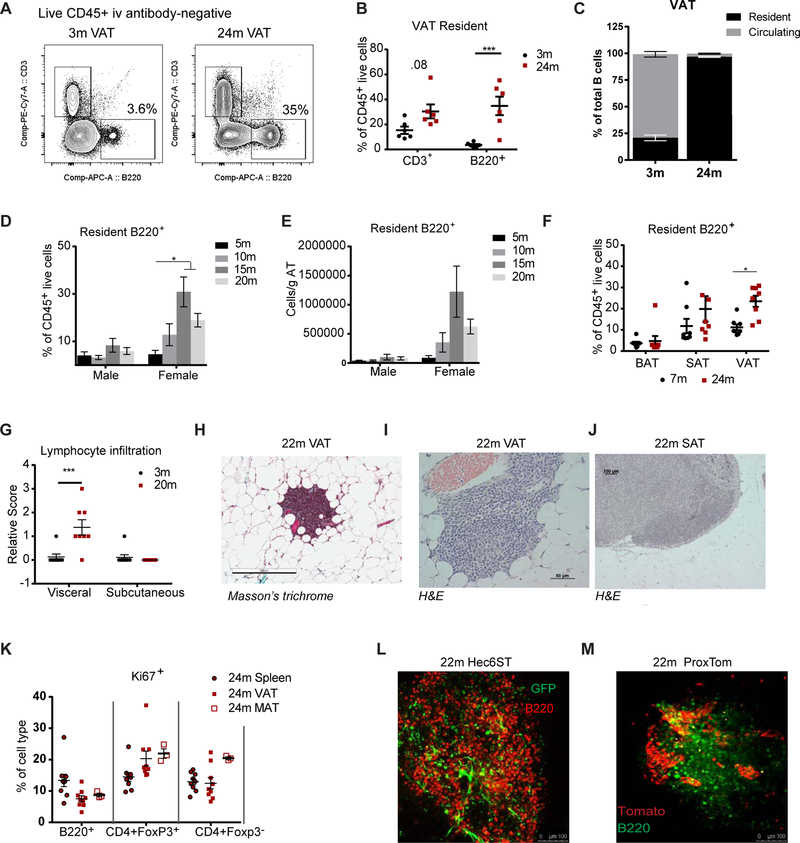
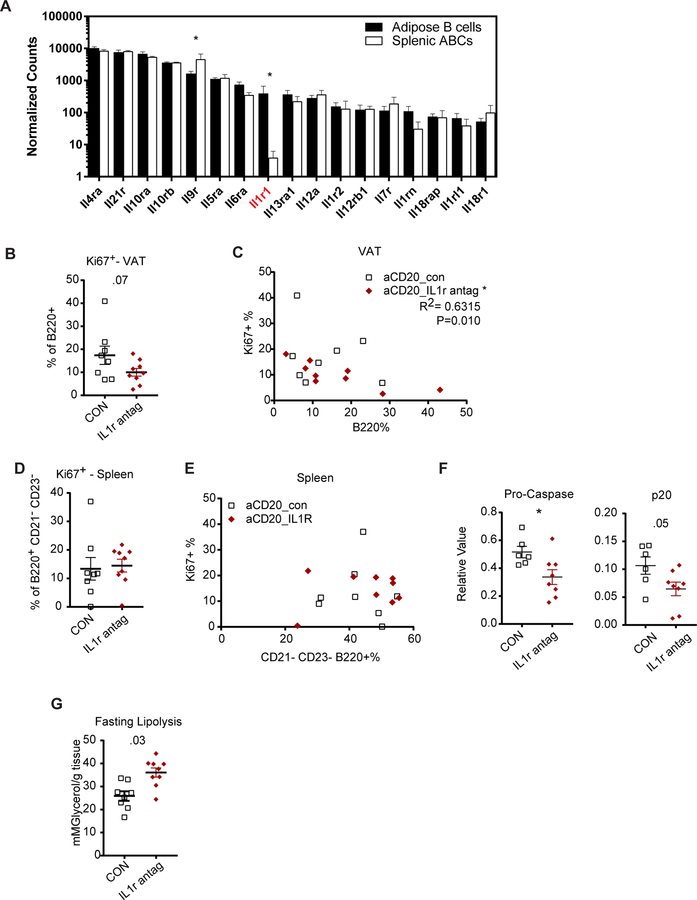
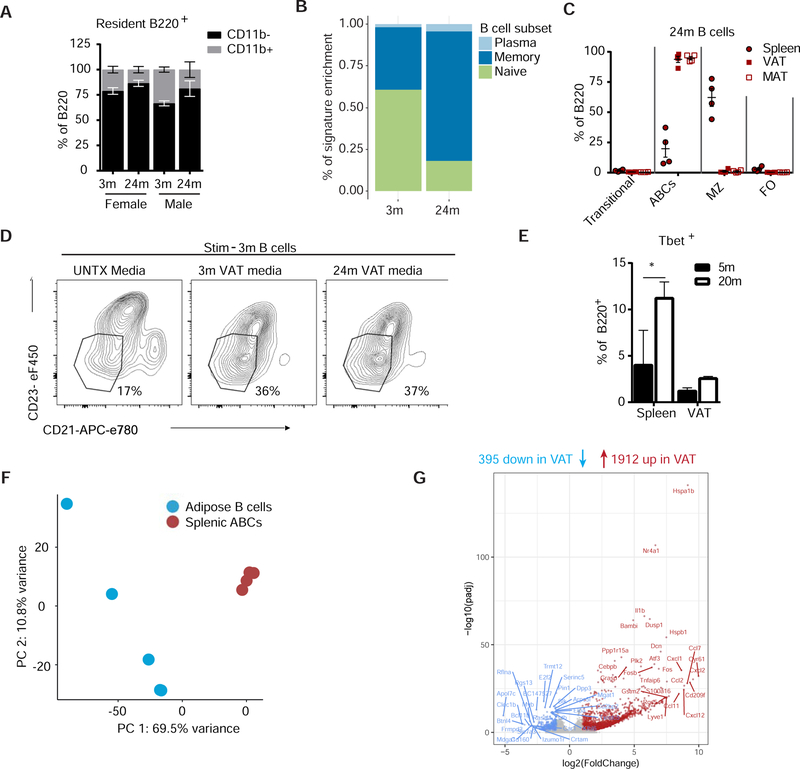
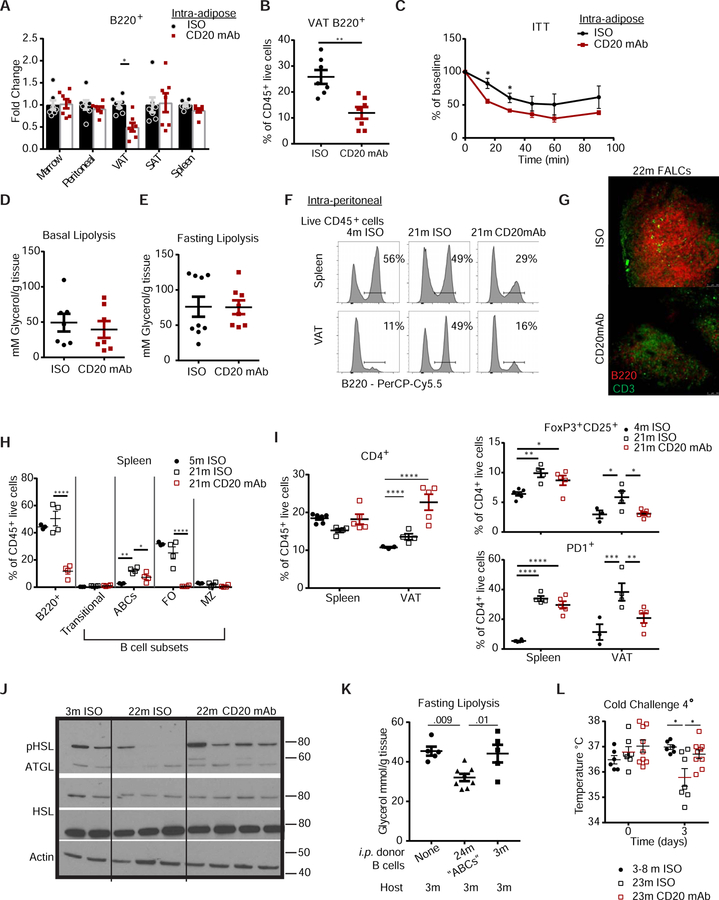
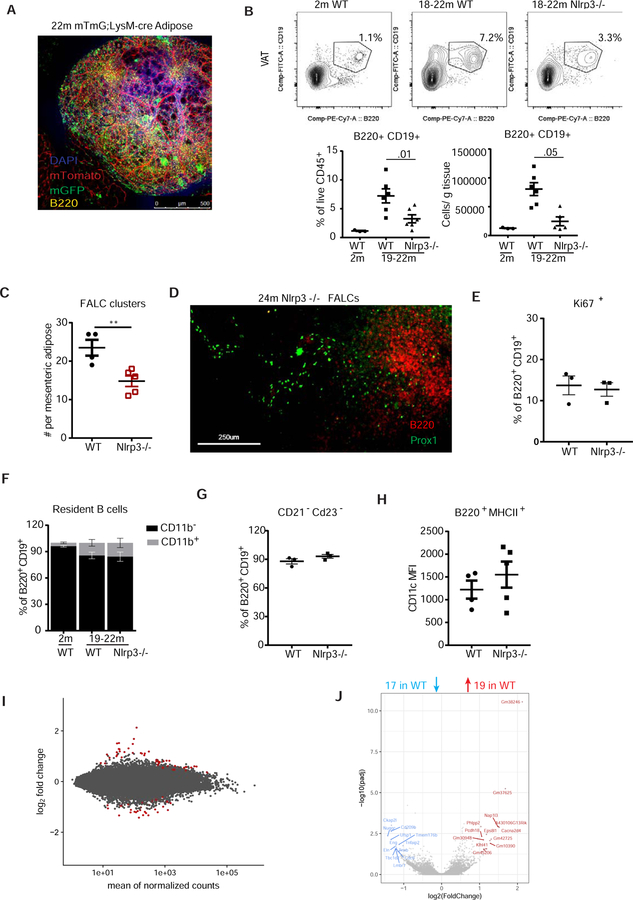
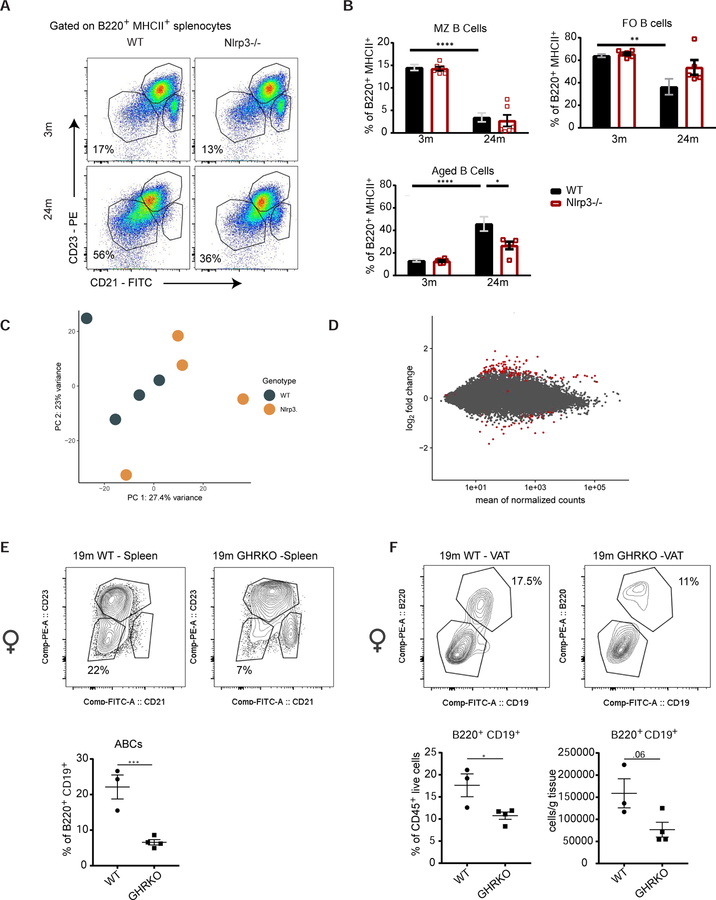
During aging, visceral adiposity is often associated with alterations in adipose tissue (AT) leukocytes, inflammation, and metabolic dysfunction. However, the contribution of AT B cells in immunometabolism during aging is unexplored. Here, we show that aging is associated with an expansion of a unique population of resident non-senescent aged adipose B cells (AABs) found in fat-associated lymphoid clusters (FALCs). AABs are transcriptionally distinct from splenic age-associated B cells (ABCs) and show greater expansion in female mice. Functionally, whole-body B cell depletion restores proper lipolysis and core body temperature maintenance during cold stress. Mechanistically, the age-induced FALC formation, AAB, and splenic ABC expansion is dependent on the Nlrp3 inflammasome. Furthermore, AABs express IL-1R, and inhibition of IL-1 signaling reduces their proliferation and increases lipolysis in aging. These data reveal that inhibiting Nlrp3-dependent B cell accumulation can be targeted to reverse metabolic impairment in aging AT.
随着年龄的增长,内脏脂肪往往与脂肪组织(AT)白细胞、炎症和代谢功能障碍的改变有关。然而,AT B 细胞在衰老过程中的免疫代谢中的贡献尚不清楚。在这里,我们表明,衰老与在脂肪相关淋巴簇(FALC)中发现的常驻非衰老脂肪 B 细胞(AAB)的独特群体的扩张有关。AAB 在转录上与脾脏年龄相关的 B 细胞(ABC)不同,并且在雌性小鼠中表现出更大的扩张。功能上,全身性 B 细胞耗竭可恢复冷应激期间适当的脂肪分解和核心体温维持。从机制上讲,Nlrp3 炎性小体依赖于年龄诱导的 FALC 形成、AAB 和脾 ABC 的扩张。此外,AAB 表达 IL-1R,抑制 IL-1 信号可减少其增殖并增加衰老时的脂肪分解。这些数据表明,抑制 Nlrp3 依赖性 B 细胞积累可以作为靶向治疗,以逆转衰老 AT 中的代谢损伤。