Sgouros Georgios, Mallouchos Athanasios, Filippousi Maria-Evangelia, Banilas Georgios, Nisiotou Aspasia
Institute of Technology of Agricultural Products, Hellenic Agricultural Organization "Demeter", 14123 Lykovryssi, Greece.
Department of Molecular Biology & Genetics, Democritus University of Thrace, 68100 Alexandroupolis, Greece.
Foods. 2020 May 7;9(5):595. doi: 10.3390/foods9050595.
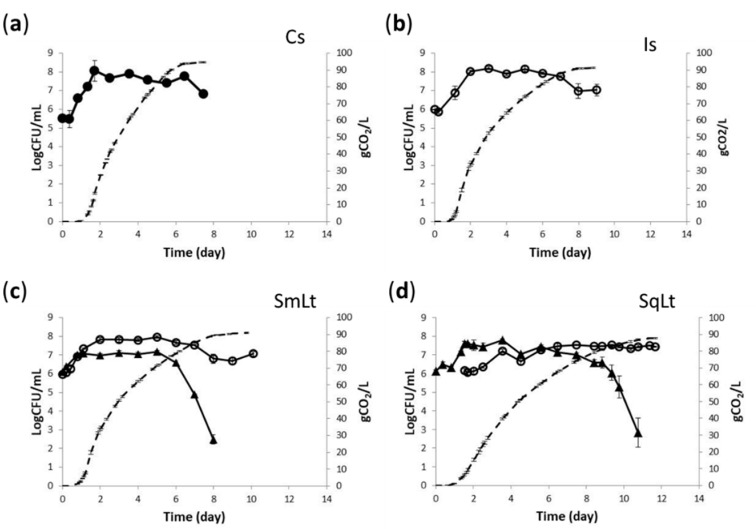
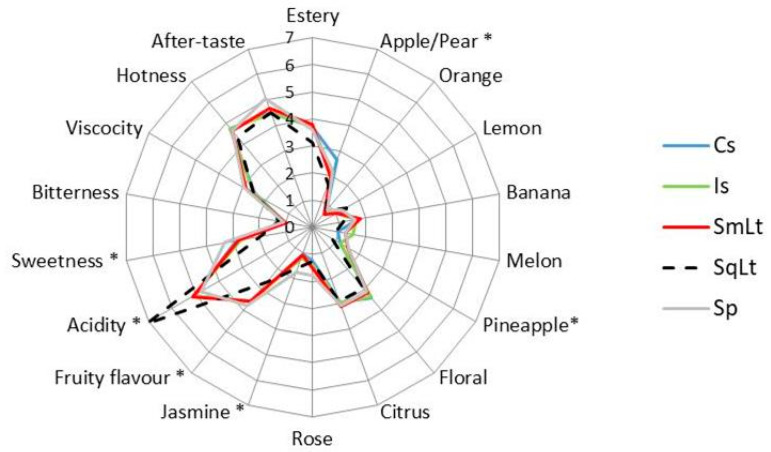
Lactic acid production is an important feature of the yeast that has gained increasing interest in winemaking. In particular, in light of climate change, the biological acidification and ethanol reduction by the use of selected yeast strains may counteract the effect of global warming in wines. Here, the enological potential of a high lactate-producing strain (P-HO1) in mixed fermentations with was examined. Among the different inoculation schemes evaluated, the most successful implantation of was accomplished by sequential inoculation of , i.e., at 1% vol. ethanol. P-HO1produced the highest levels of lactic acid ever recorded in mixed fermentations (10.4 g/L), increasing thereby the acidity and reducing ethanol by 1.6% vol. was also associated with increases in ethyl isobutyrate (strawberry aroma), free SO, organoleptically perceived citric nuances and aftertaste. To start uncovering the molecular mechanisms of lactate biosynthesis in , the relative expressions of the three lactate dehydrogenase () paralogous genes, which encode the key enzyme for lactate biosynthesis, along with the alcohol dehydrogenase paralogs (s) were determined. Present results point to the possible implication of , but not of other or genes, in the high production of lactic acid in certain strains at the expense of ethanol. Taken together, the important enological features of P-HO1 highlighted here, and potentially of other strains, indicate its great importance in modern winemaking, particularly in the light of the upcoming climate change and its consequences in the grape/wine system.
乳酸生成是酵母的一个重要特性,在葡萄酒酿造中越来越受到关注。特别是鉴于气候变化,使用特定酵母菌株进行生物酸化和乙醇还原可能会抵消全球变暖对葡萄酒的影响。在此,研究了一种高产乳酸菌株(P-HO1)在与[未提及的物质]混合发酵中的酿酒潜力。在评估的不同接种方案中,[未提及的物质]最成功的接种是通过[未提及的物质]的顺序接种实现的,即在1%(体积)乙醇时接种。P-HO1在混合发酵中产生了有记录以来最高水平的乳酸(10.4克/升),从而提高了酸度并使乙醇含量降低了1.6%(体积)。[未提及的物质]还与异丁酸乙酯(草莓香气)、游离二氧化硫、感官上可察觉的柠檬酸细微差别和余味的增加有关。为了开始揭示[未提及的物质]中乳酸生物合成的分子机制,测定了编码乳酸生物合成关键酶的三个乳酸脱氢酶(LDH)同源基因以及醇脱氢酶同源基因的相对表达。目前的结果表明,在某些菌株中,以乙醇为代价的高乳酸产量可能与[未提及的物质]有关,而与其他LDH或[未提及的物质]基因无关。综上所述,这里突出显示的P-HO1以及潜在的其他[未提及的物质]菌株的重要酿酒特性,表明其在现代葡萄酒酿造中具有重要意义,特别是鉴于即将到来的气候变化及其对葡萄/葡萄酒系统的影响。