Gruner Katrin, Esser Tobias, Acevedo-Garcia Johanna, Freh Matthias, Habig Michael, Strugala Roxana, Stukenbrock Eva, Schaffrath Ulrich, Panstruga Ralph
Unit of Plant Molecular Cell Biology, Institute for Biology I, RWTH Aachen University, Worringerweg 1, 52056 Aachen, Germany.
Department of Plant Physiology, Institute for Biology III, RWTH Aachen, Worringerweg 1, 52056 Aachen, Germany.
Genes (Basel). 2020 May 7;11(5):517. doi: 10.3390/genes11050517.
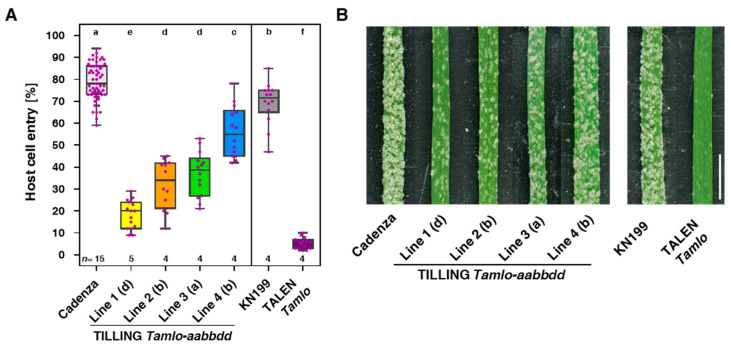
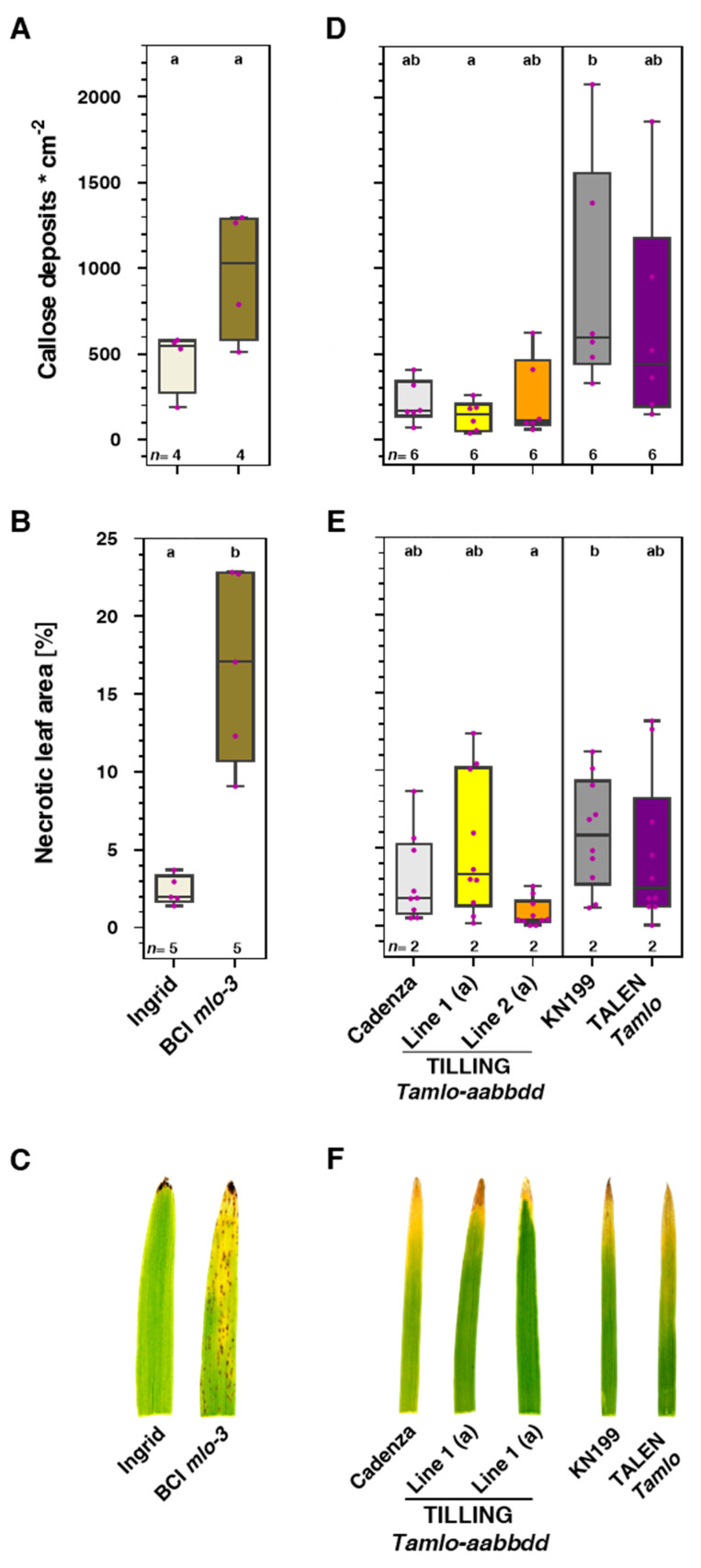
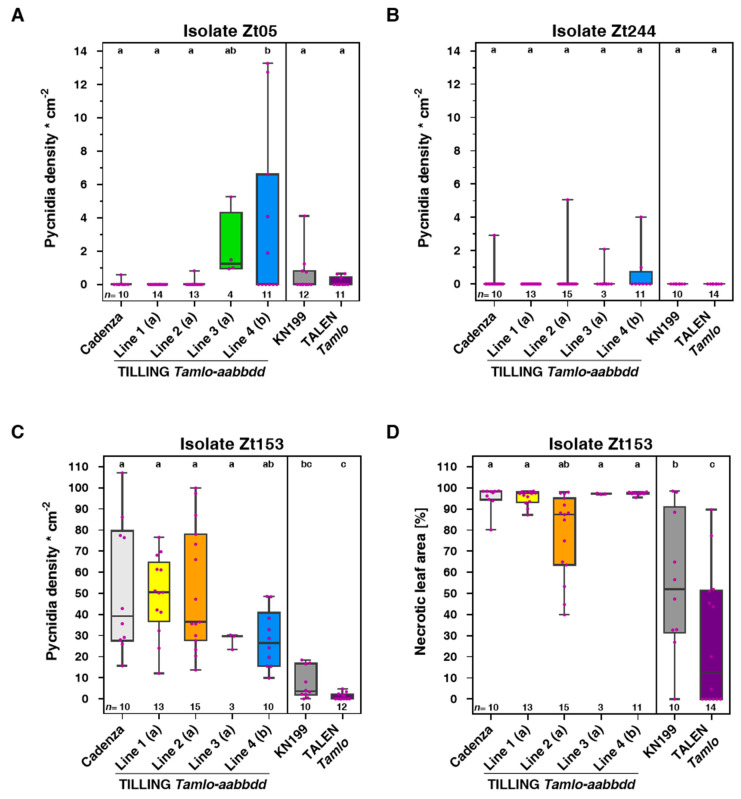
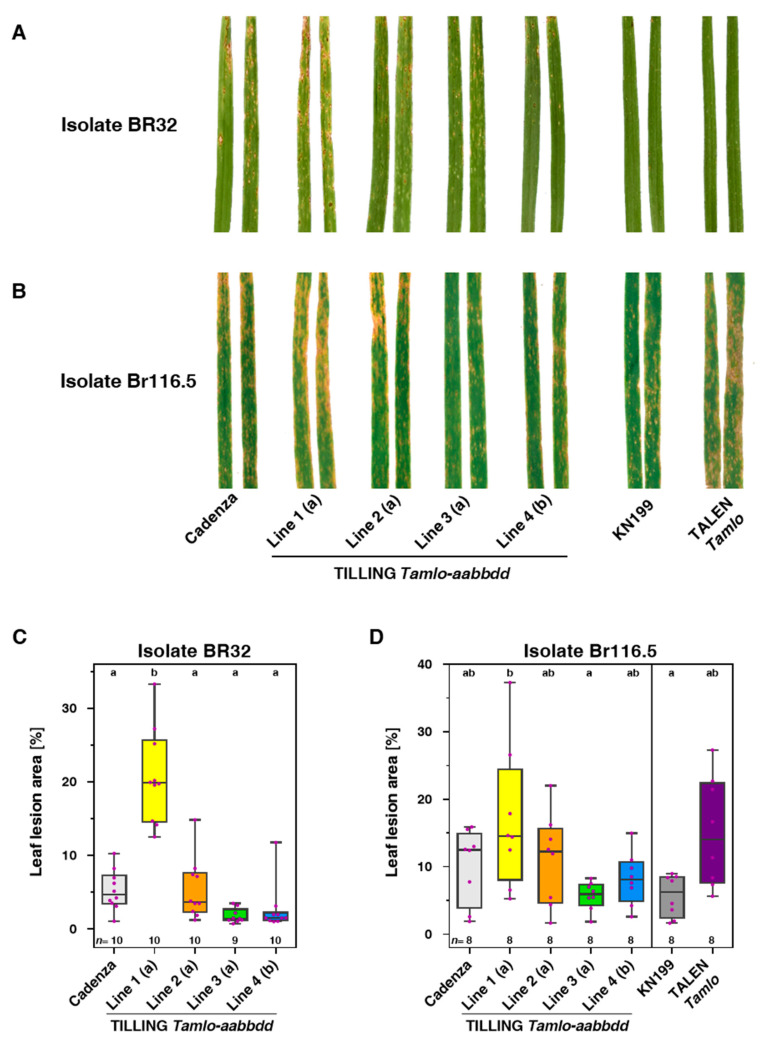
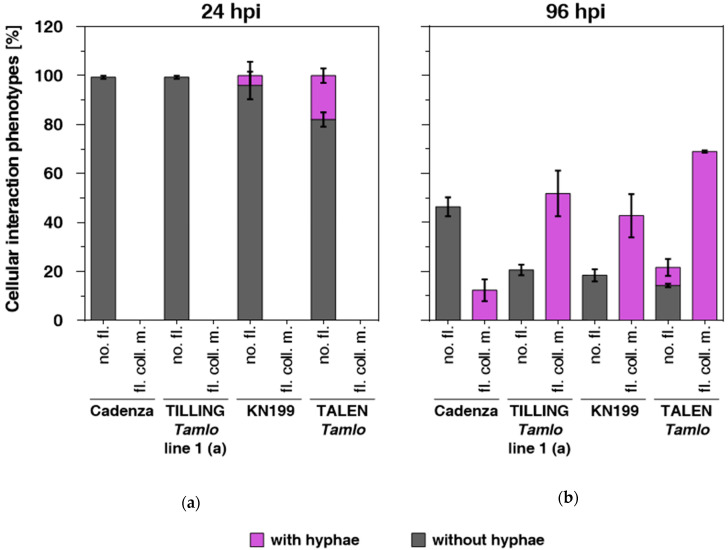
Barley mutants are well known for their profound resistance against powdery mildew disease. Recently, mutant plants were generated in hexaploid bread wheat () with the help of transgenic (transcription-activator-like nuclease, TALEN) and non-transgenic (targeted induced local lesions in genomes, TILLING) biotechnological approaches. While full-gene knockouts in the three wheat () homoeologs, created via TALEN, confer full resistance to the wheat powdery mildew pathogen ( f.sp. ), the currently available TILLING-derived missense mutants provide only partial protection against powdery mildew attack. Here, we studied the infection phenotypes of TALEN- and TILLING-derived plants to the two hemibiotrophic pathogens , causing Septoria leaf blotch in wheat, and pv. (), the causal agent of wheat blast disease. While plants showed unaltered outcomes upon challenge with , we found evidence for allele-specific levels of enhanced susceptibility to , with stronger powdery mildew resistance correlated with more invasive growth by the blast pathogen. Surprisingly, unlike barley mutants, young wheat mutant plants do not show undesired pleiotropic phenotypes such as spontaneous callose deposits in leaf mesophyll cells or signs of early leaf senescence. In conclusion, our study provides evidence for allele-specific levels of enhanced susceptibility of plants to the hemibiotrophic wheat pathogen .
大麦突变体因其对白粉病具有高度抗性而闻名。最近,借助转基因(转录激活样核酸酶,TALEN)和非转基因(基因组靶向诱导局部损伤,TILLING)生物技术方法,在六倍体面包小麦()中培育出了突变植株。通过TALEN技术使小麦的三个同源基因完全敲除后,植株对白粉病病原体( f.sp. )具有完全抗性,而目前可用的TILLING技术产生的错义突变体仅能提供部分保护以抵御白粉病侵袭。在此,我们研究了TALEN技术和TILLING技术培育出的植株对两种半活体营养型病原体的感染表型,这两种病原体分别是引起小麦叶斑病的,以及小麦条锈病的病原体pv. ()。在用挑战时,植株表现出未改变的结果,但我们发现了对易感性增强存在等位基因特异性水平的证据,白粉病抗性越强,条锈病病原体的侵入性生长就越强。令人惊讶的是,与大麦突变体不同,小麦突变体幼苗并未表现出不良的多效性表型,如叶肉细胞中自发的胼胝质沉积或早期叶片衰老的迹象。总之,我们的研究为植株对半活体营养型小麦病原体易感性增强存在等位基因特异性水平提供了证据。