Reenaers Dieter, Marchal Wouter, Biesmans Ianto, Nivelle Philippe, D'Haen Jan, Deferme Wim
Institute for Materials Research (IMO), Universiteit Hasselt, Wetenschapspark 1, B-3590 Diepenbeek, Belgium.
IMEC vzw, Division IMOMEC, Wetenschapspark 1, B-3590 Diepenbeek, Belgium.
Nanomaterials (Basel). 2020 May 7;10(5):892. doi: 10.3390/nano10050892.
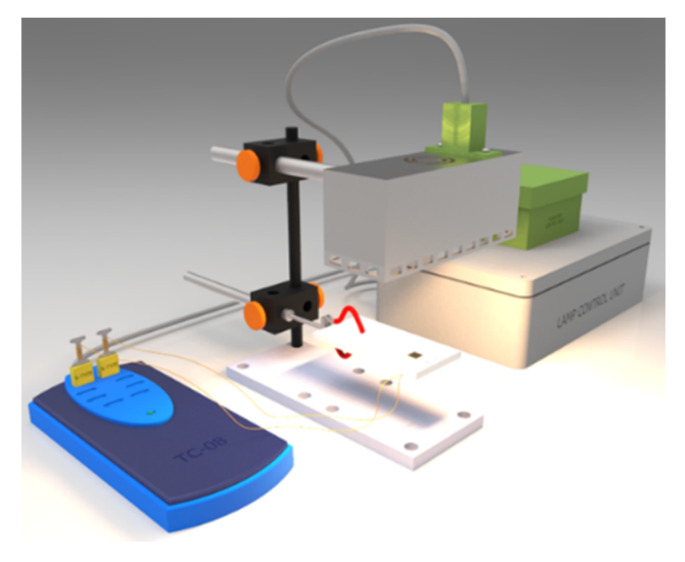
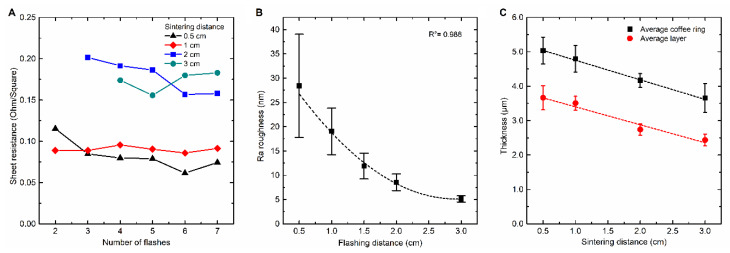
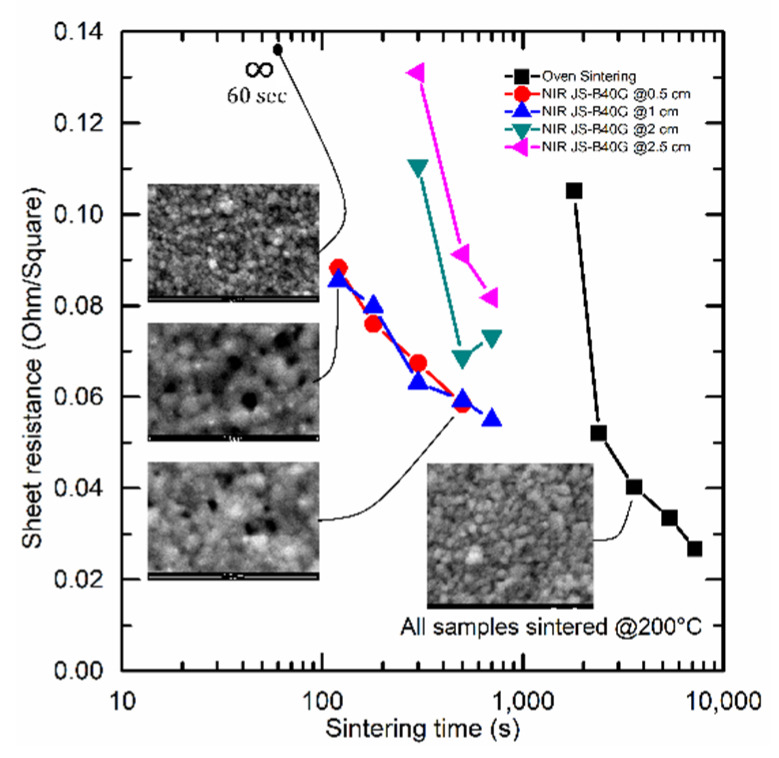
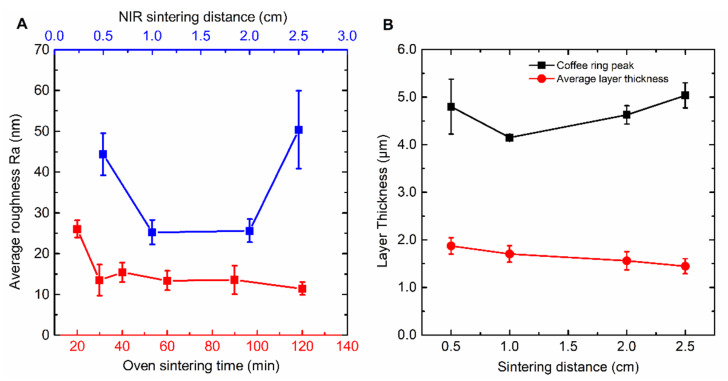
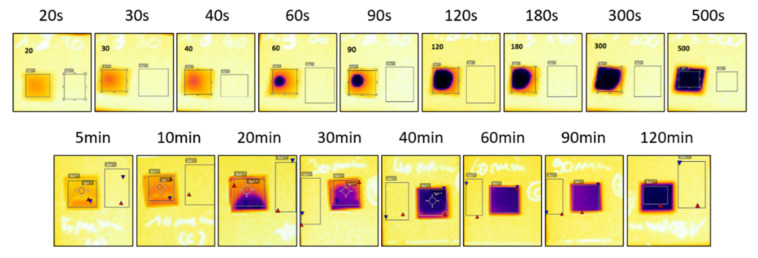
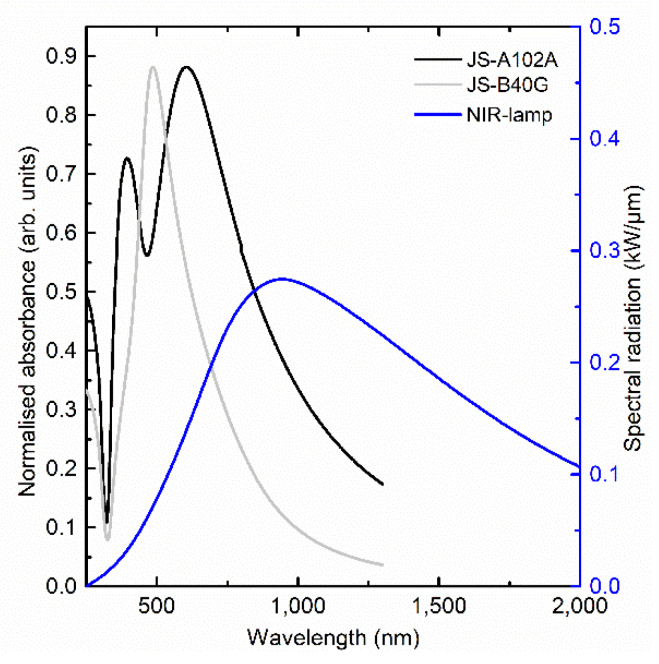
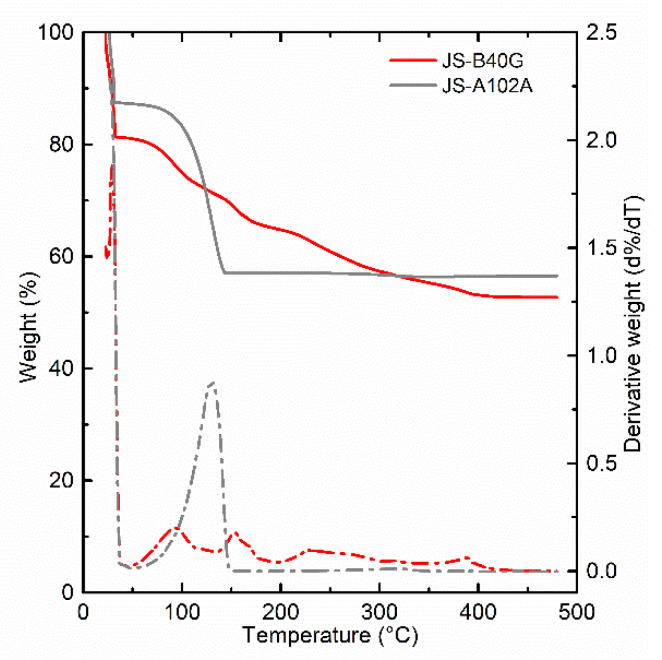
The field of printed electronics is rapidly evolving, producing low cost applications with enhanced performances with transparent, stretchable properties and higher reliability. Due to the versatility of printed electronics, industry can consider the implementation of electronics in a way which was never possible before. However, a post-processing step to achieve conductive structures-known as sintering-limits the production ease and speed of printed electronics. This study addresses the issues related to fast sintering without scarifying important properties such as conductivity and surface roughness. A drop-on-demand inkjet printer is employed to deposit silver nanoparticle-based inks. The post-processing time of these inks is reduced by replacing the conventional oven sintering procedure with the state-of-the-art method, named near-infrared sintering. By doing so, the post-processing time shortens from 30-60 min to 6-8 s. Furthermore, the maximum substrate temperature during sintering is reduced from 200 °C to 120 °C. Based on the results of this study, one can conclude that near-infrared sintering is a ready-to-industrialize post-processing method for the production of printed electronics, capable of sintering inks at high speed, low temperature and with low complexity. Furthermore, it becomes clear that ink optimization plays an important role in processing inkjet printable inks, especially after being near-infrared sintered.
印刷电子领域正在迅速发展,能够生产出具有增强性能的低成本应用产品,这些产品具有透明、可拉伸的特性以及更高的可靠性。由于印刷电子的多功能性,工业界可以以前所未有的方式考虑电子器件的应用。然而,实现导电结构的后处理步骤(即烧结)限制了印刷电子的生产便利性和速度。本研究解决了与快速烧结相关的问题,同时又不牺牲诸如导电性和表面粗糙度等重要性能。采用按需滴液式喷墨打印机来沉积基于银纳米颗粒的墨水。通过用名为近红外烧结的先进方法取代传统的烘箱烧结程序,这些墨水的后处理时间得以缩短。这样一来,后处理时间从30 - 60分钟缩短至6 - 8秒。此外,烧结过程中的最高基板温度从200°C降至120°C。基于本研究的结果,可以得出结论,近红外烧结是一种可直接工业化的印刷电子生产后处理方法,能够在高速、低温且低复杂度的条件下烧结墨水。此外,很明显墨水优化在处理喷墨可打印墨水方面起着重要作用,尤其是在经过近红外烧结之后。