Department of Integrated Mathematical Oncology, H. Lee Moffitt Cancer Center and Research Institute, Tampa, FL, USA.
Independent Researcher, New York, NY, USA.
Nat Ecol Evol. 2020 Jun;4(6):870-884. doi: 10.1038/s41559-020-1157-y. Epub 2020 May 11.
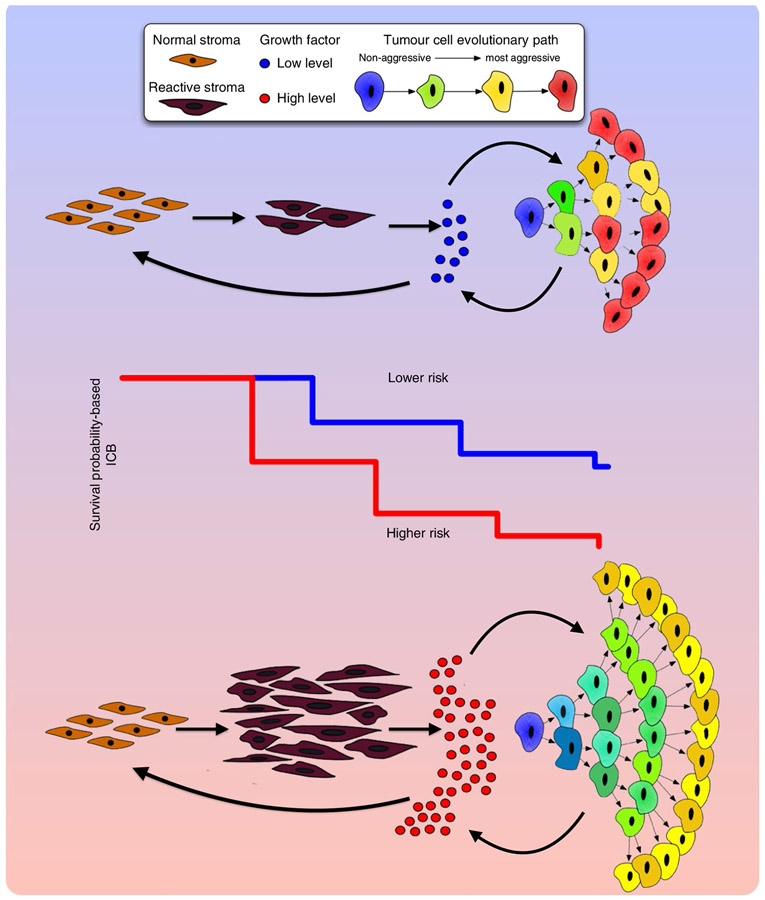
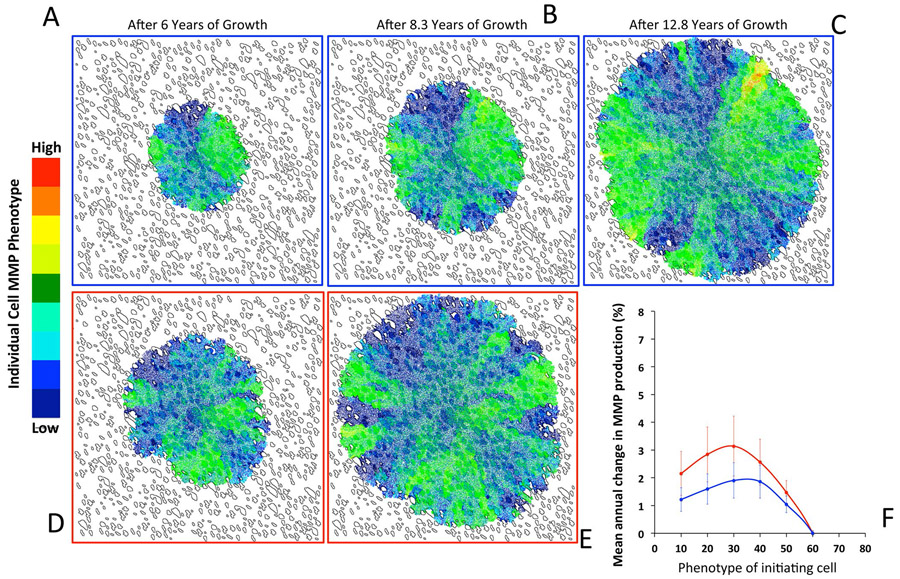
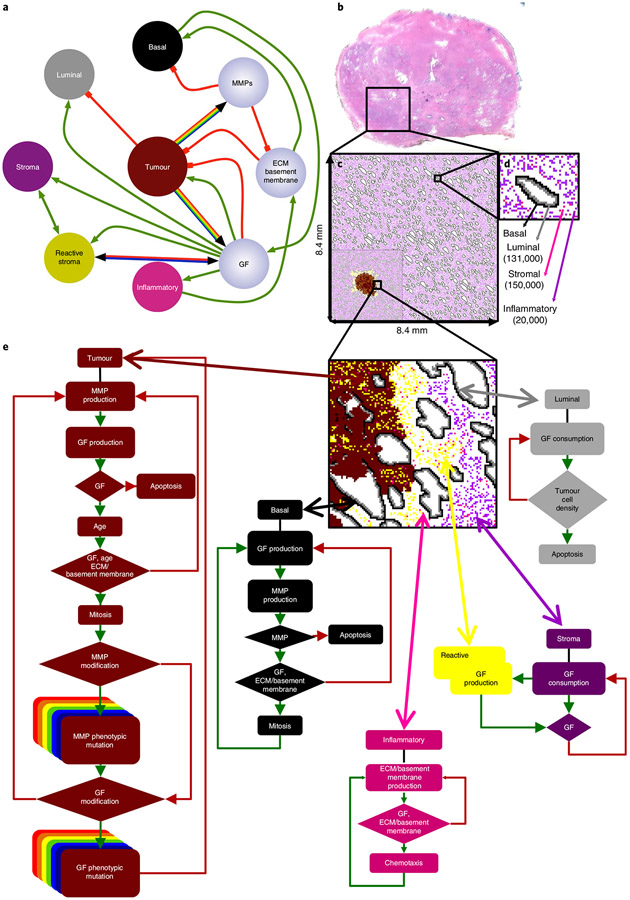
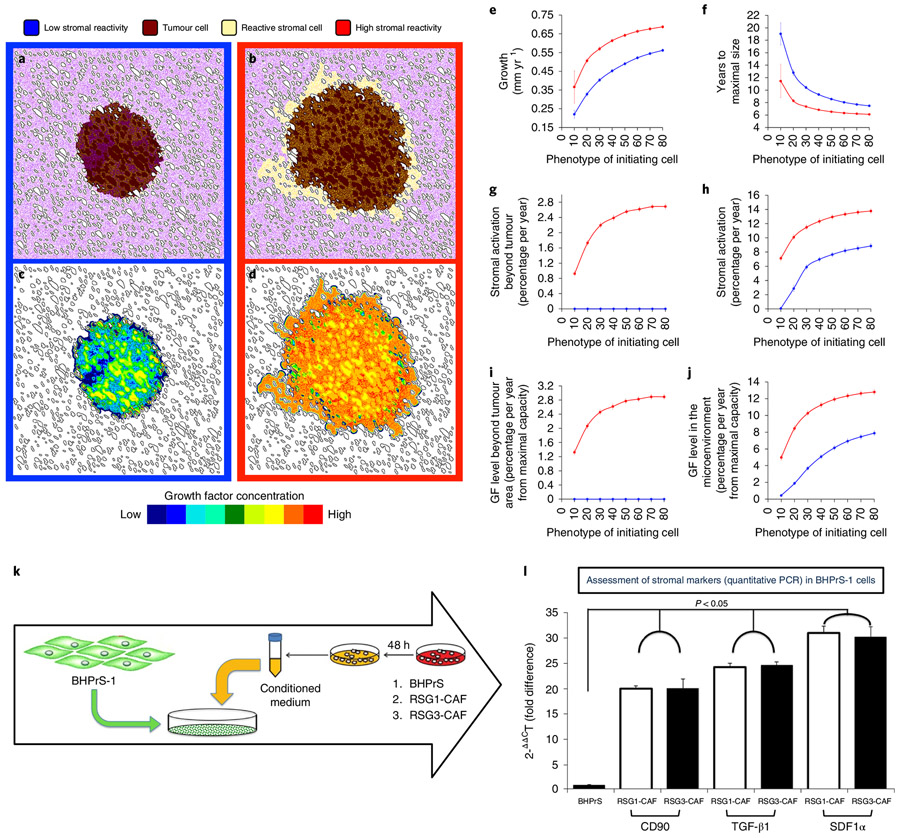
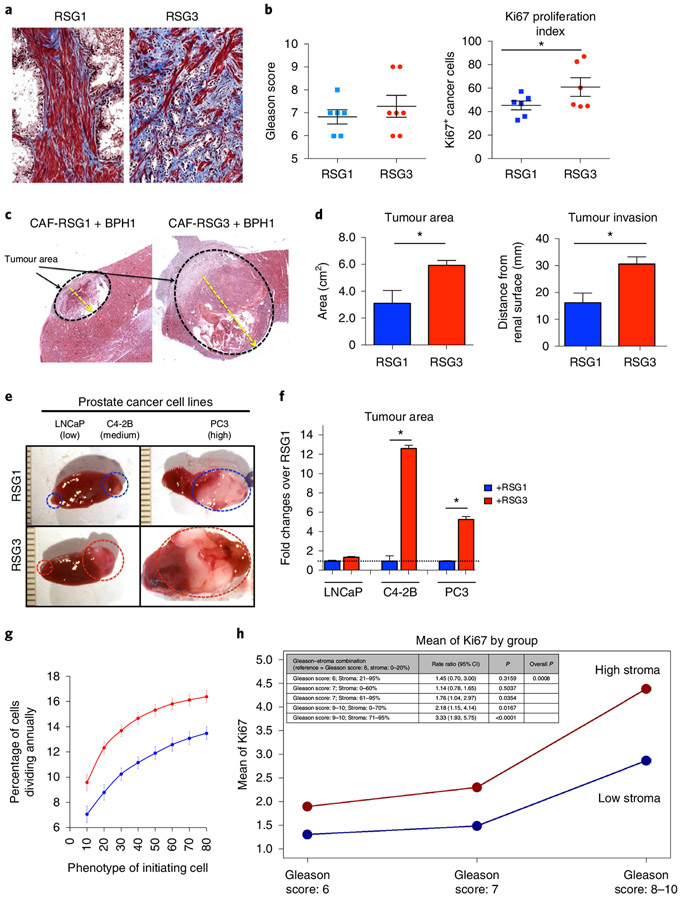
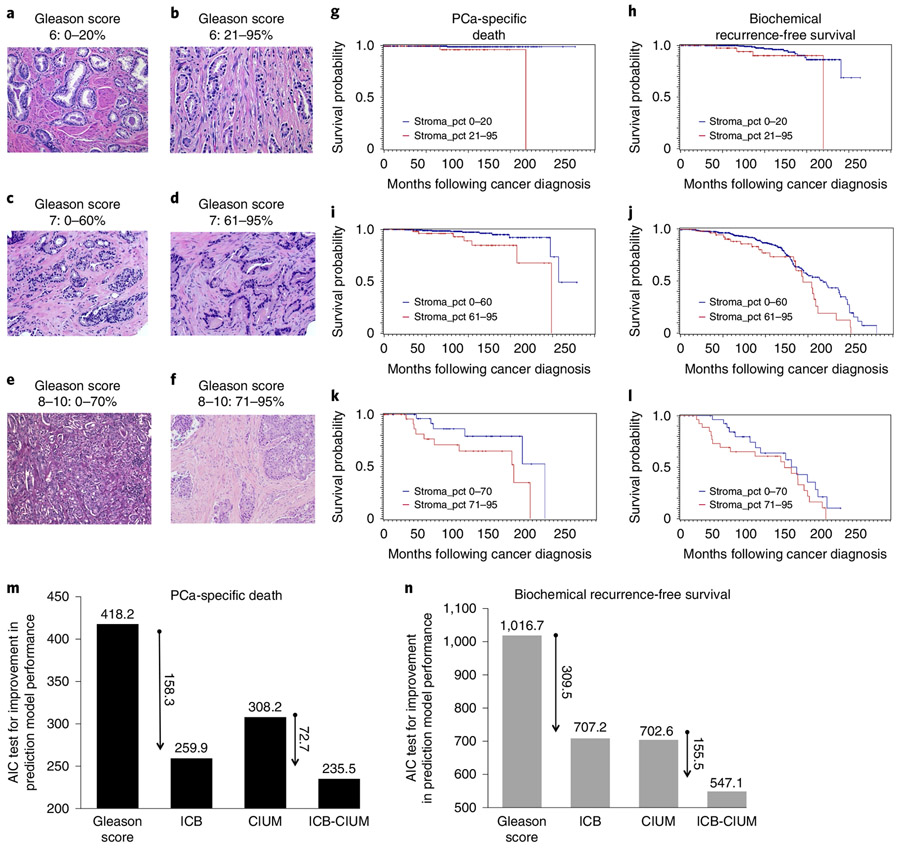
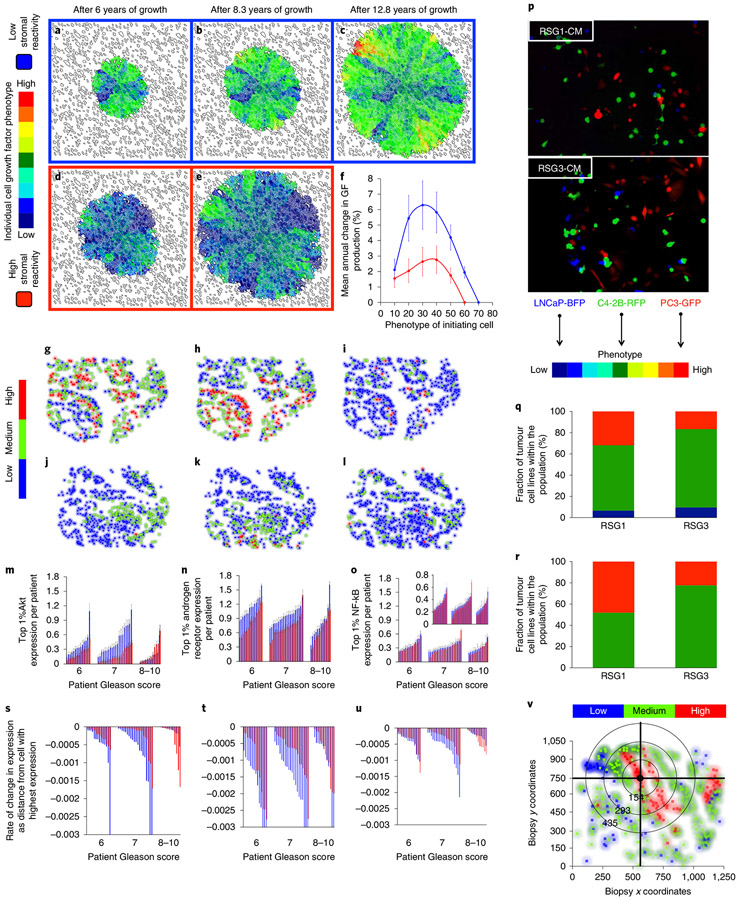
Prostate cancer (PCa) progression is a complex eco-evolutionary process driven by the feedback between evolving tumour cell phenotypes and microenvironmentally driven selection. To better understand this relationship, we used a multiscale mathematical model that integrates data from biology and pathology on the microenvironmental regulation of PCa cell behaviour. Our data indicate that the interactions between tumour cells and their environment shape the evolutionary dynamics of PCa cells and explain overall tumour aggressiveness. A key environmental determinant of this aggressiveness is the stromal ecology, which can be either inhibitory, highly reactive (supportive) or non-reactive (neutral). Our results show that stromal ecology correlates directly with tumour growth but inversely modulates tumour evolution. This suggests that aggressive, environmentally independent PCa may be a result of poor stromal ecology, supporting the concept that purely tumour epithelium-centric metrics of aggressiveness may be incomplete and that incorporating markers of stromal ecology would improve prognosis.
前列腺癌(PCa)的进展是一个复杂的生态进化过程,由不断进化的肿瘤细胞表型与受微环境驱动的选择之间的反馈所驱动。为了更好地理解这种关系,我们使用了一种多尺度数学模型,该模型整合了生物学和病理学的数据,以研究微环境对 PCa 细胞行为的调节。我们的数据表明,肿瘤细胞与其环境之间的相互作用塑造了 PCa 细胞的进化动态,并解释了肿瘤的整体侵袭性。这种侵袭性的一个关键环境决定因素是基质生态学,它可以是抑制性的、高度反应性的(支持性的)或非反应性的(中性的)。我们的结果表明,基质生态学与肿瘤生长直接相关,但反过来又调节肿瘤的进化。这表明,侵袭性的、环境独立的 PCa 可能是由于基质生态不佳造成的,这支持了这样一种概念,即仅仅基于肿瘤上皮细胞的侵袭性指标可能是不完整的,而纳入基质生态学标志物将改善预后。