Tianjin Institute of Urology, The Second Hospital of Tianjin Medical University, Tianjin, 300211, China.
J Exp Clin Cancer Res. 2020 Feb 17;39(1):36. doi: 10.1186/s13046-020-1542-z.
Cancer-associated fibroblasts (CAFs) are an important part of the tumour microenvironment, and their functions are of great concern. This series of experiments aimed to explore how Yes-associated protein 1 (YAP1) regulates the function of stromal cells and how the normal fibroblasts (NFs) convert into CAFs in prostate cancer (PCa).
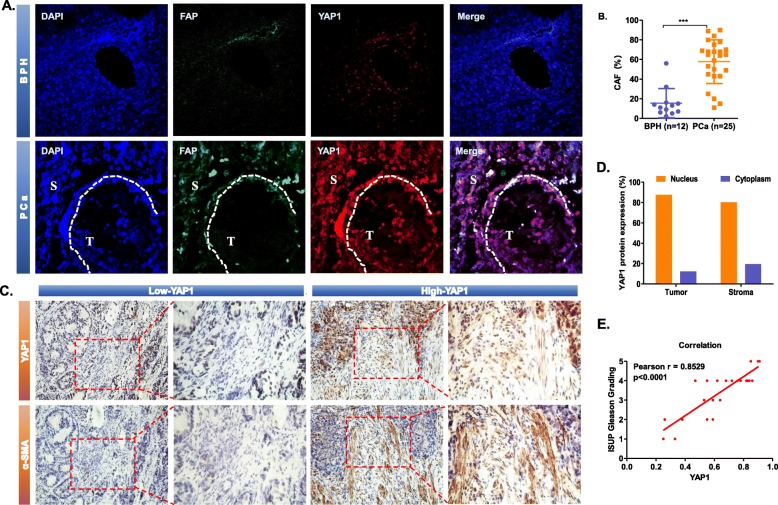
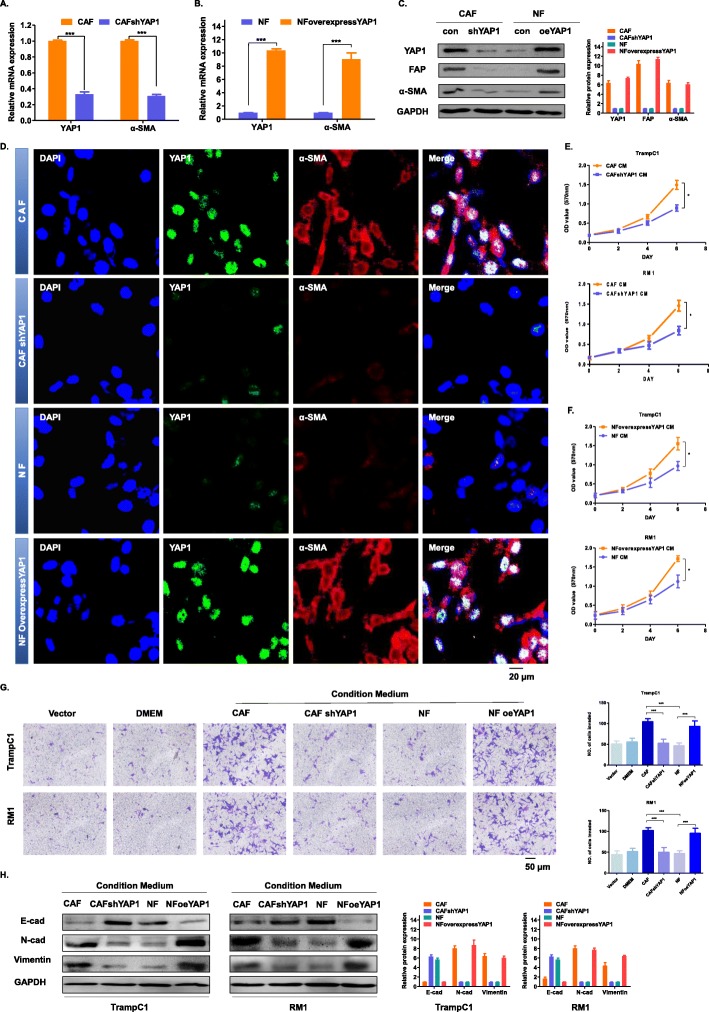
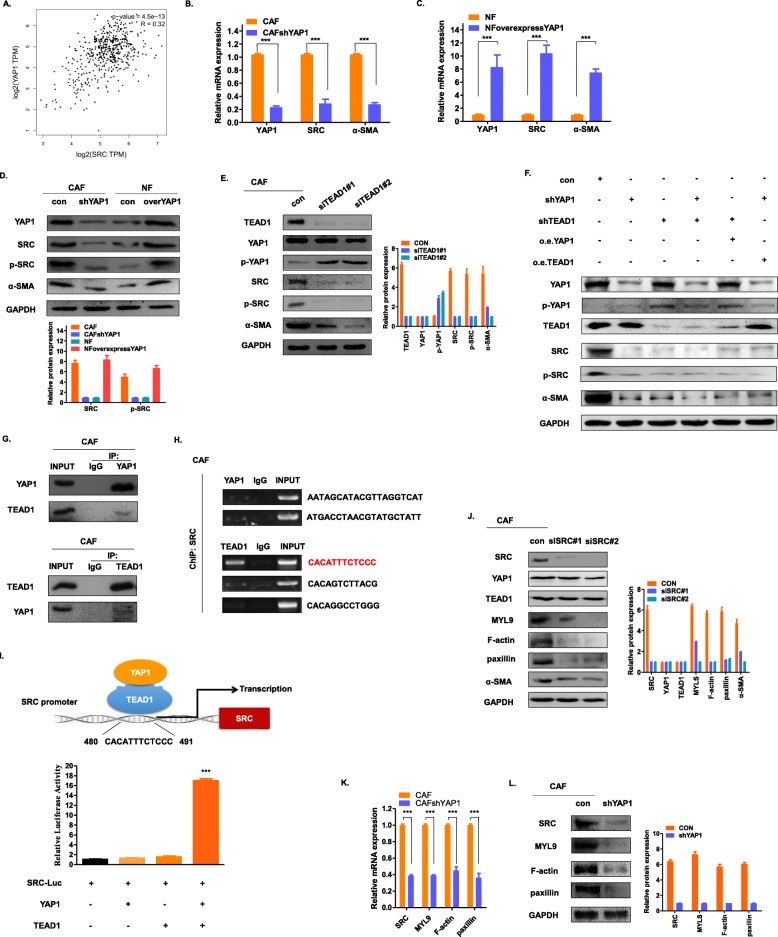
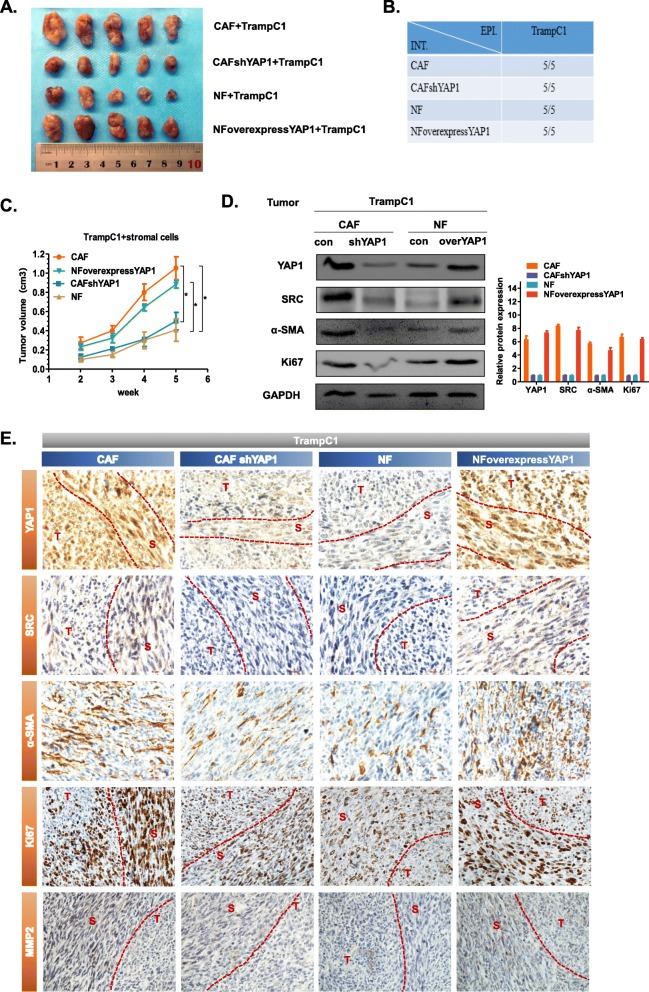
The effects of conditioned media from different fibroblasts on the proliferation and invasion of epithelial cells TrampC1 were examined. We then analysed the interaction between the YAP1/TEAD1 protein complex and SRC, as well as the regulatory function of the downstream cytoskeletal proteins and actins. A transplanted tumour model was used to explore the function of YAP1 in regulating tumour growth through stromal cells. The relationship between the expression of YAP1 in tumour stromal cells and the clinical characteristics of PCa patients was analysed.
The expression level of YAP1 was significantly upregulated in PCa stromal cells. After the expression level of YAP1 was increased, NF was transformed into CAF, enhancing the proliferation and invasion ability of epithelial cells. The YAP1/TEAD1 protein complex had the capability to influence downstream cytoskeletal proteins by regulating SRC transcription; therefore, it converts NF to CAF, and CAF can significantly promote tumour growth and metastasis. The high expression of YAP1 in the tumour stromal cells suggested a poor tumour stage and prognosis in PCa patients.
YAP1 can convert NFs into CAFs in the tumour microenvironment of PCa, thus promoting the development and metastasis of PCa. Silencing YAP1 in tumour stromal cells can effectively inhibit tumour growth.
癌症相关成纤维细胞(CAFs)是肿瘤微环境的重要组成部分,其功能备受关注。本系列实验旨在探索 Yes 相关蛋白 1(YAP1)如何调节基质细胞的功能,以及正常成纤维细胞(NFs)如何在前列腺癌(PCa)中转化为 CAFs。
检测不同成纤维细胞条件培养基对上皮细胞 TrampC1 增殖和侵袭的影响。然后,我们分析了 YAP1/TEAD1 蛋白复合物与 SRC 之间的相互作用,以及下游细胞骨架蛋白和肌动蛋白的调节功能。使用移植瘤模型探索 YAP1 通过基质细胞调节肿瘤生长的功能。分析肿瘤基质细胞中 YAP1 的表达与 PCa 患者临床特征的关系。
PCa 基质细胞中 YAP1 的表达水平明显上调。YAP1 表达水平增加后,NF 转化为 CAF,增强上皮细胞的增殖和侵袭能力。YAP1/TEAD1 蛋白复合物通过调节 SRC 转录影响下游细胞骨架蛋白,从而将 NF 转化为 CAF,CAF 可显著促进肿瘤生长和转移。肿瘤基质细胞中 YAP1 的高表达提示 PCa 患者肿瘤分期和预后较差。
YAP1 可在 PCa 肿瘤微环境中将 NFs 转化为 CAFs,从而促进 PCa 的发展和转移。沉默肿瘤基质细胞中的 YAP1 可有效抑制肿瘤生长。