Elmansi Ahmed M, Hussein Khaled A, Herrero Sergio Mas, Periyasamy-Thandavan Sudharsan, Aguilar-Pérez Alexandra, Kondrikova Galina, Kondrikov Dmitry, Eisa Nada H, Pierce Jessica L, Kaiser Helen, Ding Ke-Hong, Walker Aisha L, Jiang Xue, Bollag Wendy B, Elsalanty Mohammed, Zhong Qing, Shi Xing-Ming, Su Yun, Johnson Maribeth, Hunter Monte, Reitman Charles, Volkman Brian F, Hamrick Mark W, Isales Carlos M, Fulzele Sadanand, McGee-Lawrence Meghan E, Hill William D
Department of Pathology and Laboratory Medicine, Medical University of South Carolina, Charleston, SC 29403, United States of America.
Ralph H. Johnson Veterans Affairs Medical Center, Charleston, SC 29403, United States of America.
Bone Rep. 2020 Apr 23;12:100270. doi: 10.1016/j.bonr.2020.100270. eCollection 2020 Jun.
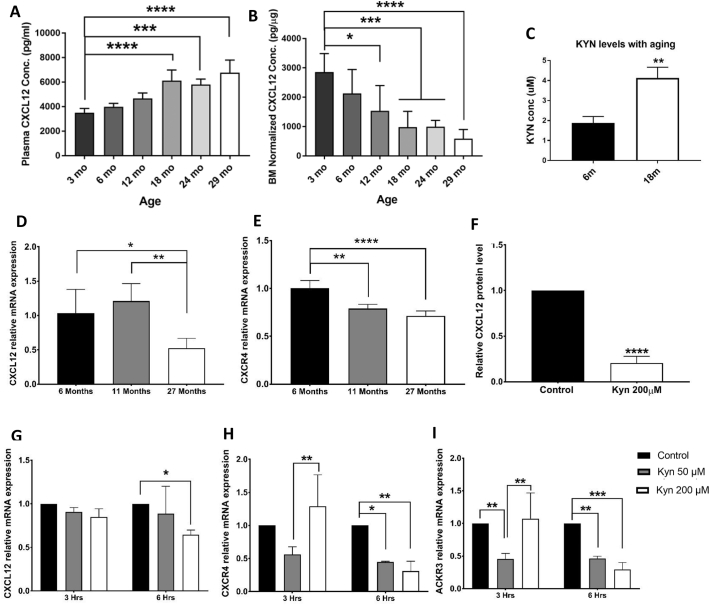
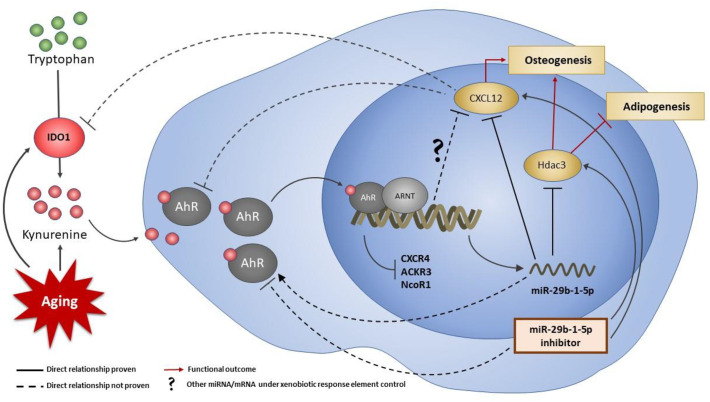
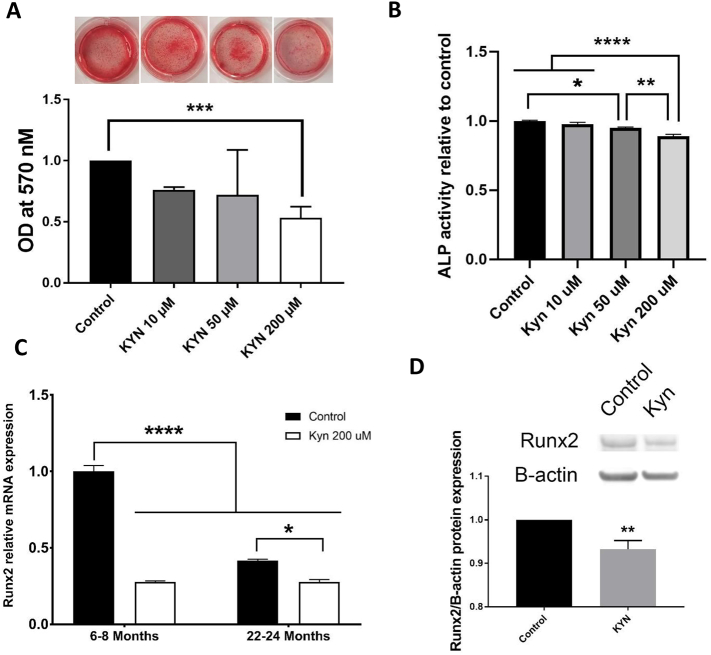
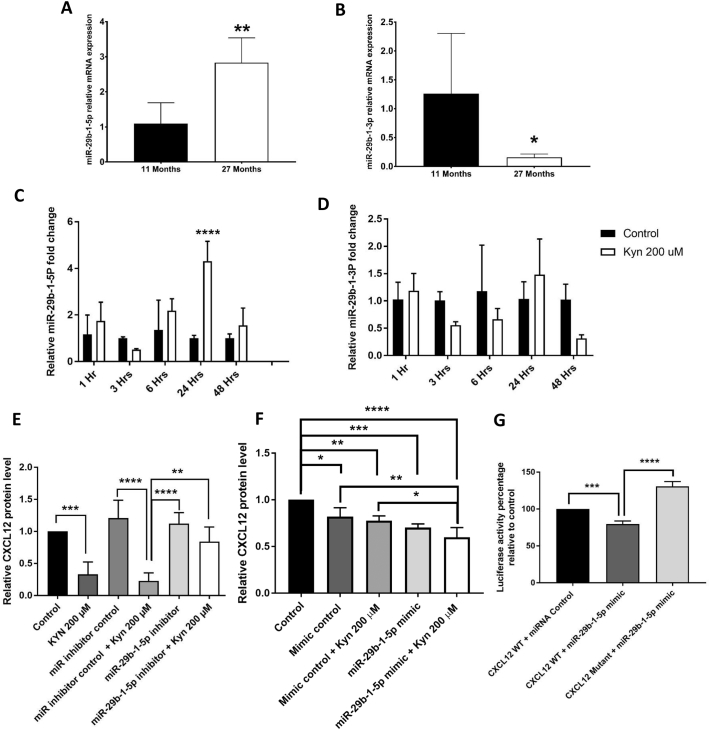
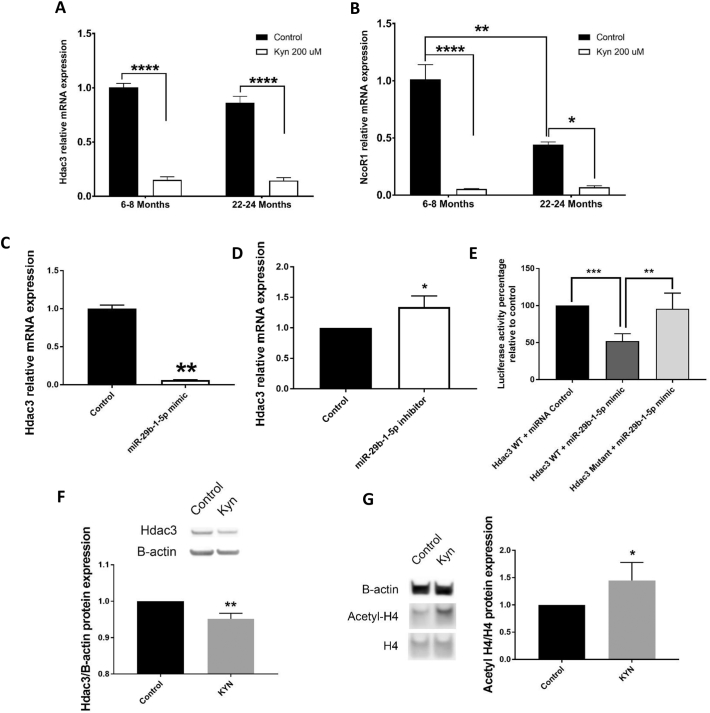
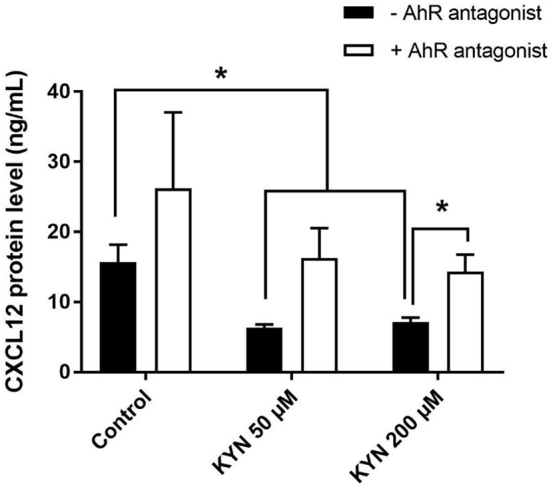
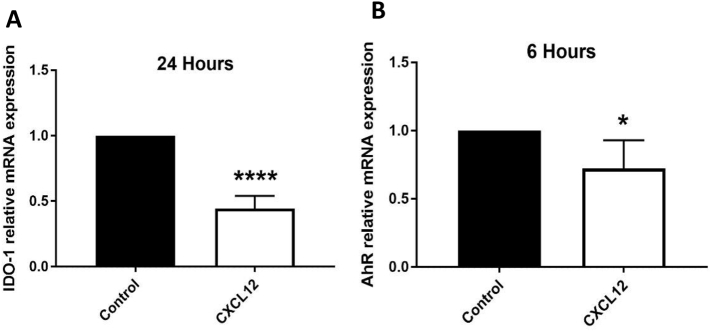
Mechanisms leading to age-related reductions in bone formation and subsequent osteoporosis are still incompletely understood. We recently demonstrated that kynurenine (KYN), a tryptophan metabolite, accumulates in serum of aged mice and induces bone loss. Here, we report on novel mechanisms underlying KYN's detrimental effect on bone aging. We show that KYN is increased with aging in murine bone marrow mesenchymal stem cells (BMSCs). KYN reduces bone formation via modulating levels of CXCL12 and its receptors as well as histone deacetylase 3 (Hdac3). BMSCs responded to KYN by significantly decreasing mRNA expression levels of CXCL12 and its cognate receptors, CXCR4 and ACKR3, as well as downregulating osteogenic gene RUNX2 expression, resulting in a significant inhibition in BMSCs osteogenic differentiation. KYN's effects on these targets occur by increasing regulatory miRNAs that target osteogenesis, specifically miR29b-1-5p. Thus, KYN significantly upregulated the anti-osteogenic miRNA miR29b-1-5p in BMSCs, mimicking the up-regulation of miR-29b-1-5p in human and murine BMSCs with age. Direct inhibition of miR29b-1-5p by antagomirs rescued CXCL12 protein levels downregulated by KYN, while a miR29b-1-5p mimic further decreased CXCL12 levels. KYN also significantly downregulated mRNA levels of Hdac3, a target of miR-29b-1-5p, as well as its cofactor NCoR1. KYN is a ligand for the aryl hydrocarbon receptor (AhR). We hypothesized that AhR mediates KYN's effects in BMSCs. Indeed, AhR inhibitors (CH-223191 and 3',4'-dimethoxyflavone [DMF]) partially rescued secreted CXCL12 protein levels in BMSCs treated with KYN. Importantly, we found that treatment with CXCL12, or transfection with an miR29b-1-5p antagomir, downregulated the AhR mRNA level, while transfection with miR29b-1-5p mimic significantly upregulated its level. Further, CXCL12 treatment downregulated IDO, an enzyme responsible for generating KYN. Our findings reveal novel molecular pathways involved in KYN's age-associated effects in the bone microenvironment that may be useful translational targets for treating osteoporosis.
导致与年龄相关的骨形成减少及随后骨质疏松的机制仍未完全明确。我们最近证明,色氨酸代谢产物犬尿氨酸(KYN)在老年小鼠血清中蓄积并诱导骨质流失。在此,我们报告KYN对骨老化产生有害影响的新机制。我们发现,在小鼠骨髓间充质干细胞(BMSC)中,KYN水平会随着衰老而升高。KYN通过调节CXCL12及其受体以及组蛋白去乙酰化酶3(Hdac3)的水平来减少骨形成。BMSC对KYN的反应是显著降低CXCL12及其同源受体CXCR4和ACKR3的mRNA表达水平,同时下调成骨基因RUNX2的表达,从而显著抑制BMSC的成骨分化。KYN对这些靶点的作用是通过增加靶向成骨的调节性微小RNA(miRNA),特别是miR29b - 1 - 5p来实现的。因此,KYN显著上调了BMSC中抗成骨的miRNA miR29b - 1 - 5p,这与人和小鼠BMSC中随着年龄增长miR - 29b - 1 - 5p的上调情况相似。用抗miR抑制miR29b - 1 - 5p可挽救被KYN下调的CXCL12蛋白水平,而miR29b - 1 - 5p模拟物则进一步降低CXCL12水平。KYN还显著下调了miR - 29b - 1 - 5p的靶标Hdac3及其辅因子NCoR1的mRNA水平。KYN是芳烃受体(AhR)的配体。我们推测AhR介导了KYN在BMSC中的作用。事实上,AhR抑制剂(CH - 223191和3',4' - 二甲氧基黄酮[DMF])部分挽救了用KYN处理的BMSC中分泌的CXCL12蛋白水平。重要的是,我们发现用CXCL12处理或用miR29b - 1 - 5p抗miR转染会下调AhR的mRNA水平,而用miR29b - 1 - 5p模拟物转染则显著上调其水平。此外,CXCL12处理下调了负责生成KYN的酶吲哚胺2,3 - 双加氧酶(IDO)。我们的研究结果揭示了KYN在骨微环境中与年龄相关效应所涉及的新分子途径,这些途径可能成为治疗骨质疏松症的有用转化靶点。