Mitchell Carol C, Wilbrand Stephanie M, Cook Thomas D, Meshram Nirvedh H, Steffel Catherine N, Nye Rebecca, Varghese Tomy, Hermann Bruce P, Dempsey Robert J
Department of Medicine, Division of Cardiovascular Medicine, University of Wisconsin School of Medicine and Public Health, Madison, Wisconsin, USA.
Department of Neurological Surgery, University of Wisconsin School of Medicine and Public Health, Madison, Wisconsin, USA.
J Ultrasound Med. 2020 Oct;39(10):2033-2042. doi: 10.1002/jum.15311. Epub 2020 May 12.
Traditional Doppler measures have been used to predict cognitive performance in patients with carotid atherosclerosis. Novel measures, such as carotid plaque strain indices (CPSIs), have shown associations with cognitive performance. We hypothesized that lower mean middle cerebral artery (MCA) velocities, higher bulb-internal carotid artery (ICA) velocities, the MCA pulsatility index (PI), and CPSIs would be associated with poorer cognitive performance in individuals with advanced atherosclerosis.
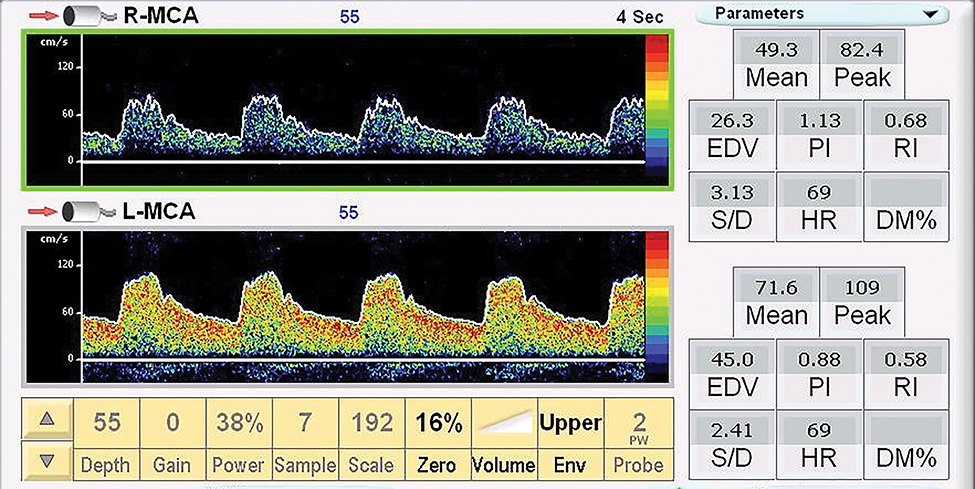
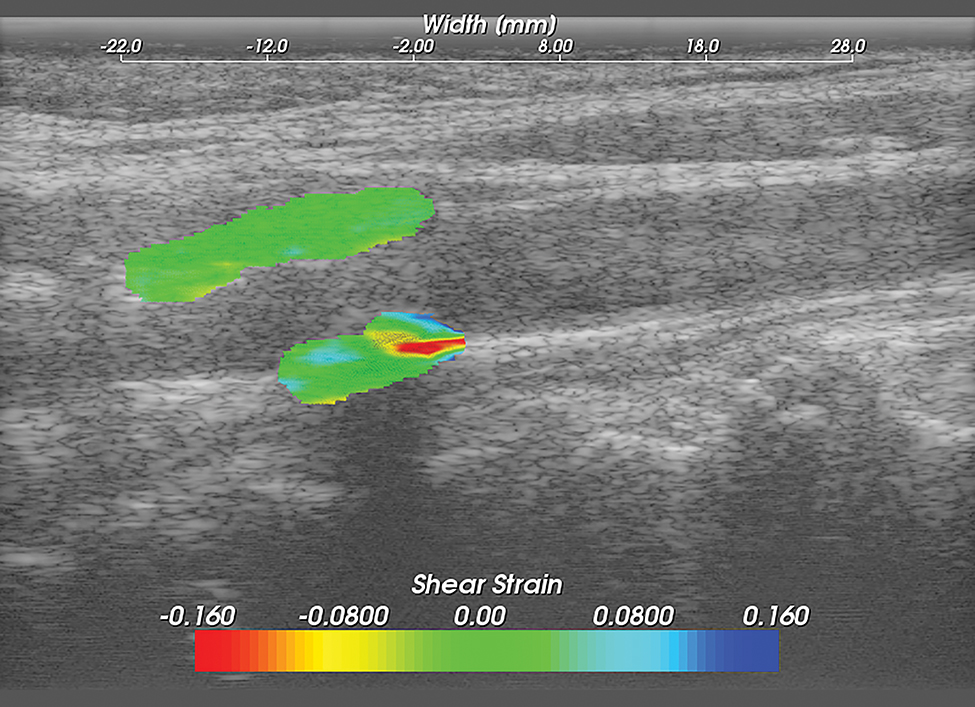
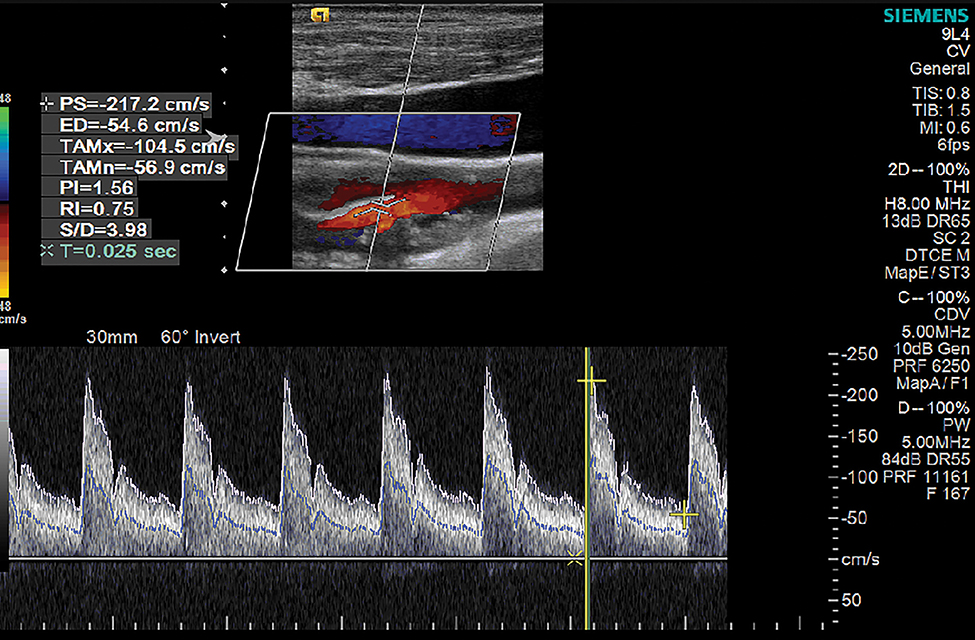
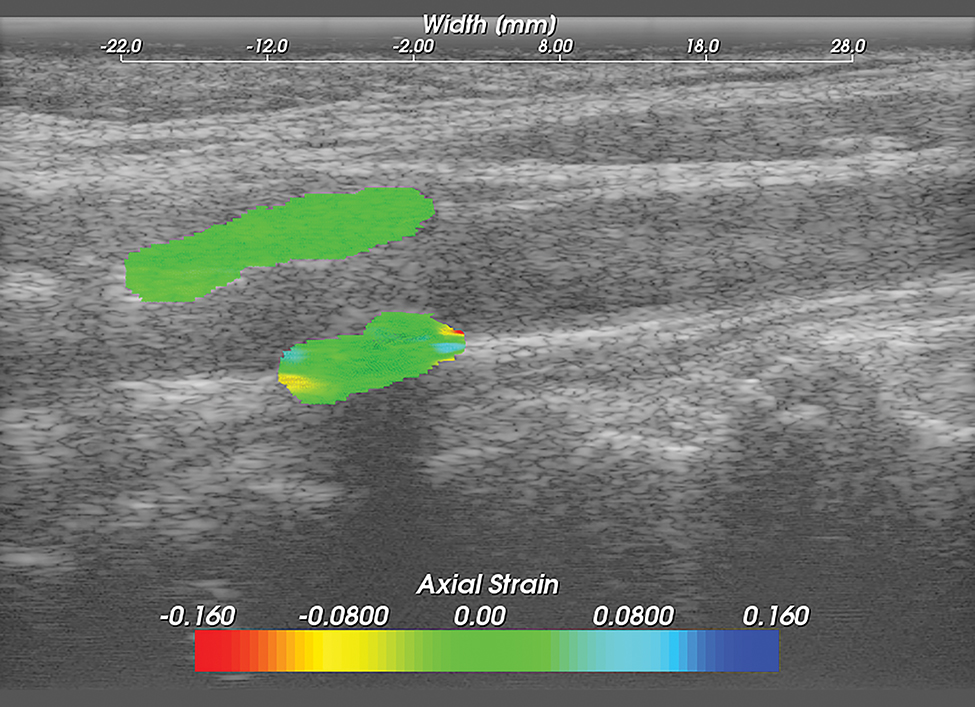
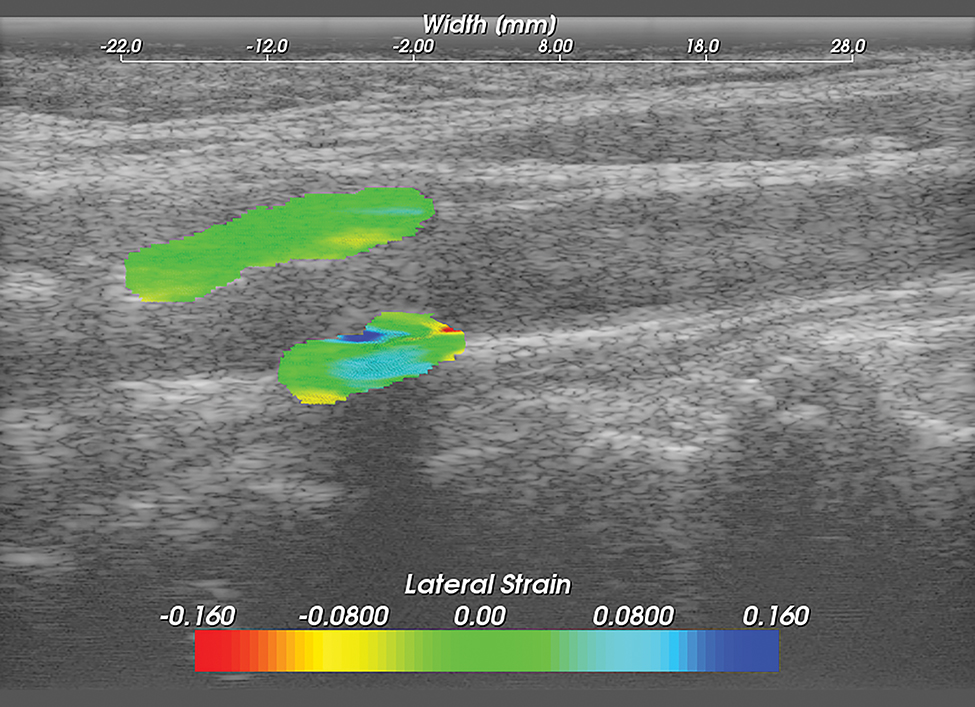
Neurocognitive testing, carotid ultrasound imaging, transcranial Doppler imaging, and carotid strain imaging were performed on 40 patients scheduled for carotid endarterectomy. Kendall tau correlations were used to examine relationships between cognitive tests and the surgical-side maximum peak systolic velocity (PSV; from the bulb, proximal, mid, or distal ICA), mean MCA velocity and PI, and maximum CPSIs (axial, lateral, and shear strain indices used to characterize plaque deformations with arterial pulsation). Cognitive measures included age-adjusted indices of verbal fluency, verbal and visual learning/memory, psychomotor speed, auditory attention/working memory, visuospatial construction, and mental flexibility.
Participants had a median age of 71.0 (interquartile range, 9.75) years; 26 were male (65%), and 14 were female (35%). Traditional Doppler parameters, PSV, mean MCA velocity, and MCA PI did not predict cognitive performance (all P > .05). Maximum CPSIs were significantly associated with cognitive performance (P < .05).
Traditional velocity measurements of the maximum bulb-ICA PSV, mean MCA velocity, and PI were not associated with cognitive performance in patients with advanced atherosclerotic disease; however, maximum CPSIs were associated with cognitive performance. These findings suggest that cognition may be associated with unstable plaque rather than blood flow.
传统的多普勒测量方法已被用于预测颈动脉粥样硬化患者的认知表现。诸如颈动脉斑块应变指数(CPSIs)等新的测量方法已显示出与认知表现相关。我们假设,在患有晚期动脉粥样硬化的个体中,较低的大脑中动脉(MCA)平均速度、较高的球部-颈内动脉(ICA)速度、MCA搏动指数(PI)和CPSIs与较差的认知表现相关。
对40例计划行颈动脉内膜切除术的患者进行神经认知测试、颈动脉超声成像、经颅多普勒成像和颈动脉应变成像。使用肯德尔tau相关性检验来检查认知测试与手术侧最大收缩期峰值速度(PSV;来自球部、近端、中段或远端ICA)、MCA平均速度和PI以及最大CPSIs(轴向、横向和剪切应变指数,用于表征斑块随动脉搏动的变形)之间的关系。认知测量包括言语流畅性、言语和视觉学习/记忆、心理运动速度、听觉注意力/工作记忆、视觉空间构建和心理灵活性的年龄校正指数。
参与者的年龄中位数为71.0(四分位间距,9.75)岁;26例为男性(65%),14例为女性(35%)。传统的多普勒参数、PSV、MCA平均速度和MCA PI均不能预测认知表现(所有P>0.05)。最大CPSIs与认知表现显著相关(P<0.05)。
球部-ICA最大PSV、MCA平均速度和PI的传统速度测量与晚期动脉粥样硬化疾病患者的认知表现无关;然而,最大CPSIs与认知表现相关。这些发现表明,认知可能与不稳定斑块而非血流相关。