Department of Biology, University of Saint Joseph, West Hartford, Connecticut, United States of America.
PLoS One. 2020 May 12;15(5):e0233187. doi: 10.1371/journal.pone.0233187. eCollection 2020.
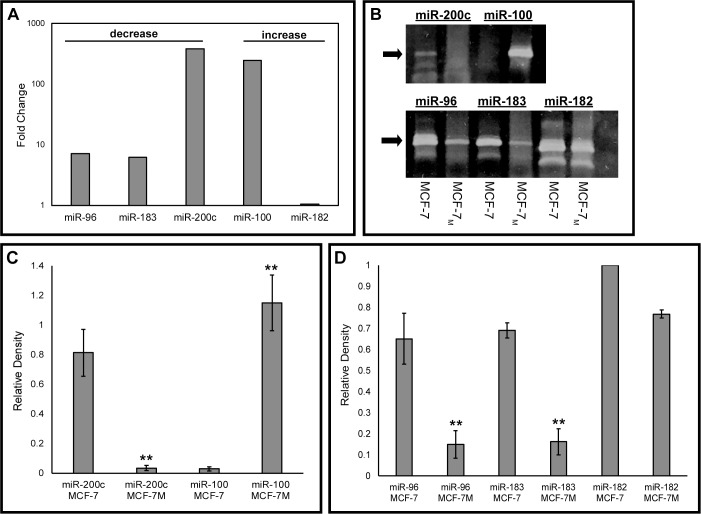
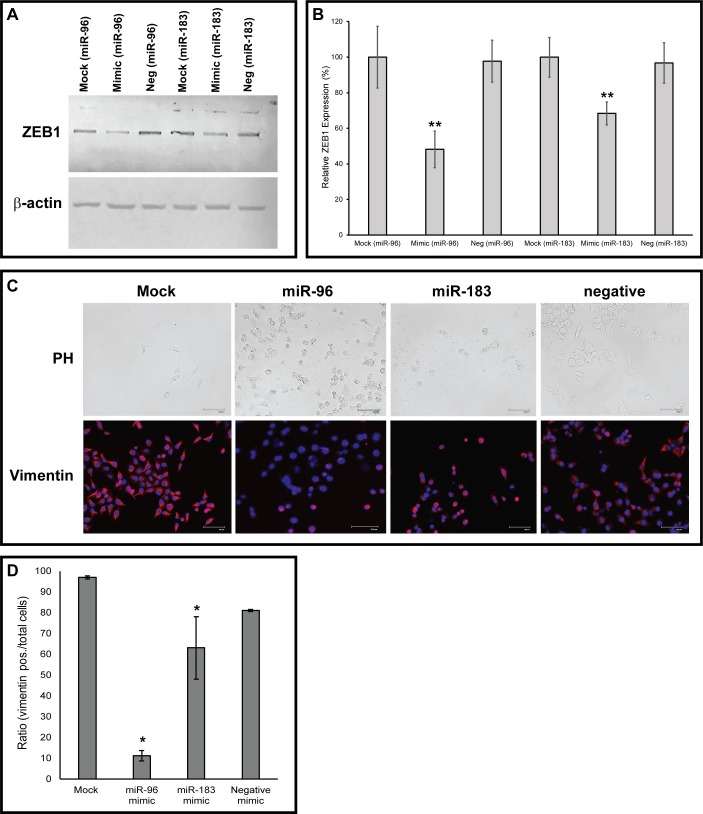
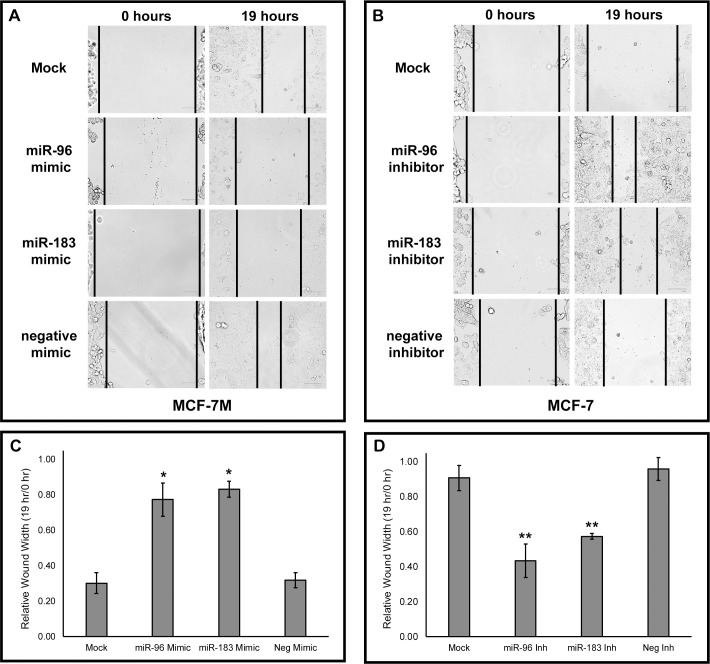
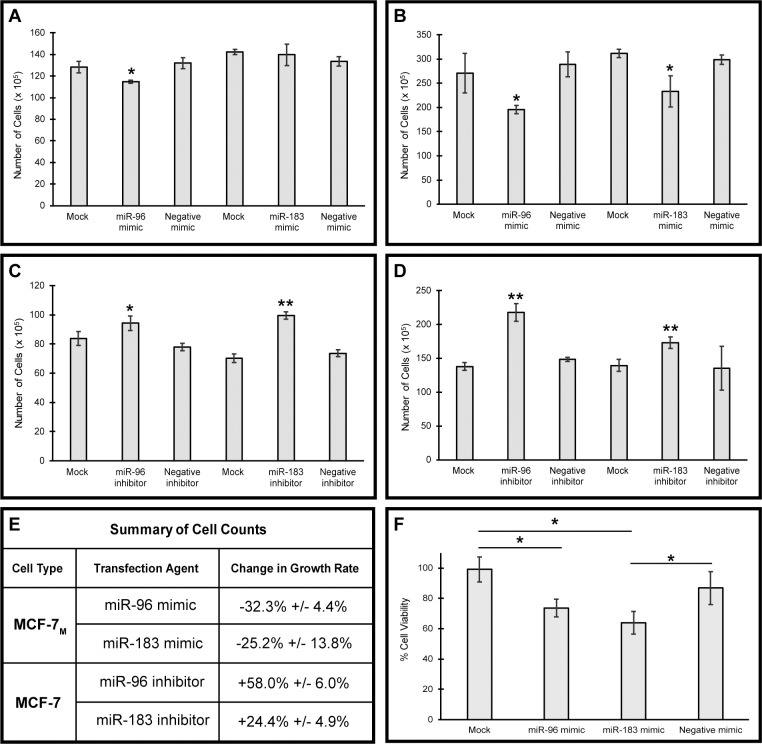
Breast cancer is the most commonly diagnosed malignancy in women, and has the second highest mortality rate. Over 90% of all cancer-related deaths are due to metastasis, which is the spread of malignant cells from the primary tumor to a secondary site in the body. It is hypothesized that one cause of metastasis involves epithelial-mesenchymal transition (EMT). When epithelial cells undergo EMT and transition into mesenchymal cells, they display increased levels of cell proliferation and invasion, resulting in a more aggressive phenotype. While many factors regulate EMT, microRNAs have been implicated in driving this process. MicroRNAs are short noncoding RNAs that suppress protein production, therefore loss of microRNAs may promote the overexpression of specific target proteins important for EMT. The goal of this study was to investigate the role of miR-96 and miR-183 in EMT in breast cancer. Both miR-96 and miR-183 were found to be downregulated in post-EMT breast cancer cells. When microRNA mimics were transfected into these cells, there was a significant decrease in cell viability and migration, and a shift from a mesenchymal to an epithelial morphology (mesenchymal-epithelial transition or MET). These MET-related changes may be facilitated in part by the regulation of ZEB1 and vimentin, as both of these proteins were downregulated when miR-96 and miR-183 were overexpressed in post-EMT cells. These findings indicate that the loss of miR-96 and miR-183 may help facilitate EMT and contribute to the maintenance of a mesenchymal phenotype. Understanding the role of microRNAs in regulating EMT is significant in order to not only further elucidate the pathways that facilitate metastasis, but also identify potential therapeutic options for preventing or reversing this process.
乳腺癌是女性最常见的恶性肿瘤,死亡率居第二位。超过 90%的癌症相关死亡是由于转移,即恶性细胞从原发肿瘤扩散到体内的继发性部位。据推测,转移的一个原因涉及上皮-间充质转化(EMT)。当上皮细胞经历 EMT 并转化为间充质细胞时,它们表现出更高水平的细胞增殖和侵袭,从而表现出更具侵袭性的表型。虽然许多因素调节 EMT,但 microRNAs 已被认为参与驱动这一过程。microRNAs 是短的非编码 RNA,可抑制蛋白质的产生,因此 microRNAs 的缺失可能会促进 EMT 中特定靶蛋白的过度表达。本研究的目的是研究 miR-96 和 miR-183 在乳腺癌 EMT 中的作用。miR-96 和 miR-183 在 EMT 后的乳腺癌细胞中均下调。当 microRNA 模拟物转染到这些细胞中时,细胞活力和迁移显著降低,细胞形态从间充质向上皮(间充质-上皮转化或 MET)转变。这些 MET 相关变化可能部分受到 ZEB1 和波形蛋白的调节,因为当 miR-96 和 miR-183 在 EMT 后细胞中过表达时,这两种蛋白的表达均下调。这些发现表明,miR-96 和 miR-183 的缺失可能有助于促进 EMT,并有助于维持间充质表型。了解 microRNAs 在调节 EMT 中的作用对于阐明促进转移的途径以及确定预防或逆转这一过程的潜在治疗选择都具有重要意义。