Janes Peter W, Vail Mary E, Gan Hui K, Scott Andrew M
Olivia Newton-John Cancer Institute and La Trobe University School of Cancer Medicine, Victoria 3084, Australia.
Pharmaceuticals (Basel). 2020 May 8;13(5):88. doi: 10.3390/ph13050088.
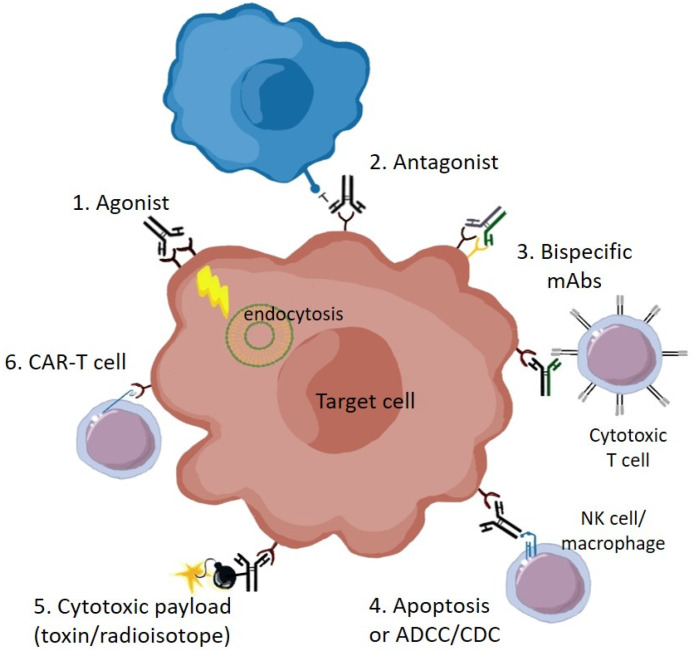
The Eph subfamily of receptor tyrosine kinases mediate cell-cell communication controlling cell and tissue patterning during development. While generally less active in adult tissues, they often re-emerge in cancers, particularly on undifferentiated or progenitor cells in tumors and the tumor microenvironment, associated with tumor initiation, angiogenesis and metastasis. Eph receptors are thus attractive therapeutic targets, and monoclonal antibodies have been commonly developed and tested for anti-cancer activity in preclinical models, and in some cases in the clinic. This review summarizes 20 years of research on various antibody-based approaches to target Eph receptors in tumors and the tumor microenvironment, including their mode of action, tumor specificity, and efficacy in pre-clinical and clinical testing.
受体酪氨酸激酶的Eph亚家族介导细胞间通讯,在发育过程中控制细胞和组织的模式形成。虽然它们在成体组织中通常活性较低,但在癌症中常重新出现,特别是在肿瘤和肿瘤微环境中的未分化或祖细胞上,与肿瘤起始、血管生成和转移相关。因此,Eph受体是有吸引力的治疗靶点,单克隆抗体已被广泛开发并在临床前模型以及某些情况下在临床中测试其抗癌活性。本综述总结了20年来关于各种基于抗体的方法靶向肿瘤和肿瘤微环境中Eph受体的研究,包括其作用模式、肿瘤特异性以及临床前和临床试验中的疗效。