Gelsomino Fabio, Casadei-Gardini Andrea, Caputo Francesco, Rossi Giulio, Bertolini Federica, Petrachi Tiziana, Spallanzani Andrea, Pettorelli Elisa, Kaleci Shaniko, Luppi Gabriele
Department of Oncology and Hematology, University Hospital of Modena, 41124 Modena, Italy.
Pathology Unit, Azienda USL della Romagna, 48121 Ravenna, Italy.
Cancers (Basel). 2020 May 10;12(5):1201. doi: 10.3390/cancers12051201.
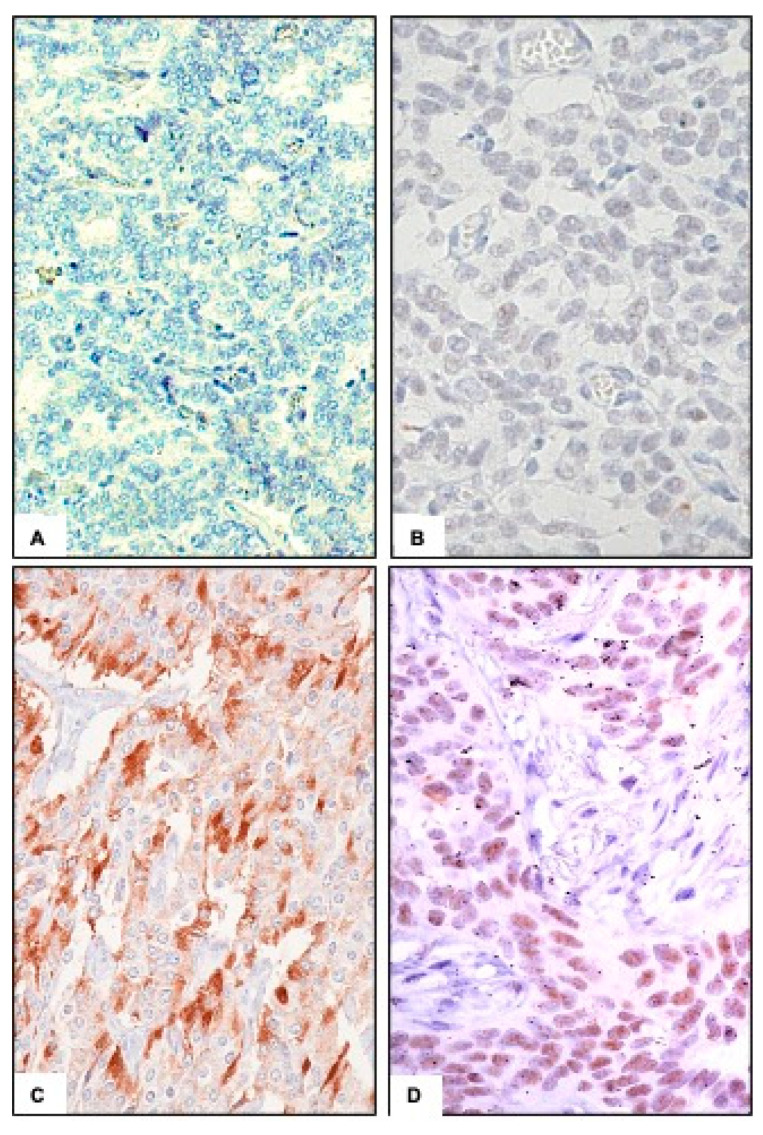
Everolimus (Eve), which is a mammalian target of Rapamicin (mTOR) inhibitor, is part of the therapeutic armamentarium of neuroendocrine tumors (NETs). Currently, there are no validated biomarkers predicting Eve efficacy in NETs. In this study, we explore whether the expression of phosphorilated (p)-mTOR and p70S6-kinase (S6K), a downstream effector of mTOR, correlates with the outcome of patients with NET that were treated with Eve.
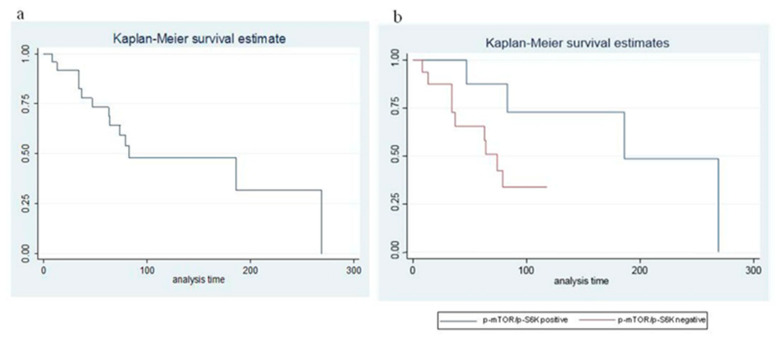
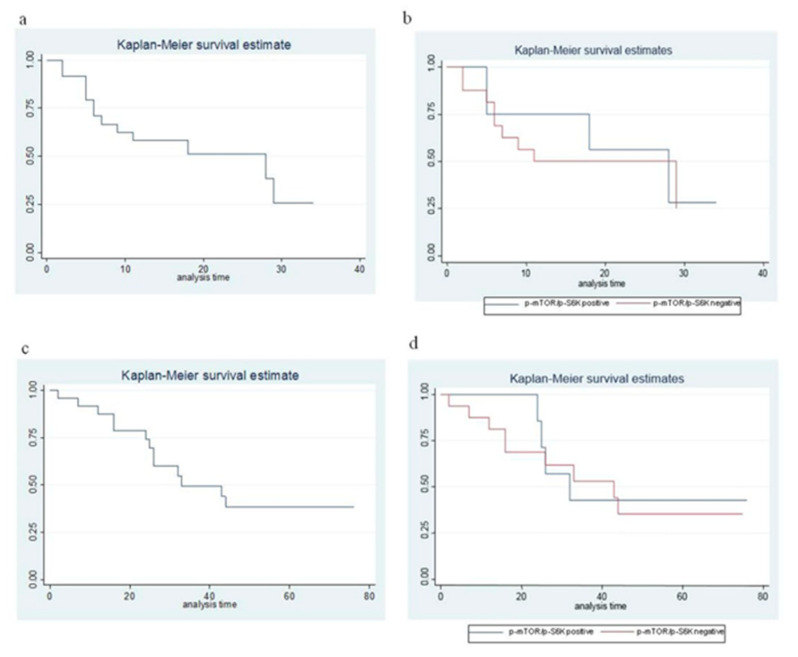
Tissue specimens that were derived from NETs treated with Eve at our Institution were examined for the expression levels of p-mTOR and p-S6K by immunohistochemistry. Response rate (RR), progression-free survival (PFS), and overall survival (OS) were analyzed in two groups: p-mTOR/p-S6K positive (group 1) and p-mTOR/p-S6K negative (group 2). Univariate and multivariate Cox regression analysis were performed.
Twenty-four patients with advanced NETs that were treated with Eve were included in the analysis. Eight out 24 (33.3%) patients were both p-mTOR and p-S6K positive. A better median PFS and OS in group 1 (18.2 and 39.9 months) as compared to group 2 (13 and 32.4 months) was depicted, with a toxicity profile that was comparable with data literature.
Our study suggests that the activation of mTOR pathway can predict better outcomes in patients with NET treated with Eve. However, these results warrant further confirmation in a prospective setting.
依维莫司(Eve)是一种雷帕霉素哺乳动物靶点(mTOR)抑制剂,是神经内分泌肿瘤(NETs)治疗药物库的一部分。目前,尚无经过验证的生物标志物可预测依维莫司在NETs中的疗效。在本研究中,我们探讨磷酸化(p)-mTOR和mTOR的下游效应器p70S6激酶(S6K)的表达是否与接受依维莫司治疗的NET患者的预后相关。
通过免疫组织化学检查来自我们机构接受依维莫司治疗的NETs组织标本中p-mTOR和p-S6K的表达水平。在两组中分析缓解率(RR)、无进展生存期(PFS)和总生存期(OS):p-mTOR/p-S6K阳性组(第1组)和p-mTOR/p-S6K阴性组(第2组)。进行单因素和多因素Cox回归分析。
24例接受依维莫司治疗的晚期NET患者纳入分析。24例患者中有8例(33.3%)p-mTOR和p-S6K均为阳性。与第2组(13个月和32.4个月)相比,第1组(18.2个月和39.9个月)的中位PFS和OS更好,毒性特征与文献数据相当。
我们的研究表明,mTOR通路的激活可预测接受依维莫司治疗的NET患者有更好的预后。然而,这些结果需要在前瞻性研究中进一步证实。