Department of Hematology, The First Hospital of Jilin University, Changchun, China.
Key Laboratory of Polymer Ecomaterials, Changchun Institute of Applied Chemistry, Chinese Academy of Sciences, Changchun, China.
Sci Rep. 2020 May 12;10(1):7832. doi: 10.1038/s41598-020-64828-1.
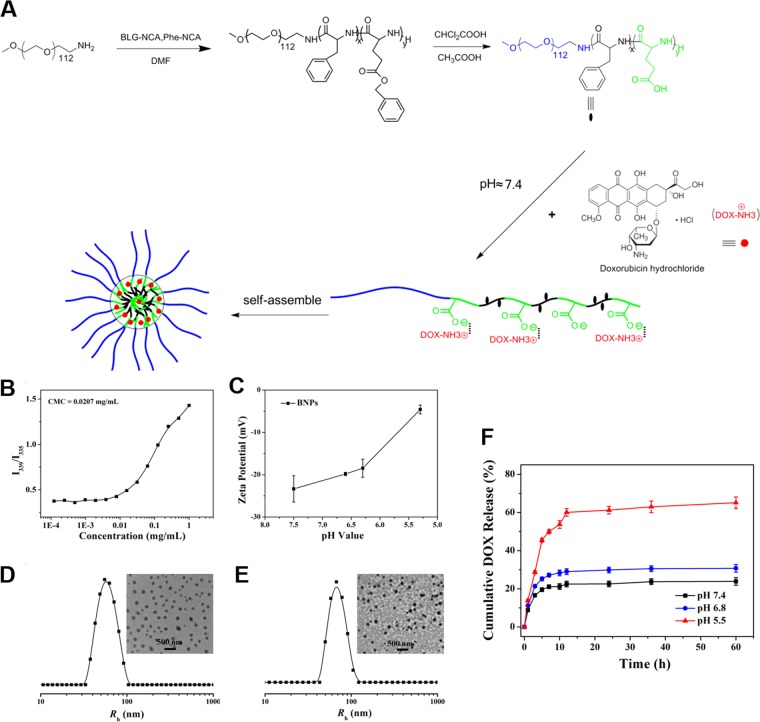
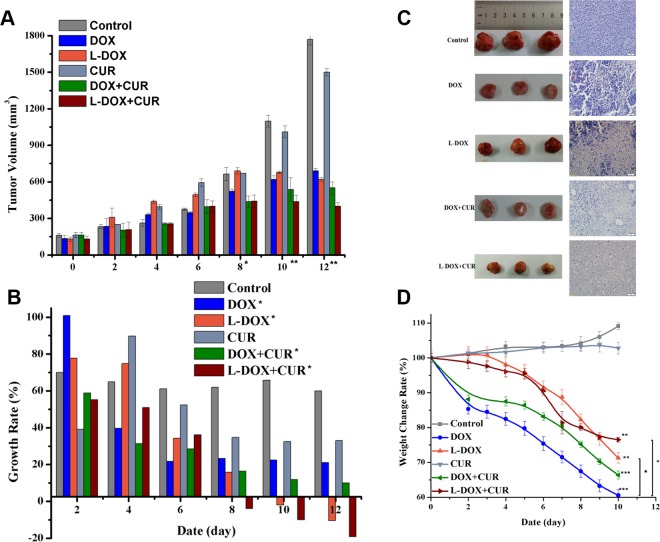
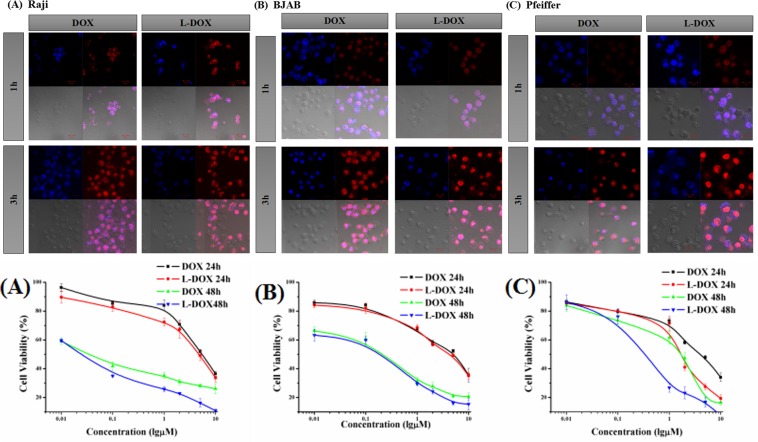
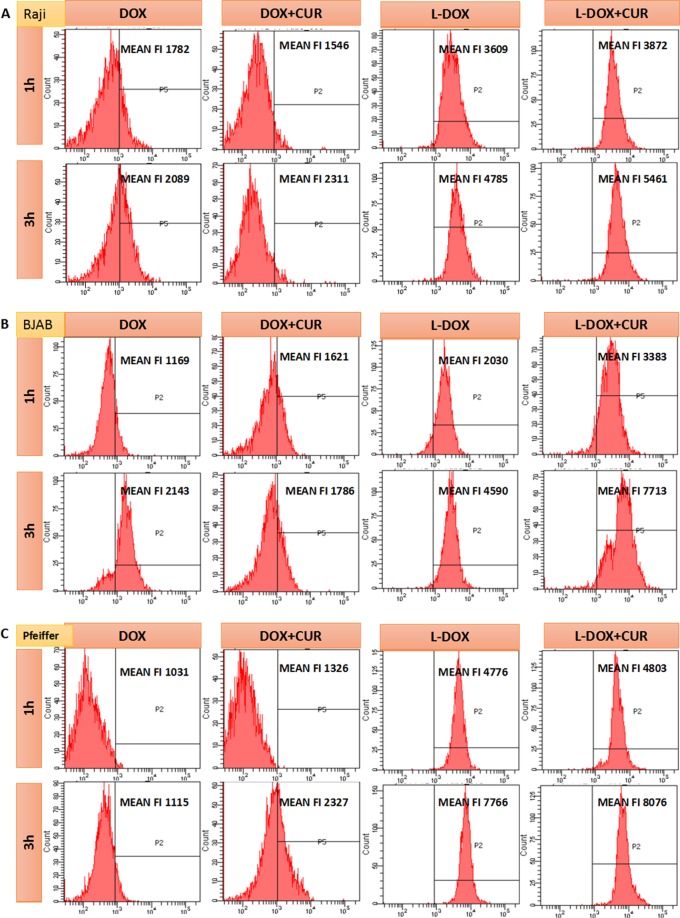
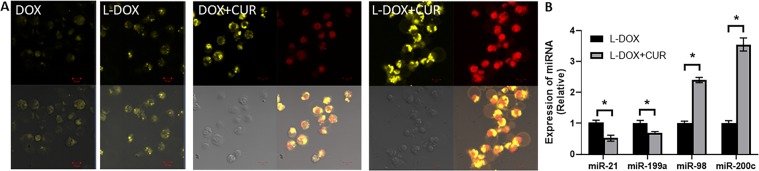
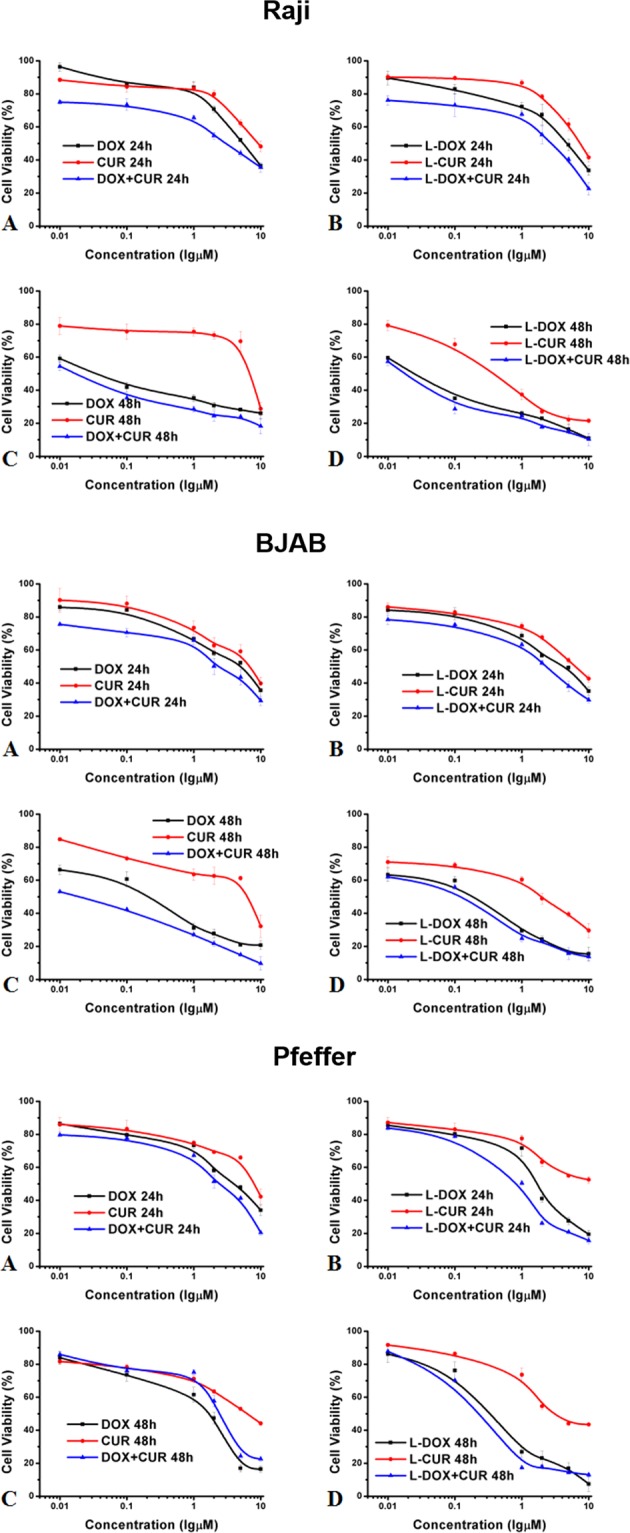
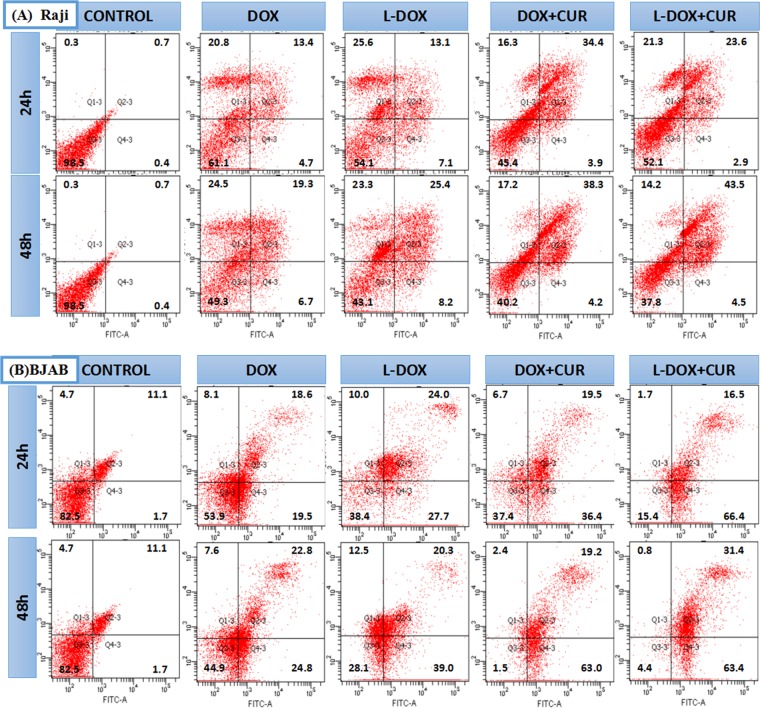
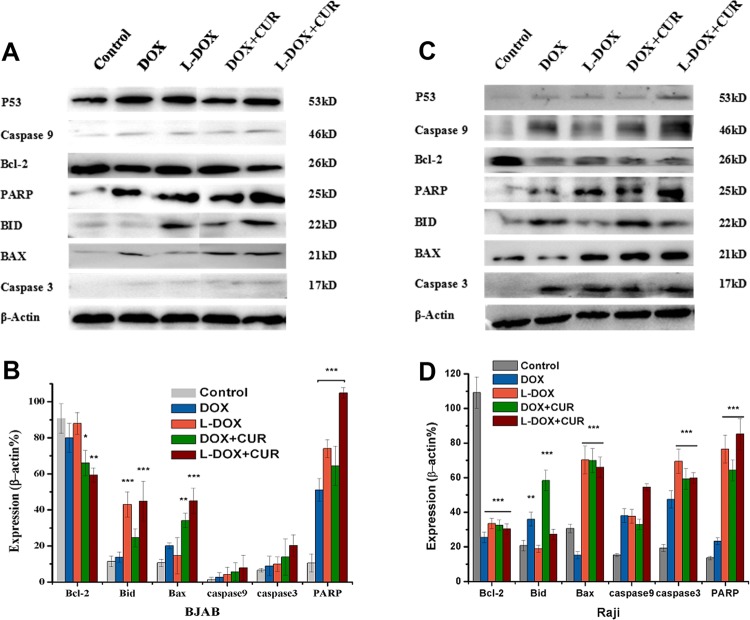
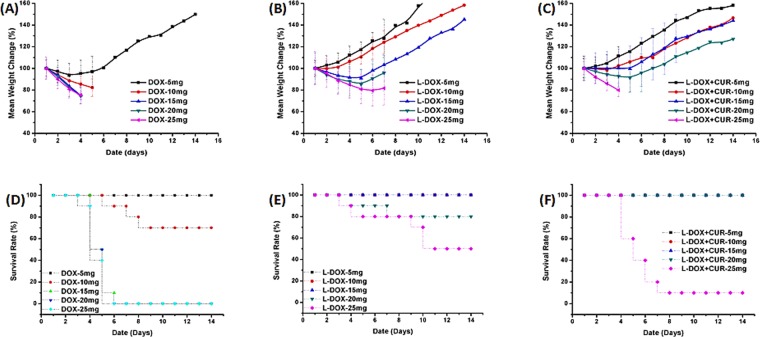
The traditional chemotherapy, including Adriamycin (Doxorubicin, DOX), is widely used and is part of the first-line chemotherapy of invasive B cell lymphoma. DOX is nonselective cytotoxic drug and has many adverse effects, which limit its clinical application in combination with other anti-cancer drugs. Optimization of the delivery system targeting tumor microenvironment could be a feasible approach that may have significant clinical significance. Further, combination of DOX with other anticancer drugs, such as curcumin, can enhance the synergistic effects, possibly through epigenetic mechanisms. Hence, we evaluated the efficacy and toxicity of novel nanoparticles that enable the co-delivery of DOX and curcumin in the treatment of invasive B cell lymphoma both in vivo and vitro. The polymer nano materials [mPEG-b-P(Glu-co-Phe)] was used to co-load DOX and curcumin (CUR): L-DOX + CUR. DOX signal was measured to determine the ability of the drugs entering the cells by flow cytometry, and the different enrichment areas in the cells were directly observed by confocal microscope. The toxicity of LDOX + CUR was tested by CCK-8 assay in different cells, and the synergistic coefficients were calculated. The cell apoptosis and the possible mechanisms of apoptosis pathways regulation by L-DOX + CUR were examined using flow cytometry and Western Blot. The MTD (maximum tolerable dose) test was performed in mice. Tumor-bearing SCID mice (i.e., BJAB cell) were used to evaluate the in vivo efficacy of L-DOX + CUR. L-DOX + CUR, was prepared successfully, and the mole ratio of DOX and CUR fixed in 1.0:1.2. (DOX loading rate 9.7%, CUR loading rate 8.1%). L-DOX + CUR exhibited increased intracellular delivery and the main enrichment area of DOX was nucleus. L-DOX + CUR increased cytotoxicity, induced higher rates of apoptosis, and had synergistic effect, especially in BJAB cells (min CI 0.019). It even had epigenetic effect and affected miRNA levels favorably by down-regulating miR-21, miR-199a and up-regulating miR-98 and miR-200c. Additionally, L-DOX + CUR increased MTD in Kunming mice (i.e., 25 mg/kg), compared to DOX (10 mg/kg) and L-DOX (20 mg/kg). In BJAB cell bearing SCID mice, L-DOX + CUR treatment suppressed tumor growth compared to DOX or L-DOX alone, and exhibited less weight loss in mice. We developed new polymer nanoparticles-mPEG-b-P (Glu-co-Phe) co-loaded with DOX and DUR. L-DOX + CUR exhibited synergistic cytotoxic and apoptotic effects on invasive B cell lymphoma. Treatment of L-DOX + CUR potentiated tumor killing in xenografts and reduced toxicity in vivo.
传统的化疗,包括阿霉素(多柔比星,DOX),被广泛应用,是侵袭性 B 细胞淋巴瘤的一线化疗药物之一。DOX 是一种非选择性细胞毒性药物,具有许多不良反应,限制了其与其他抗癌药物联合应用。优化针对肿瘤微环境的给药系统可能是一种可行的方法,可能具有重要的临床意义。此外,将 DOX 与其他抗癌药物(如姜黄素)联合使用,可以通过表观遗传机制增强协同作用。因此,我们评估了新型纳米粒子在体内和体外治疗侵袭性 B 细胞淋巴瘤中的疗效和毒性,该纳米粒子能够共递送 DOX 和姜黄素(CUR):L-DOX+CUR。通过流式细胞术测量 DOX 信号,以确定药物进入细胞的能力,并通过共聚焦显微镜直接观察细胞内的不同富集区域。通过 CCK-8 测定在不同细胞中测试 LDOX+CUR 的毒性,并计算协同系数。使用流式细胞术和 Western Blot 检测 L-DOX+CUR 诱导的细胞凋亡和凋亡途径调节的可能机制。在小鼠中进行 MTD(最大耐受剂量)试验。使用荷瘤 SCID 小鼠(即 BJAB 细胞)评估 L-DOX+CUR 的体内疗效。成功制备了 L-DOX+CUR,DOX 和 CUR 的摩尔比固定在 1.0:1.2。(DOX 载药率 9.7%,CUR 载药率 8.1%)。L-DOX+CUR 表现出增加的细胞内递送,并且 DOX 的主要富集区域是细胞核。L-DOX+CUR 增加了细胞毒性,诱导更高的细胞凋亡率,并具有协同作用,尤其是在 BJAB 细胞中(最小 CI 0.019)。它甚至具有表观遗传作用,并通过下调 miR-21、miR-199a 和上调 miR-98 和 miR-200c 来影响 miRNA 水平。此外,与 DOX(10mg/kg)和 L-DOX(20mg/kg)相比,L-DOX+CUR 增加了昆明小鼠的 MTD(即 25mg/kg)。在荷瘤 SCID 小鼠中,与 DOX 或 L-DOX 单独治疗相比,L-DOX+CUR 治疗抑制了肿瘤生长,并且在小鼠中体重减轻较少。我们开发了新的聚合物纳米粒子-mPEG-b-P(Glu-co-Phe),共载 DOX 和 DUR。L-DOX+CUR 对侵袭性 B 细胞淋巴瘤具有协同的细胞毒性和促凋亡作用。L-DOX+CUR 治疗增强了异种移植物中的肿瘤杀伤作用,并降低了体内毒性。