Department of Cell, Developmental, and Integrative Biology, University of Alabama at Birmingham, Birmingham, AL.
Departments of Cell Biology and Dermatology, Emory University, Atlanta, GA.
J Cell Biol. 2020 Jun 1;219(6). doi: 10.1083/jcb.201906153.
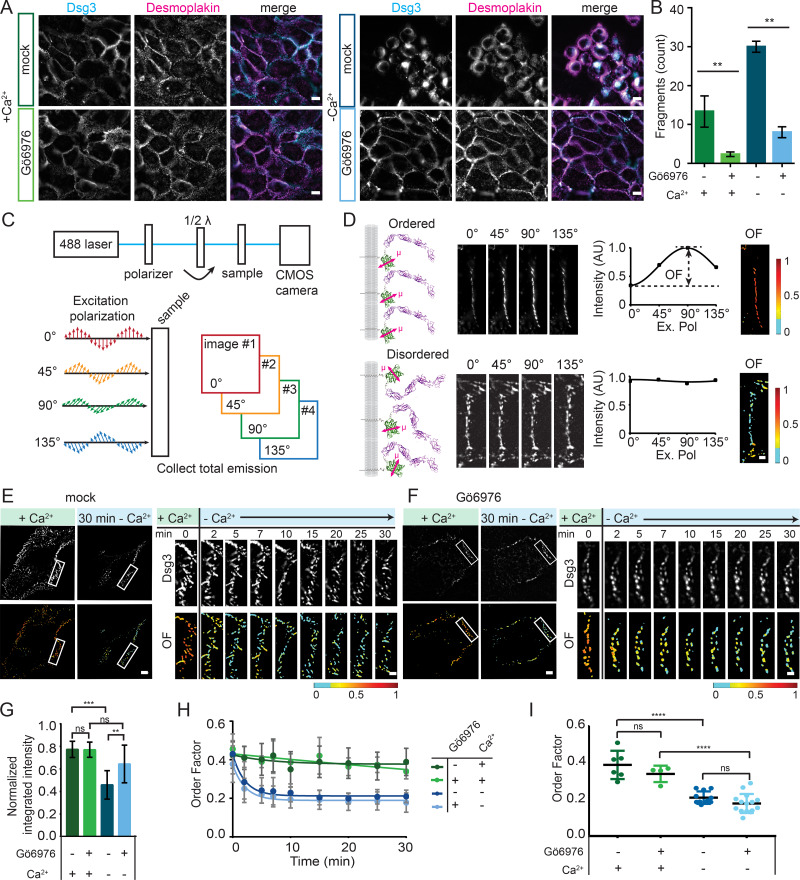
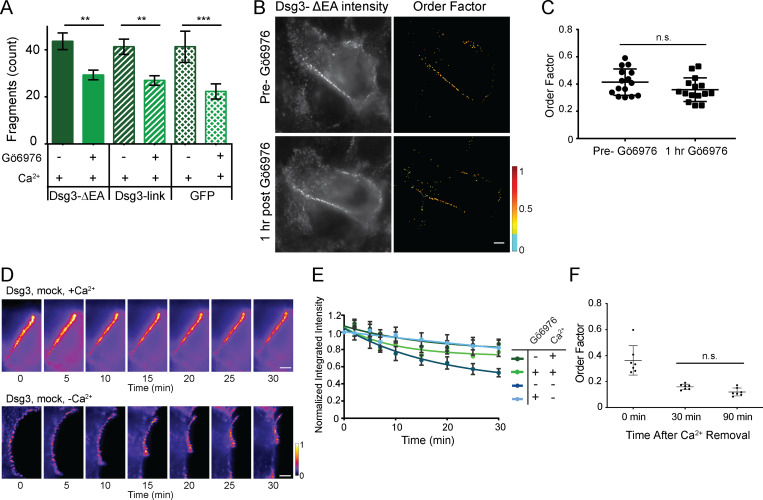
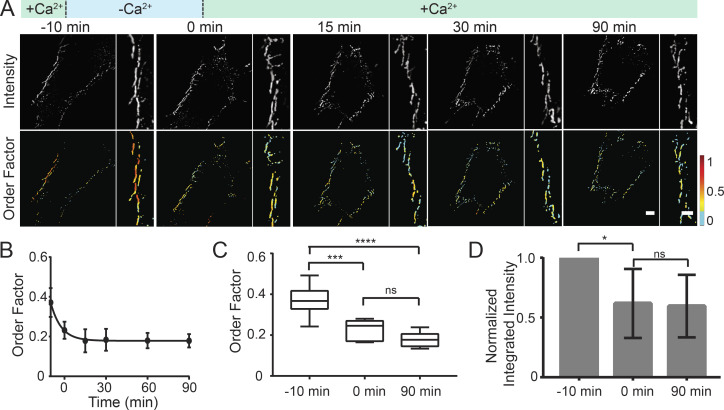
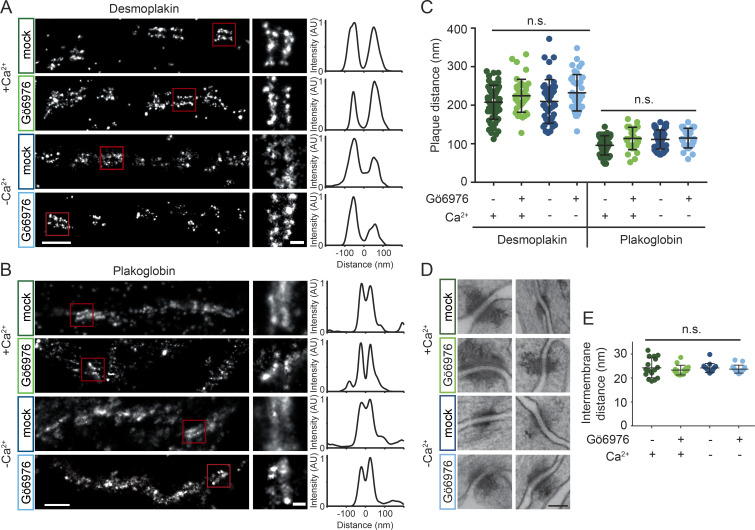
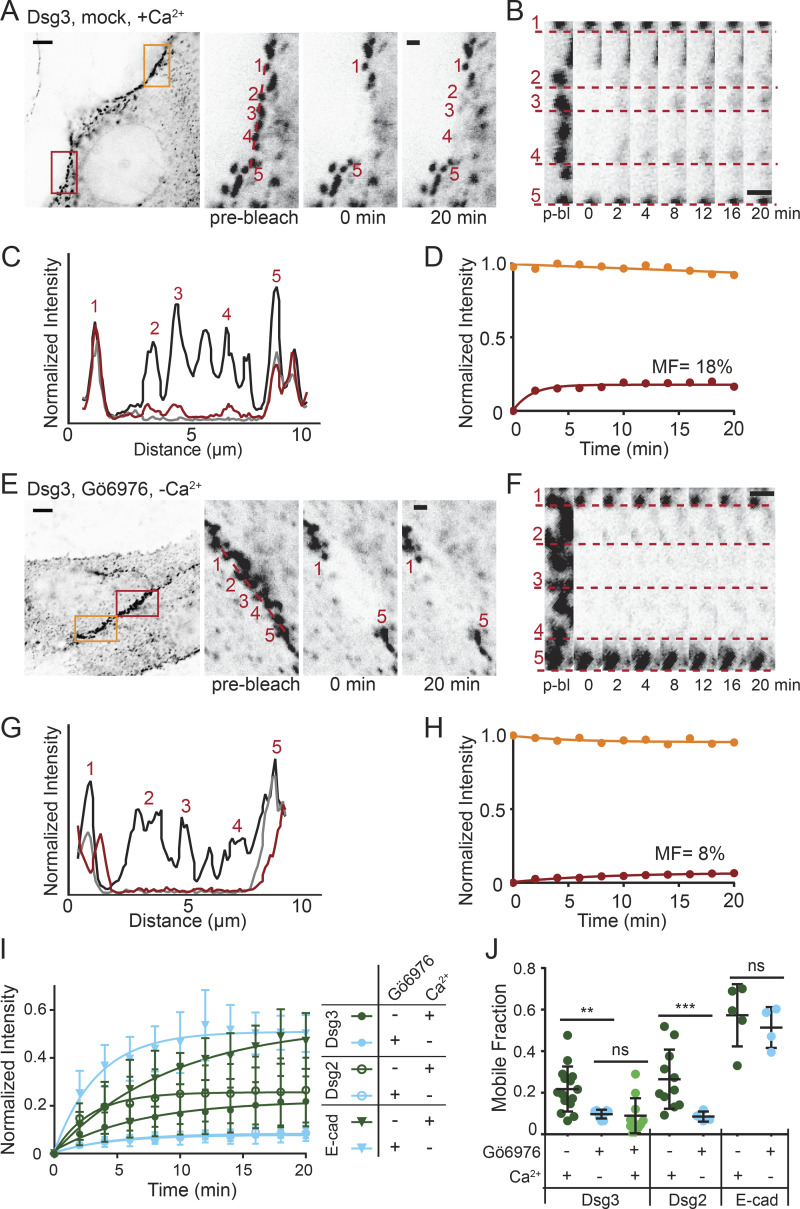
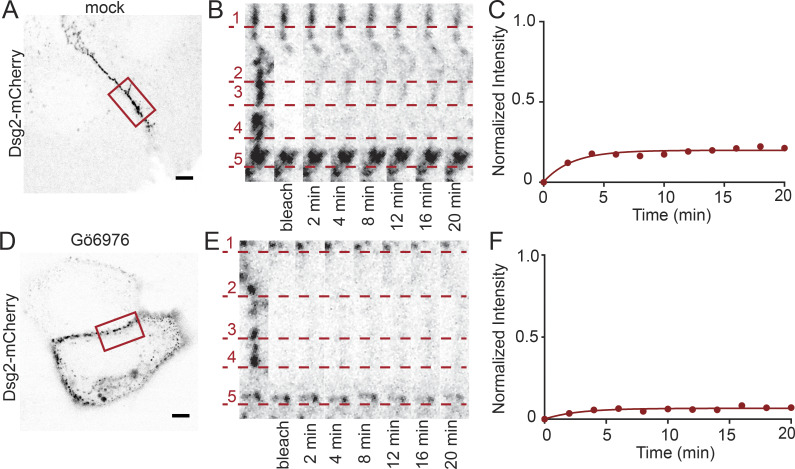
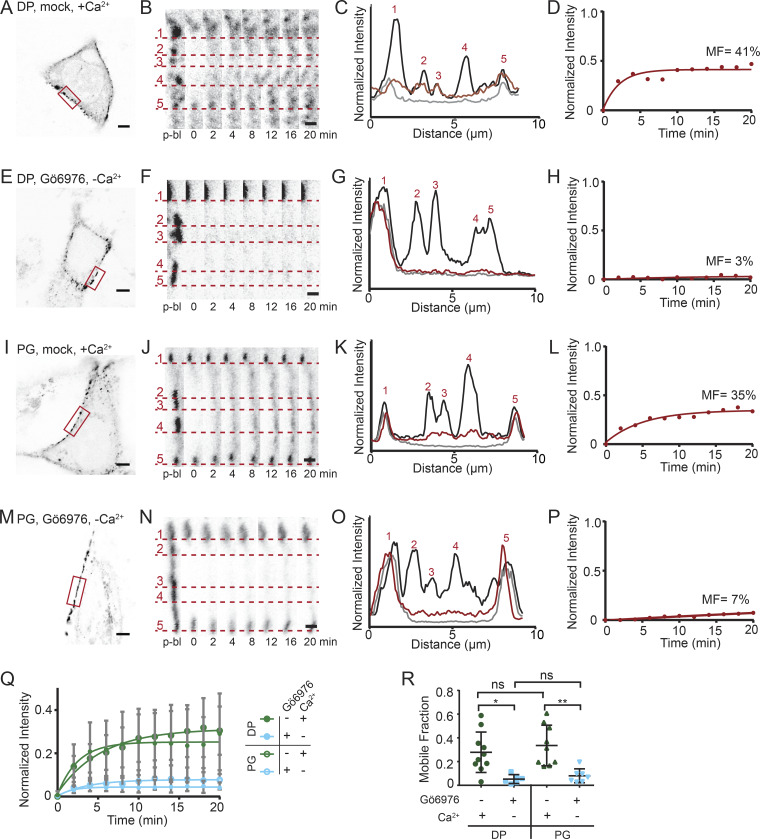
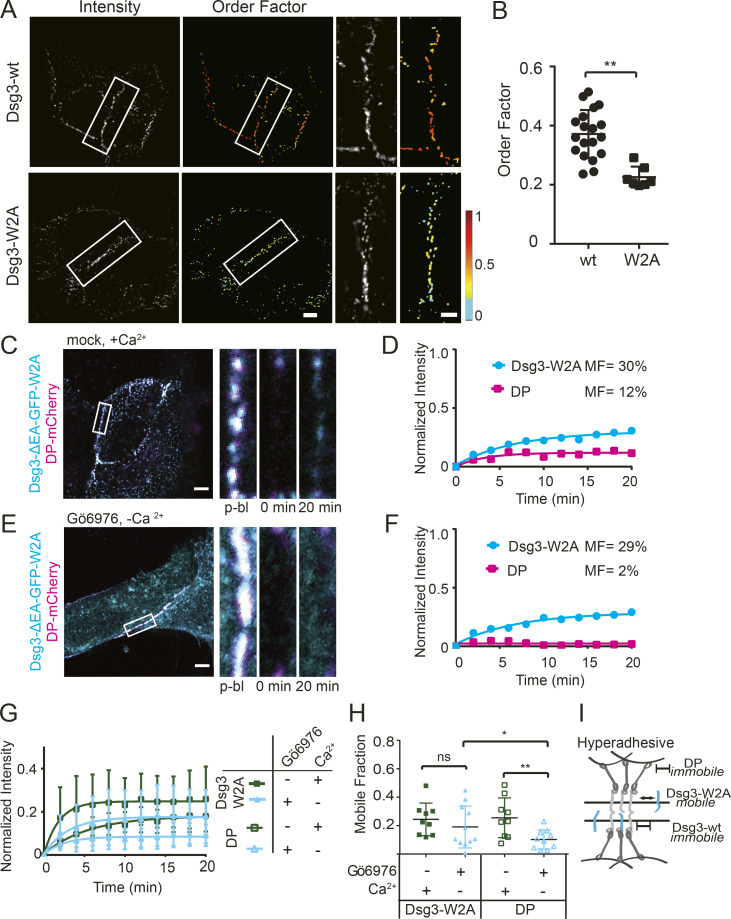
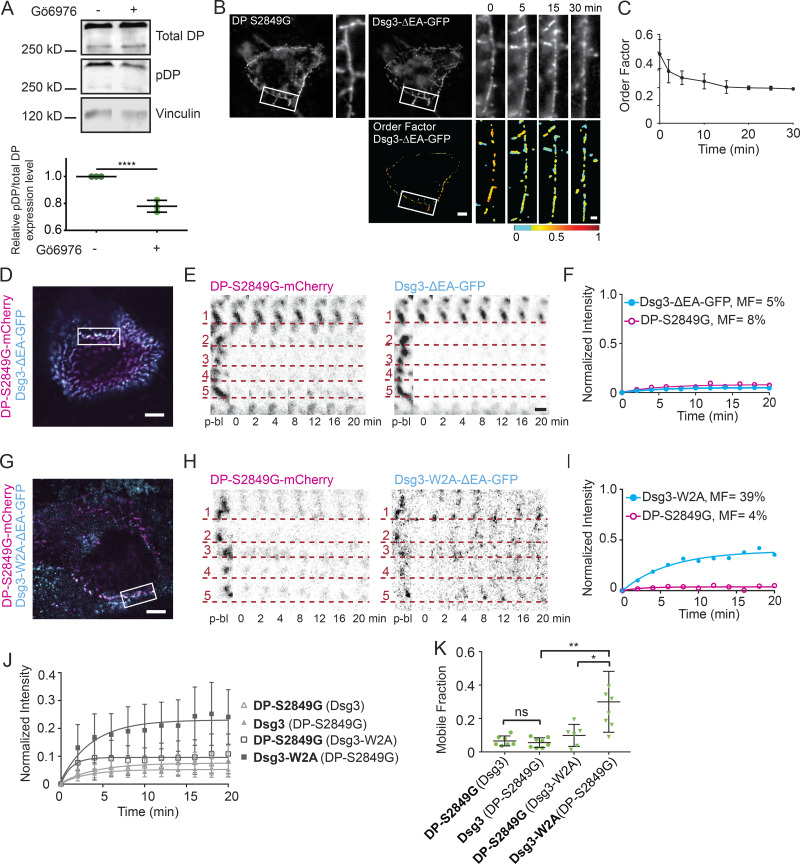
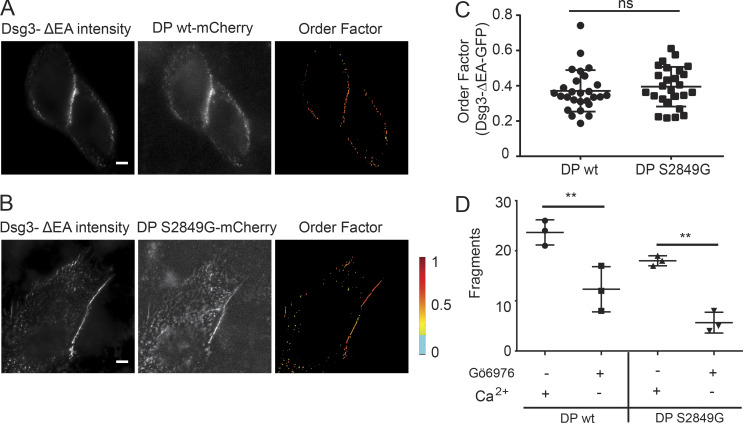
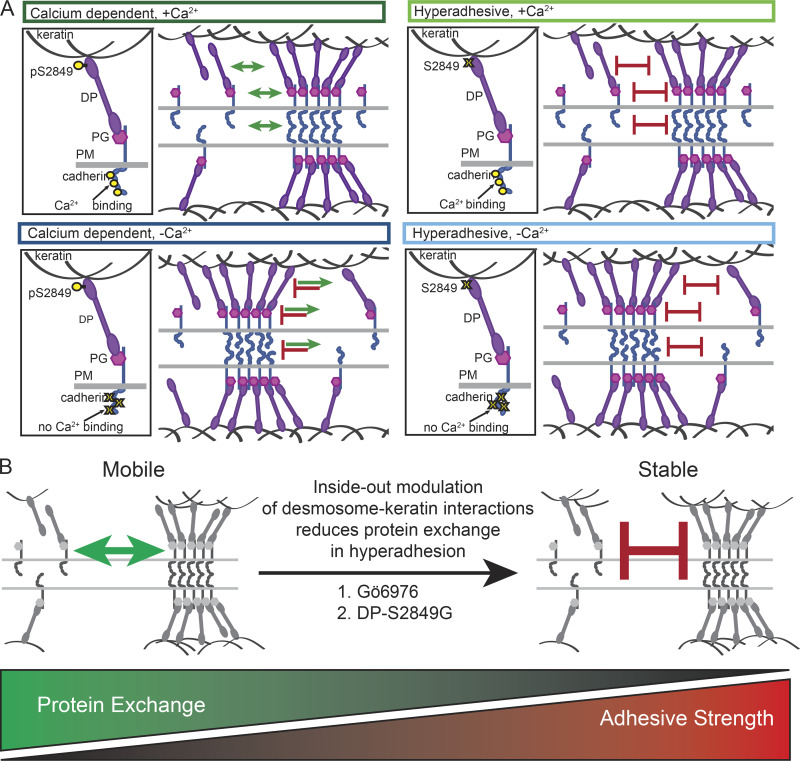
Desmosomes are cell-cell junctions that provide mechanical integrity to epithelial and cardiac tissues. Desmosomes have two distinct adhesive states, calcium-dependent and hyperadhesive, which balance tissue plasticity and strength. A highly ordered array of cadherins in the adhesive interface is hypothesized to drive hyperadhesion, but how desmosome structure confers adhesive state is still elusive. We employed fluorescence polarization microscopy to show that cadherin order is not required for hyperadhesion induced by pharmacologic and genetic approaches. FRAP experiments in cells treated with the PKCα inhibitor Gö6976 revealed that cadherins, plakoglobin, and desmoplakin have significantly reduced exchange in and out of hyperadhesive desmosomes. To test whether this was a result of enhanced keratin association, we used the desmoplakin mutant S2849G, which conferred reduced protein exchange. We propose that inside-out regulation of protein exchange modulates adhesive function, whereby proteins are "locked in" to hyperadhesive desmosomes while protein exchange confers plasticity on calcium-dependent desmosomes, thereby providing rapid control of adhesion.
桥粒是细胞-细胞连接,为上皮组织和心脏组织提供机械完整性。桥粒具有两种不同的黏附状态,即依赖钙的黏附和超黏附,这两种状态平衡了组织的可塑性和强度。黏附界面中高度有序的钙黏蛋白阵列被假设为驱动超黏附,但桥粒结构如何赋予黏附状态仍然难以捉摸。我们采用荧光偏振显微镜表明,钙黏蛋白的有序性不是药物和遗传方法诱导的超黏附所必需的。在使用蛋白激酶 Cα抑制剂 Gö6976 处理的细胞中进行的 FRAP 实验表明,钙黏蛋白、桥粒斑蛋白和桥粒芯胶蛋白在超黏附桥粒中的进出交换显著减少。为了测试这是否是增强角蛋白结合的结果,我们使用了赋予减少蛋白交换的桥粒芯胶蛋白突变体 S2849G。我们提出,蛋白交换的内-外向调节调节黏附功能,从而使蛋白“锁定”在超黏附桥粒中,而蛋白交换则赋予钙依赖性桥粒可塑性,从而提供对黏附的快速控制。