Department of Chemical and Systems Biology, School of Medicine, Stanford University, CA, USA.
Department of Chemical and Systems Biology, School of Medicine, Stanford University, CA, USA; Department of Anatomy, Institute of Biomedical Sciences, University of Sao Paulo, Sao Paulo, Brazil.
EBioMedicine. 2020 May;55:102753. doi: 10.1016/j.ebiom.2020.102753. Epub 2020 May 8.
Aldehyde dehydrogenase 2 (ALDH2) catalyzes the detoxification of aliphatic aldehydes, including acetaldehyde. About 45% of Han Chinese (East Asians), accounting for 8% of humans, carry a single point mutation in ALDH2*2 (E504K) that leads to accumulation of toxic reactive aldehydes.
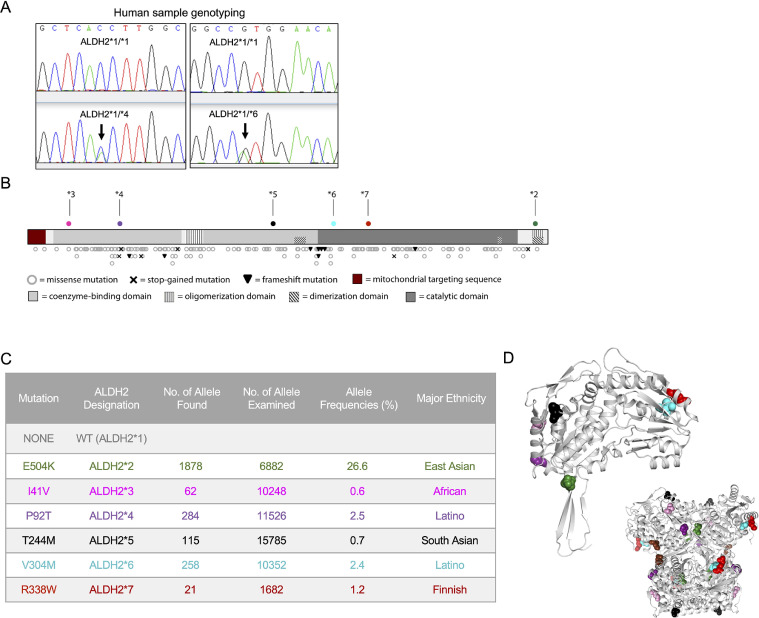
Sequencing of a small Mexican cohort and a search in the ExAC genomic database for additional ALDH2 variants common in various ethnic groups was set to identify missense variants. These were evaluated in vitro, and in cultured cells expressing these new and common variants.
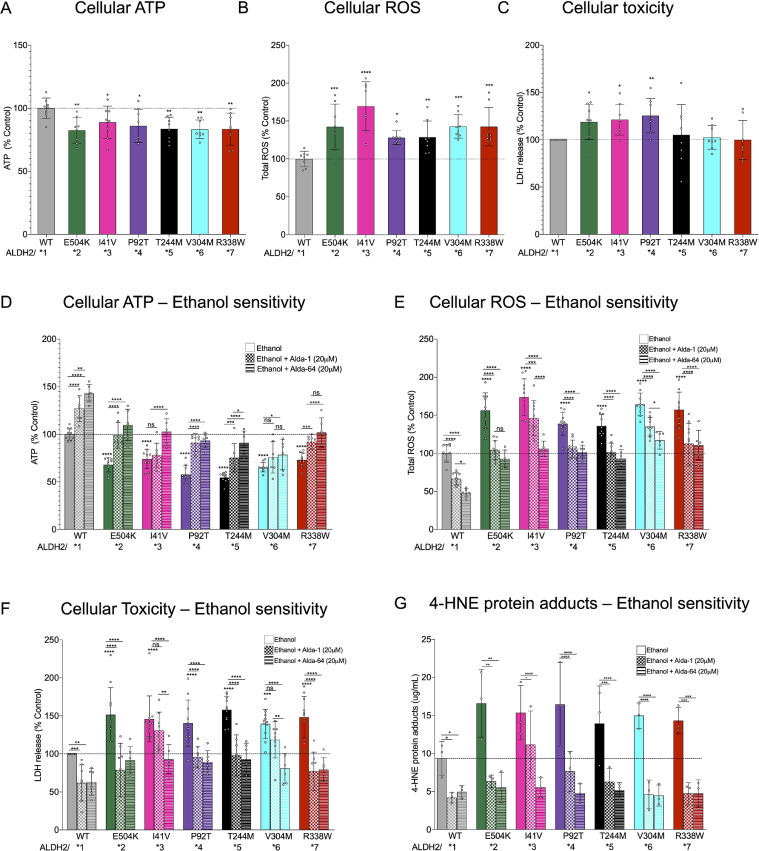
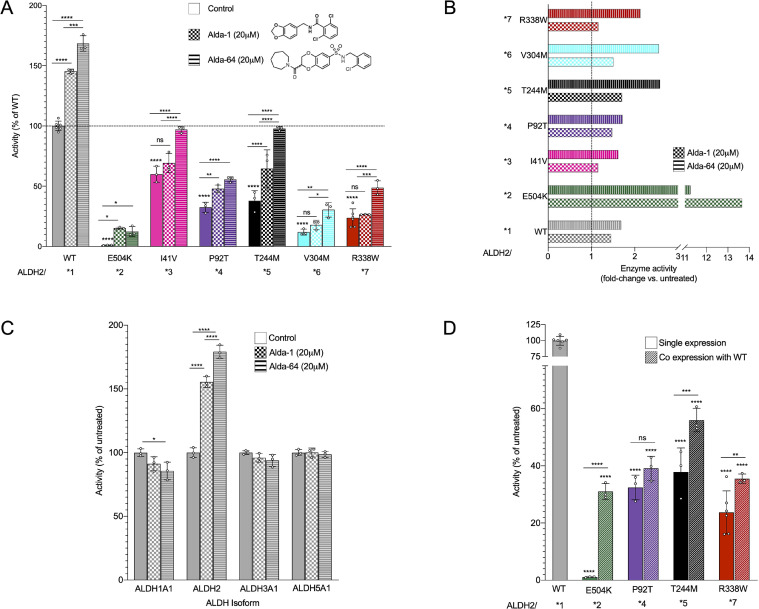
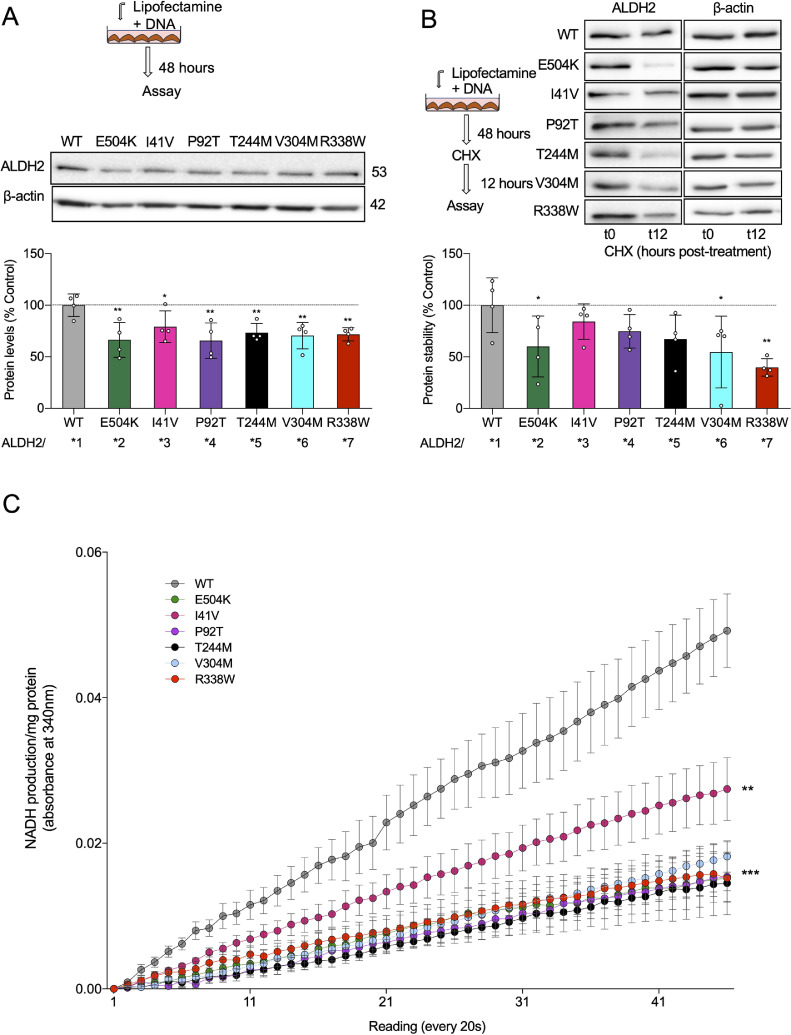
In a cohort of Hispanic donors, we identified 2 novel mutations in ALDH2. Using the ExAC genomic database, we found these identified variants and at least three other ALDH2 variants with a single point mutation among Latino, African, South Asian, and Finnish ethnic groups, at a frequency of >5/1000. Although located in different parts of the ALDH2 molecule, these common ALDH2 mutants exhibited a significant reduction in activity compared with the wild type enzyme in vitro and in 3T3 cells overexpressing each of the variants, and a greater ethanol-induced toxicity. As Alda-1, previously identified activator, did not activate some of the new mutant ALDH2 enzymes, we continued the screen and identified Alda-64, which is effective in correcting the loss of activity in most of these new and common ALDH2 variants.
Since ~80% of the world population consumes ethanol and since acetaldehyde accumulation contributes to a variety of diseases, the identification of additional inactivating variants of ALDH2 in different ethnic groups may help develop new 'precision medicine' for carriers of these inactive ALDH2.
醛脱氢酶 2(ALDH2)催化包括乙醛在内的脂族醛的解毒。约 45%的汉族人(东亚人)携带 ALDH2*2(E504K)的单点突变,导致有毒反应性醛的积累。
对一个小型墨西哥队列进行测序,并在 ExAC 基因组数据库中搜索不同人群中常见的其他 ALDH2 变体,以确定错义变体。在体外和表达这些新的和常见变体的培养细胞中对这些变体进行评估。
在一组西班牙裔供体中,我们在 ALDH2 中鉴定出 2 种新的突变。使用 ExAC 基因组数据库,我们在拉丁裔、非洲裔、南亚裔和芬兰裔人群中发现了这些已鉴定的变体以及至少另外 3 种具有单点突变的 ALDH2 变体,其频率>5/1000。尽管位于 ALDH2 分子的不同部位,但这些常见的 ALDH2 突变体与体外和过表达每种变体的 3T3 细胞中的野生型酶相比,活性显著降低,并且乙醇诱导的毒性更大。由于先前鉴定的激活剂 Alda-1 不能激活一些新的突变 ALDH2 酶,我们继续进行筛选并鉴定出 Alda-64,它有效地纠正了大多数这些新的和常见的 ALDH2 变体的活性丧失。
由于世界上约 80%的人口消费乙醇,并且乙醛积累会导致多种疾病,因此在不同种族群体中发现 ALDH2 的其他失活变体可能有助于为携带这些无活性 ALDH2 的人开发新的“精准医学”。