Division of Clinical Epidemiology and Aging Research, German Cancer Research Center (DKFZ), Heidelberg, Germany.
Division of Preventive Oncology, German Cancer Research Center (DKFZ) and National Center for Tumor Diseases (NCT), Heidelberg, Germany.
Blood Cancer J. 2020 May 13;10(5):56. doi: 10.1038/s41408-020-0323-4.
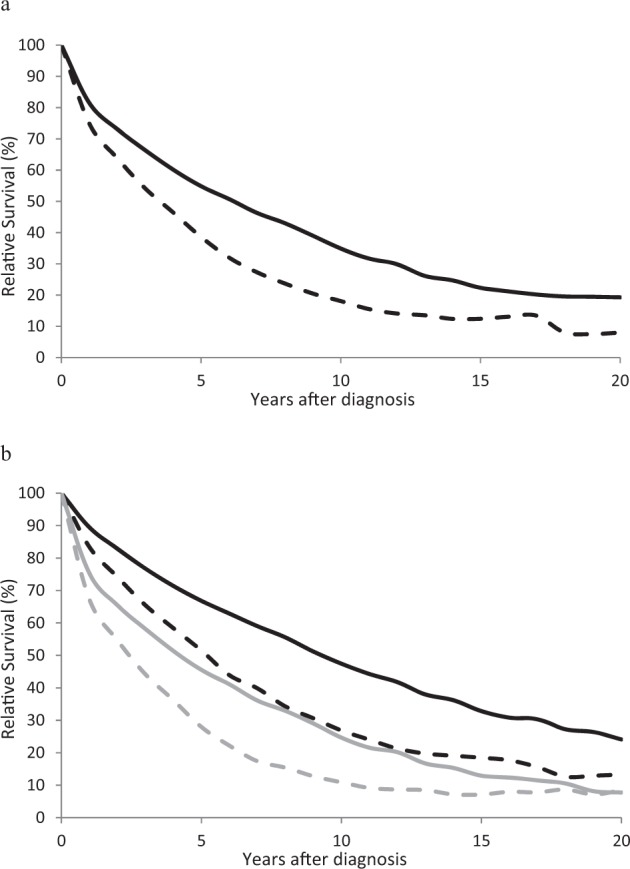
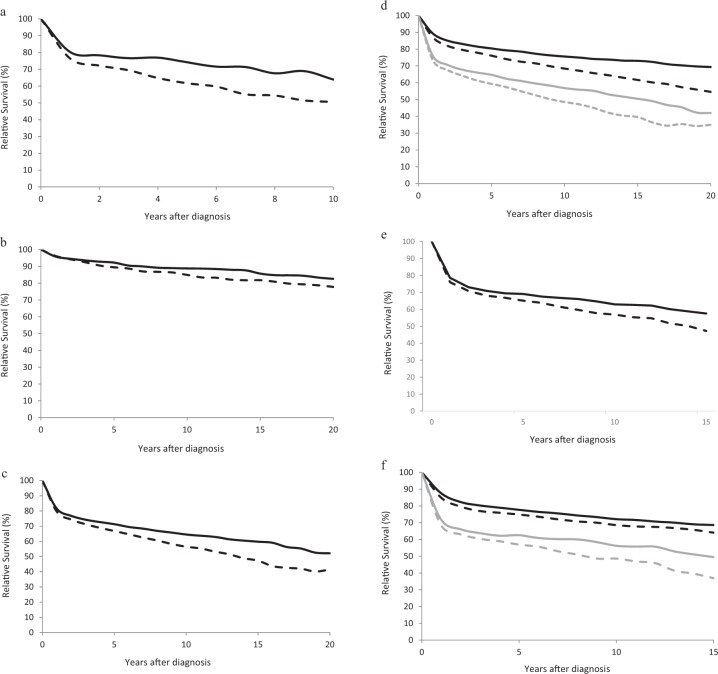
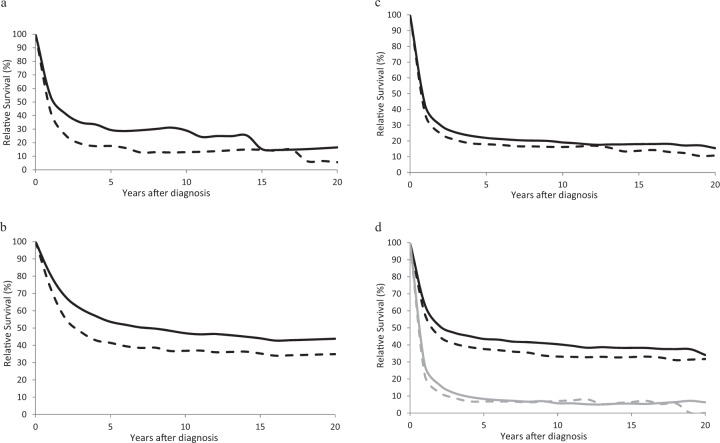
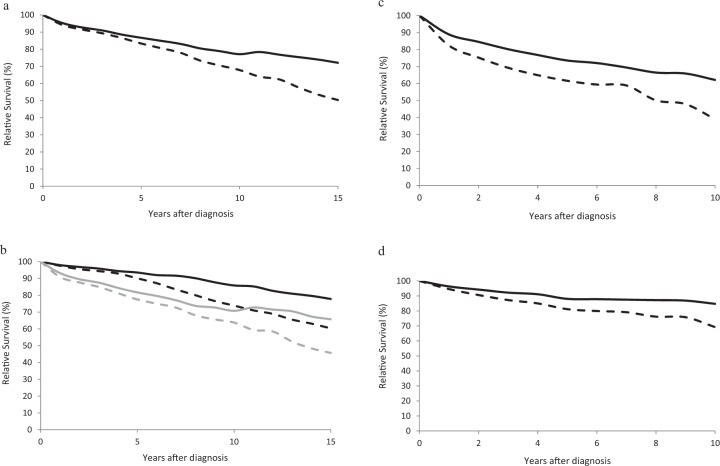
Five-year survival has increased for many hematologic malignancies in the 21st century. However, whether this has translated into greater long-term survival is unknown. Here, we examine 10- and 20-year survival for patients with multiple myeloma (MM), acute lymphoblastic leukemia (ALL), acute myeloblastic leukemia (AML), chronic lymphoid leukemia (CLL), chronic myeloid leukemia (CML), non-Hodgkin lymphoma (NHL), and Hodgkin lymphoma (HL). Data were extracted from the Surveillance, Epidemiology, and End Results-9 database. Patients age 15+ with the above malignancies were included. The newly developed boomerang method was used to examine 10- and 20-year relative survival (RS) for patients in 2002-2006 and 2012-16. Ten and 20-year RS increased for each malignancy examined, with increases ranging from +4.4% units for 20-year RS for AML to +23.1% units for 10-year RS for CML. Ten year RS was >50% in 2012-16 for patients with CLL, CML, HL, NHL, and DLBCL, at 77.1%, 62.1%, 63.9%, 64.5%, and 63.0%, respectively. Survival dropped between 10 and 20 years after diagnosis for most malignancies. Long-term survival is increasing for common hematologic malignancies, but late mortality is an ongoing issue. Further study of long-term outcomes in curable malignancies to determine the reason for these later decreases in survival is indicated.
在 21 世纪,许多血液恶性肿瘤的 5 年生存率有所提高。然而,这是否转化为更长的长期生存尚不清楚。在这里,我们研究了多发性骨髓瘤(MM)、急性淋巴细胞白血病(ALL)、急性髓细胞白血病(AML)、慢性淋巴细胞白血病(CLL)、慢性髓细胞白血病(CML)、非霍奇金淋巴瘤(NHL)和霍奇金淋巴瘤(HL)患者的 10 年和 20 年生存率。数据来自监测、流行病学和最终结果-9 数据库。纳入年龄在 15 岁及以上的上述恶性肿瘤患者。使用新开发的回旋镖方法检查了 2002-2006 年和 2012-2016 年患者的 10 年和 20 年相对生存率(RS)。每种检查的恶性肿瘤的 10 年和 20 年 RS 均有所增加,20 年 RS 的增加幅度从 AML 的+4.4%单位到 CML 的 10 年 RS 的+23.1%单位不等。在 2012-2016 年,CLL、CML、HL、NHL 和 DLBCL 的患者 10 年 RS 分别为>50%,分别为 77.1%、62.1%、63.9%、64.5%和 63.0%。大多数恶性肿瘤在诊断后 10 至 20 年内生存率下降。常见血液恶性肿瘤的长期生存率正在提高,但晚期死亡率仍是一个持续存在的问题。需要进一步研究可治愈恶性肿瘤的长期结局,以确定这些生存后期下降的原因。