Cell Biology, Faculty of Science and Engineering, Åbo Akademi University, Tykistökatu 6, 20520 Turku, Finland.
Turku Bioscience, University of Turku and Åbo Akademi University, Tykistökatu 6, 20520 Turku, Finland.
Cells. 2020 May 12;9(5):1202. doi: 10.3390/cells9051202.
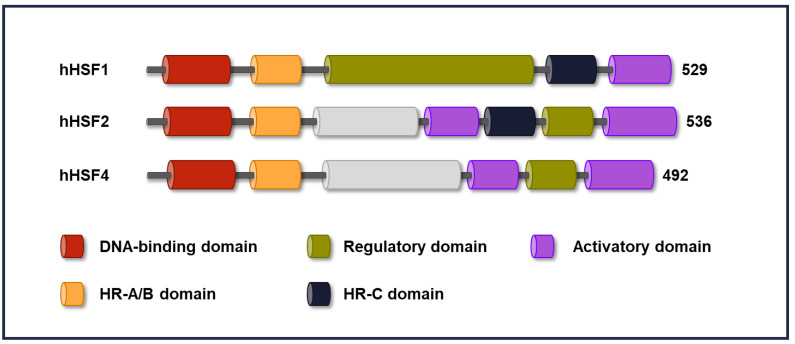
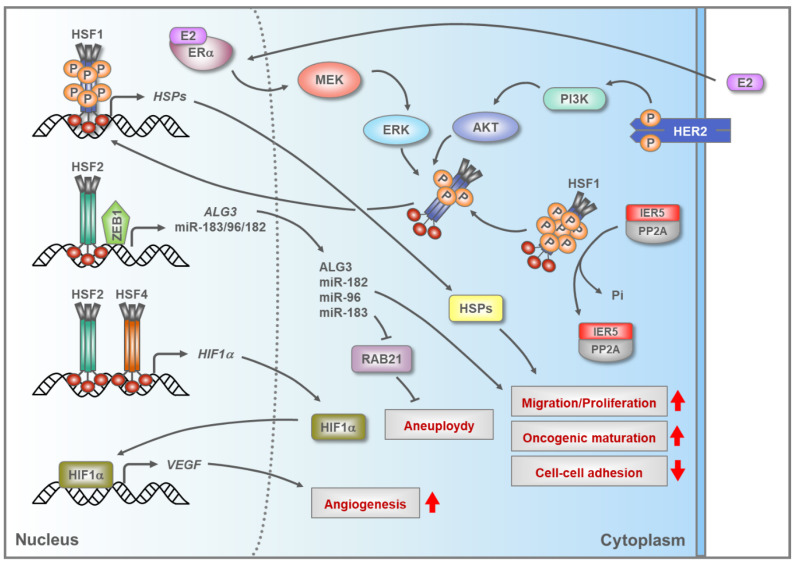
Malignant transformation is accompanied by alterations in the key cellular pathways that regulate development, metabolism, proliferation and motility as well as stress resilience. The members of the transcription factor family, called heat shock factors (HSFs), have been shown to play important roles in all of these biological processes, and in the past decade it has become evident that their activities are rewired during tumorigenesis. This review focuses on the expression patterns and functions of HSF1, HSF2, and HSF4 in specific cancer types, highlighting the mechanisms by which the regulatory functions of these transcription factors are modulated. Recently developed therapeutic approaches that target HSFs are also discussed.
恶性转化伴随着调节发育、代谢、增殖和运动以及应激弹性的关键细胞途径的改变。转录因子家族的成员,称为热休克因子(HSF),已被证明在所有这些生物过程中都发挥着重要作用,在过去的十年中,人们已经清楚地认识到它们的活性在肿瘤发生过程中被重新布线。这篇综述重点介绍了 HSF1、HSF2 和 HSF4 在特定癌症类型中的表达模式和功能,强调了这些转录因子的调节功能被调节的机制。还讨论了最近针对 HSF 的治疗方法。