Laboratory of Organic and Macromolecular Chemistry (IOMC), Friedrich Schiller University Jena, Humboldtstraße 10, 07743, Jena, Germany.
Department of Pharmaceutical/Medicinal Chemistry, Institute of Pharmacy, Friedrich Schiller University Jena, Philosophenweg 14, 07743, Jena, Germany.
J Nanobiotechnology. 2020 May 14;18(1):73. doi: 10.1186/s12951-020-00620-7.
Dual inhibitors of the 5-lipoxygenase-activating protein (FLAP) and the microsomal prostaglandin E synthase-1 (mPGES-1) may exert better anti-inflammatory efficacy and lower risks of adverse effects versus non-steroidal anti-inflammatory drugs. Despite these advantages, many dual FLAP/mPGES-1 inhibitors are acidic lipophilic molecules with low solubility and strong tendency for plasma protein binding that limit their bioavailability and bioactivity. Here, we present the encapsulation of the dual FLAP/mPGES-1 inhibitor BRP-187 into the biocompatible polymers acetalated dextran (Acdex) and poly(lactic-co-glycolic acid) (PLGA) via nanoprecipitation.
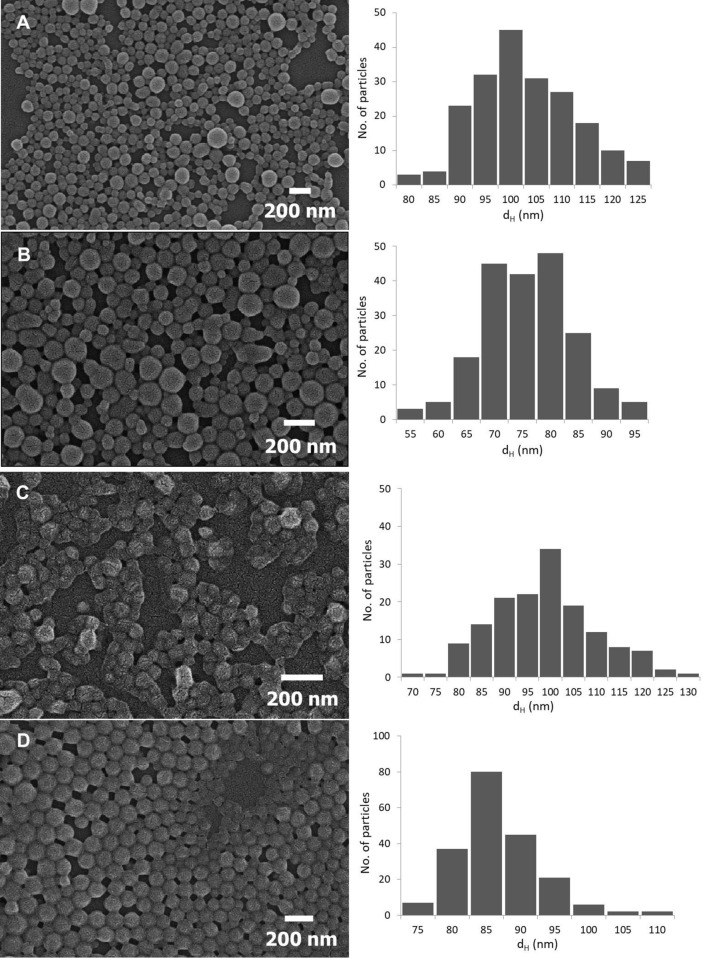
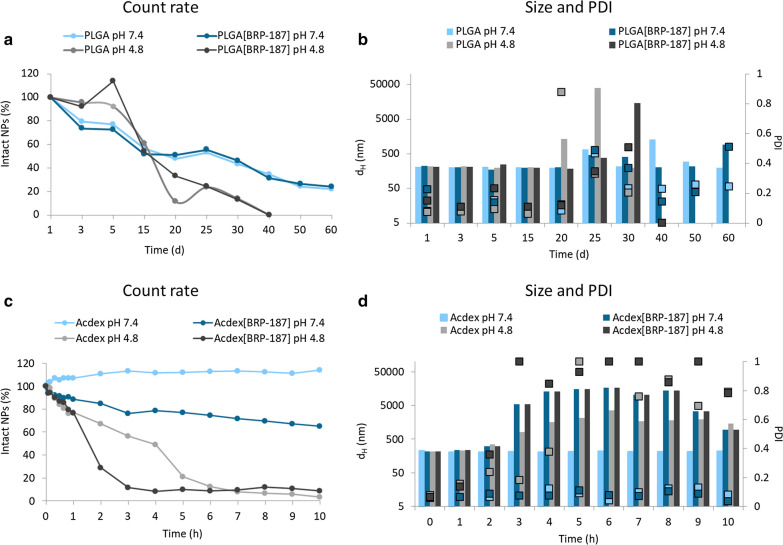
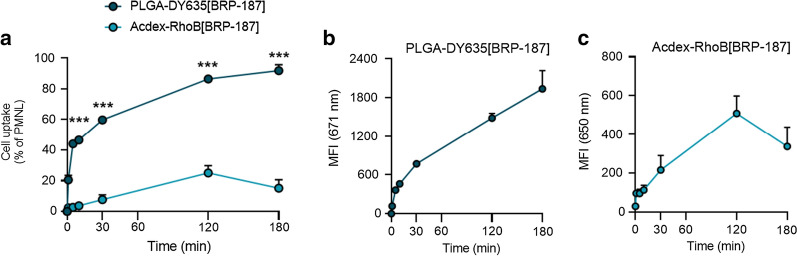
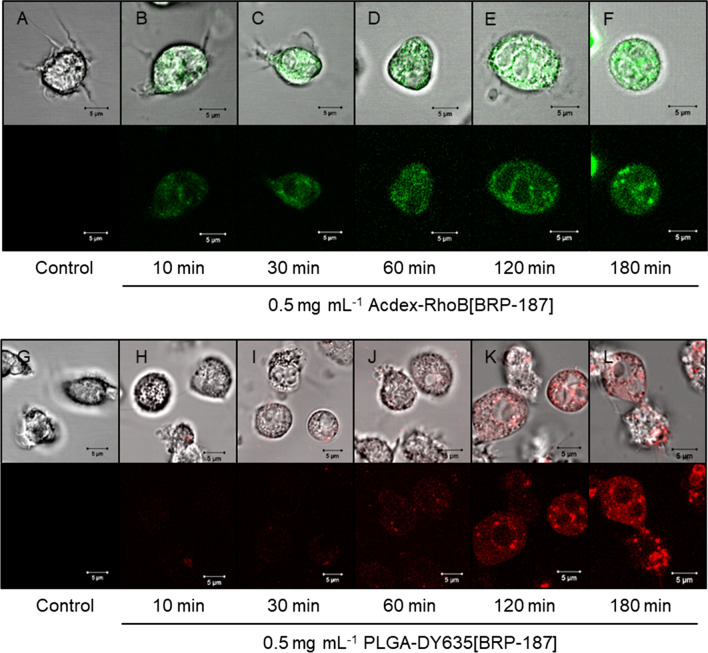
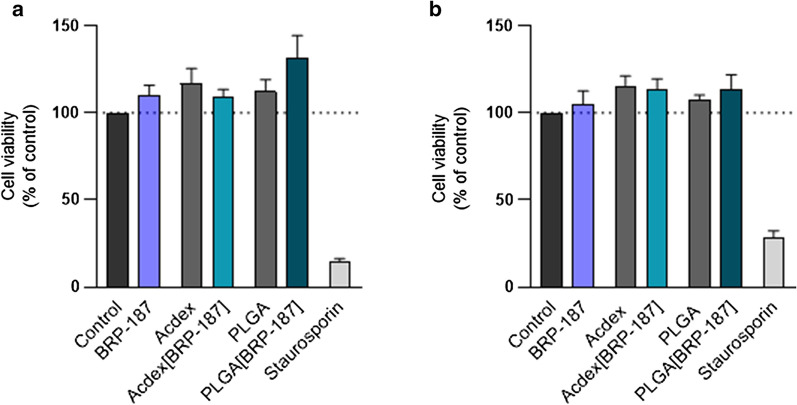
The nanoparticles containing BRP-187 were prepared by the nanoprecipitation method and analyzed by dynamic light scattering regarding their hydrodynamic diameter, by scanning electron microscopy for morphology properties, and by UV-VIS spectroscopy for determination of the encapsulation efficiency of the drug. Moreover, we designed fluorescent BRP-187 particles, which showed high cellular uptake by leukocytes, as analyzed by flow cytometry. Finally, BRP-187 nanoparticles were tested in human polymorphonuclear leukocytes and macrophages to determine drug uptake, cytotoxicity, and efficiency to inhibit FLAP and mPGES-1.
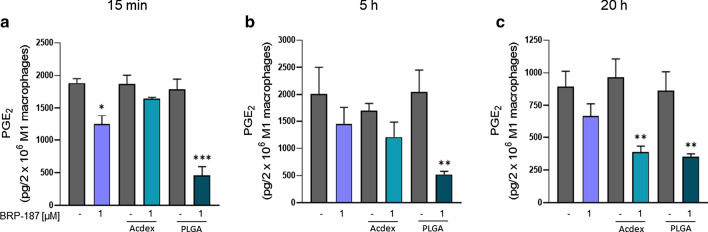
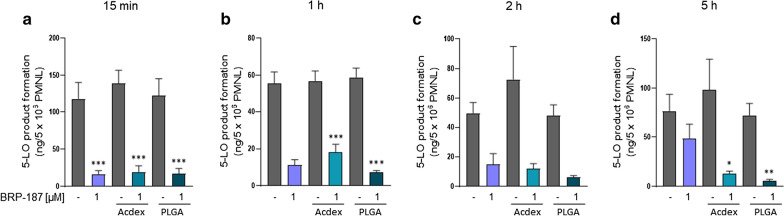
Our results demonstrate that encapsulation of BRP-187 into Acdex and PLGA is feasible, and both PLGA- and Acdex-based particles loaded with BRP-187 are more efficient in suppressing 5-lipoxygenase product formation and prostaglandin E biosynthesis in intact cells as compared to the free compound, particularly after prolonged preincubation periods.
5-脂氧合酶激活蛋白(FLAP)和微粒体前列腺素 E 合酶-1(mPGES-1)的双重抑制剂可能比非甾体抗炎药具有更好的抗炎效果和更低的不良反应风险。尽管有这些优势,但许多双重 FLAP/mPGES-1 抑制剂是具有低溶解度和强血浆蛋白结合倾向的酸性亲脂分子,这限制了它们的生物利用度和生物活性。在这里,我们通过纳米沉淀法将双重 FLAP/mPGES-1 抑制剂 BRP-187 包封到生物相容性聚合物乙酰化葡聚糖(Acdex)和聚(乳酸-共-乙醇酸)(PLGA)中。
通过纳米沉淀法制备了含有 BRP-187 的纳米颗粒,并通过动态光散射法测定其水动力直径,通过扫描电子显微镜观察其形态特性,通过紫外可见分光光度法测定药物的包封效率。此外,我们设计了荧光 BRP-187 颗粒,通过流式细胞术分析表明其被白细胞摄取的效率很高。最后,BRP-187 纳米颗粒在人多形核白细胞和巨噬细胞中进行了测试,以确定药物摄取、细胞毒性以及抑制 FLAP 和 mPGES-1 的效率。
我们的结果表明,将 BRP-187 包封到 Acdex 和 PLGA 中是可行的,并且与游离化合物相比,负载 BRP-187 的 PLGA 和 Acdex 基纳米颗粒在完整细胞中更有效地抑制 5-脂氧合酶产物的形成和前列腺素 E 的生物合成,尤其是在延长预孵育期后。