School of Public Health and Family Medicine, College of Medicine, University of Malawi, Blantyre, Malawi.
Africa Center of Excellence in Public Health and Herbal Medicine (ACEPHEM), College of Medicine, University of Malawi, Blantyre, Malawi.
Reprod Health. 2020 May 14;17(1):66. doi: 10.1186/s12978-020-00917-8.
We conducted this study to understand roles of community leaders on adolescent's HIV and Sexual and Reproductive Health (SRH) rights in Mulanje-Malawi. We discussed how each role can influence health seeking behaviour and improve SRH rights among adolescents from the local perspective.
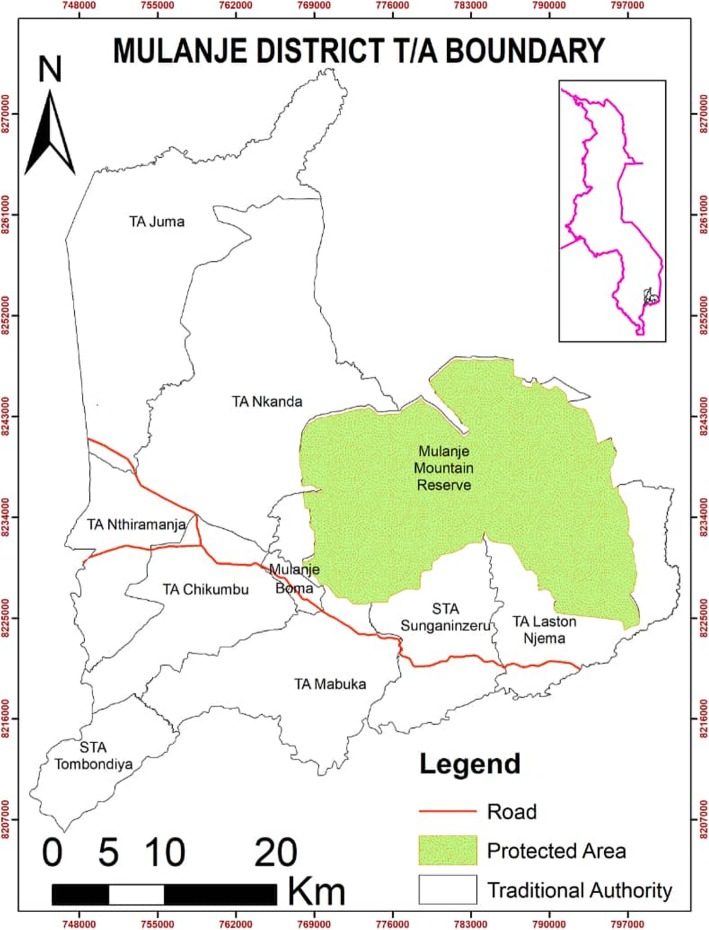
A qualitative study approach was used. We conducted 17 Key Informant Interviews (KIIs) and 12 Focus Group Discussions (FGDs) with community leaders. Purposive sampling technique was used to select study participants for KIIs. We also used purposive sampling technique to identify two villages from each of the six Traditional Authorities (TAs) where FGDs were conducted. All participants in FGDs were purposively selected. Inductive thematic content analysis was done guided by the study objectives to generate emerging themes.
Community leaders have many roles on adolescents HIV and SRH. These roles include advisory, encouragement, regulating and restricting cultural practices, formulating bye-laws and handling sexual abuse complaints. However, community leaders with religious affiliation have shown to have different views with those representing other institutions not affiliated to religion. In addition, the majority of community leaders indicated low level of knowledge on adolescent's SRH rights.
We suggest that the roles of community leaders differ depending on the position held and institution represented. Those not affiliated with religious institutions can encourage certain behaviour in adolescents while those from religious background are discouraging it. Stakeholders involved in the fight against HIV, promotion of SRH and rights should invest more on capacity building among the community leaders.
本研究旨在了解马拉维木兰杰地区社区领导人在青少年艾滋病和性与生殖健康(SRH)权利方面的作用。我们从当地的角度讨论了每个角色如何影响青少年寻求健康的行为,并改善他们的 SRH 权利。
采用定性研究方法。我们对社区领导人进行了 17 次关键知情人访谈(KII)和 12 次焦点小组讨论(FGD)。采用目的性抽样技术选择 KII 的研究参与者。我们还使用目的性抽样技术从六个传统当局(TA)中的每个传统当局中确定两个村庄进行 FGD。所有 FGD 参与者都是有目的地选择的。采用归纳主题内容分析法,根据研究目的生成新兴主题。
社区领导人在青少年艾滋病和 SRH 方面有多种角色。这些角色包括提供咨询、鼓励、规范和限制文化习俗、制定地方法规和处理性虐待投诉。然而,具有宗教背景的社区领导人与代表其他非宗教机构的领导人的观点存在差异。此外,大多数社区领导人表示对青少年的 SRH 权利的了解程度较低。
我们建议,社区领导人的角色因所担任的职务和代表的机构而异。那些不隶属于宗教机构的人可以鼓励青少年的某些行为,而那些来自宗教背景的人则会劝阻这些行为。参与抗击艾滋病、促进 SRH 和权利的利益相关者应在社区领导人的能力建设方面投入更多。