Department of Neurology, Osaka Toneyama Medical Center, 5-1-1 Toneyama, Toyonaka, Osaka, 560-8552, Japan.
The Research Institute for Time Studies, Yamaguchi University, 1677-1 Yoshida, Yamaguchi, Yamaguchi, 753-8511, Japan.
Sci Rep. 2020 May 14;10(1):7982. doi: 10.1038/s41598-020-64645-6.
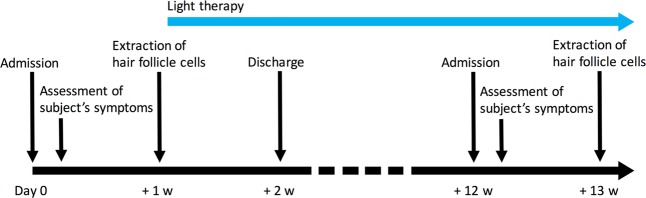
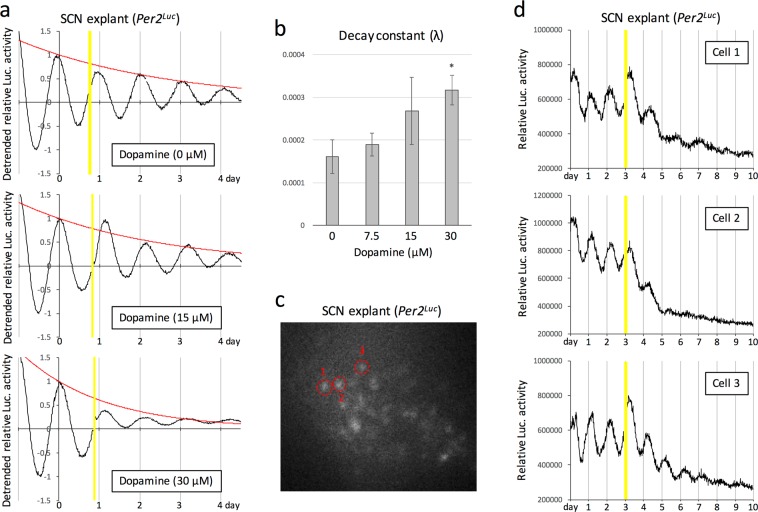
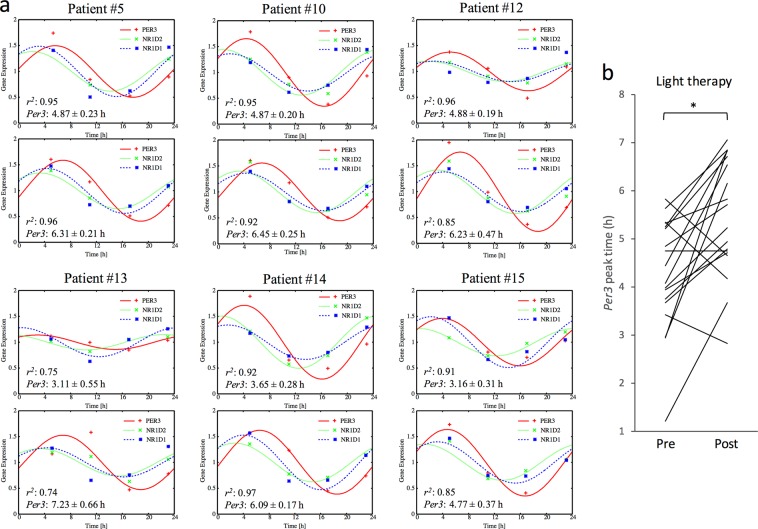
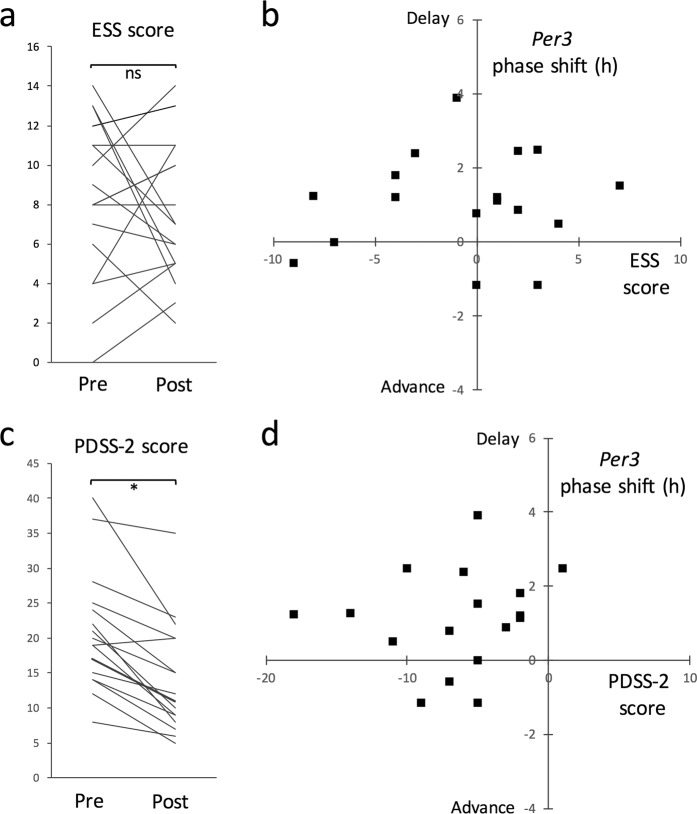
Parkinson's disease (PD) is one of the most common neurodegenerative disorders. Among the most common manifestations of PD are sleep problems, which are coupled with the adverse effects of dopaminergic therapies (DT). A non-pharmacological solution for these sleep problems has been sought to avoid additional pharmacological intervention. Here, we show that bright light therapy (BLT) is effective for improving sleep in Japanese PD patients receiving DT. Furthermore, experimental evaluation of peripheral clock gene expression rhythms revealed that most PD patients receiving DT who experienced improved sleep following BLT showed a circadian phase shift, indicating the existence of a correlation between circadian modulation and sleep improvement. Conversely, this result indicates that sleep problems in PD patients receiving DT may arise at least in part as a result of circadian dysfunction. Indeed, we found that chronic dopaminergic stimulation induced a rapid attenuation of autonomous oscillations of clock gene expression in ex vivo cultured mouse suprachiasmatic nucleus (SCN) at the single neuron level. In conclusion, BLT is a promising medical treatment for improving sleep in PD patients receiving DT. This BLT-induced improvement may be due to the restoration of circadian function.
帕金森病(PD)是最常见的神经退行性疾病之一。PD 最常见的表现之一是睡眠问题,这些问题与多巴胺能疗法(DT)的不良反应有关。为了避免额外的药物干预,人们一直在寻找这些睡眠问题的非药物解决方案。在这里,我们表明,光疗(BLT)可有效改善接受 DT 的日本 PD 患者的睡眠。此外,对周围时钟基因表达节律的实验评估表明,大多数接受 BLT 治疗后睡眠改善的接受 DT 的 PD 患者表现出昼夜相位提前,表明昼夜节律调节与睡眠改善之间存在相关性。相反,这一结果表明,接受 DT 的 PD 患者的睡眠问题至少部分可能是由于昼夜节律功能障碍引起的。事实上,我们发现,慢性多巴胺能刺激会在体外培养的小鼠视交叉上核(SCN)的单个神经元水平上迅速减弱时钟基因表达的自主振荡。总之,BLT 是改善接受 DT 的 PD 患者睡眠的一种很有前途的治疗方法。这种 BLT 诱导的改善可能是由于昼夜节律功能的恢复。