Department of Cancer Physiology, H Lee Moffitt Cancer Centre and Research Institute, Tampa, FL, USA.
Department of Molecular Medicine, University of South Florida, Tampa, FL, USA.
Nat Commun. 2020 May 14;11(1):2393. doi: 10.1038/s41467-020-16212-w.
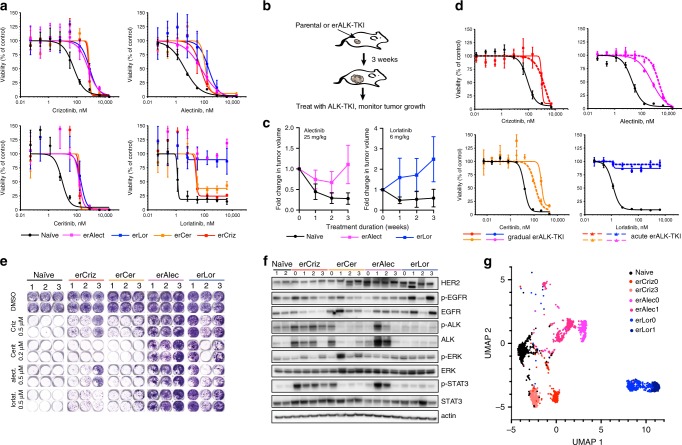
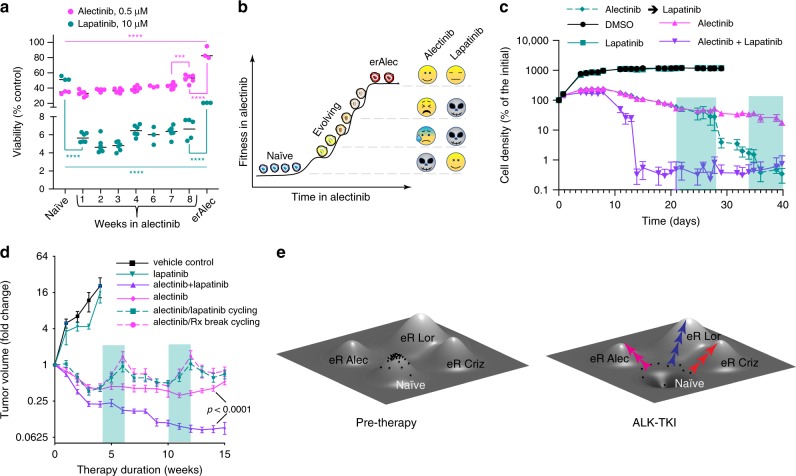
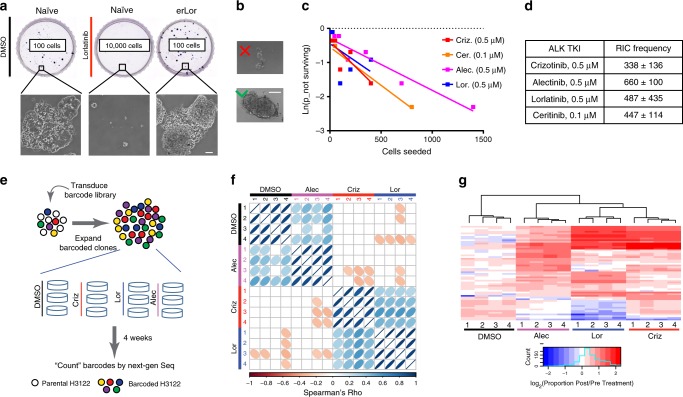
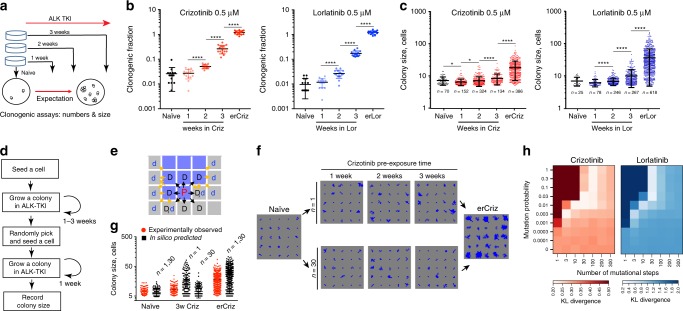
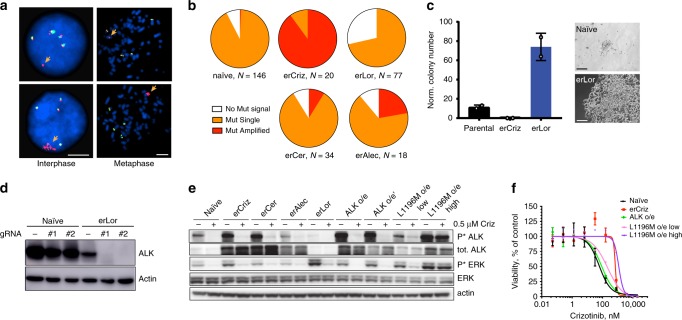
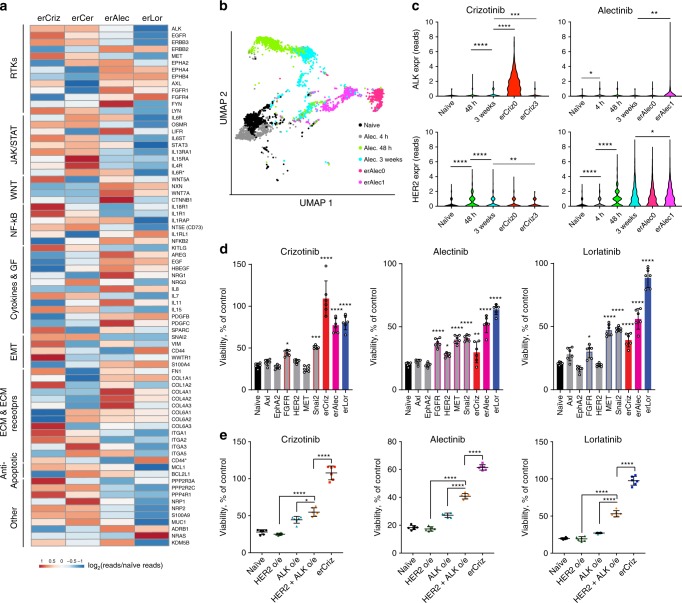
Despite high initial efficacy, targeted therapies eventually fail in advanced cancers, as tumors develop resistance and relapse. In contrast to the substantial body of research on the molecular mechanisms of resistance, understanding of how resistance evolves remains limited. Using an experimental model of ALK positive NSCLC, we explored the evolution of resistance to different clinical ALK inhibitors. We found that resistance can originate from heterogeneous, weakly resistant subpopulations with variable sensitivity to different ALK inhibitors. Instead of the commonly assumed stochastic single hit (epi) mutational transition, or drug-induced reprogramming, we found evidence for a hybrid scenario involving the gradual, multifactorial adaptation to the inhibitors through acquisition of multiple cooperating genetic and epigenetic adaptive changes. Additionally, we found that during this adaptation tumor cells might present unique, temporally restricted collateral sensitivities, absent in therapy naïve or fully resistant cells, suggesting the potential for new therapeutic interventions, directed against evolving resistance.
尽管靶向治疗在初期具有很高的疗效,但在晚期癌症中,由于肿瘤产生耐药性和复发,最终会失败。与大量关于耐药性分子机制的研究相比,人们对耐药性如何演变的理解仍然有限。我们使用 ALK 阳性 NSCLC 的实验模型,探索了对不同临床 ALK 抑制剂的耐药性演变。我们发现,耐药性可能源自异质性、耐药性较弱的亚群,这些亚群对不同的 ALK 抑制剂的敏感性不同。我们没有发现通常假设的随机单击(epi)突变过渡,或药物诱导的重新编程,而是有证据表明存在一种混合情况,即通过获得多种协同的遗传和表观遗传适应性变化,逐渐适应抑制剂。此外,我们发现在此适应过程中,肿瘤细胞可能会表现出独特的、暂时受限的旁系敏感性,而在治疗初治或完全耐药的细胞中不存在这些敏感性,这表明针对不断进化的耐药性可能存在新的治疗干预措施。