• 文献检索
  • 文档翻译
  • 深度研究
  • 学术资讯
  • Suppr Zotero 插件Zotero 插件
  • 邀请有礼
  • 套餐&价格
  • 历史记录
应用&插件
Suppr Zotero 插件Zotero 插件浏览器插件Mac 客户端Windows 客户端微信小程序
定价
高级版会员购买积分包购买API积分包
服务
文献检索文档翻译深度研究API 文档MCP 服务
关于我们
关于 Suppr公司介绍联系我们用户协议隐私条款
关注我们

Suppr 超能文献

核心技术专利:CN118964589B侵权必究
粤ICP备2023148730 号-1Suppr @ 2026

文献检索

告别复杂PubMed语法,用中文像聊天一样搜索,搜遍4000万医学文献。AI智能推荐,让科研检索更轻松。

立即免费搜索

文件翻译

保留排版,准确专业,支持PDF/Word/PPT等文件格式,支持 12+语言互译。

免费翻译文档

深度研究

AI帮你快速写综述,25分钟生成高质量综述,智能提取关键信息,辅助科研写作。

立即免费体验

SARS-CoV-2 疫情期间择期非紧急手术和美容手术:关于安全性、可行性及对临床管理影响的考虑。

Elective, Non-urgent Procedures and Aesthetic Surgery in the Wake of SARS-COVID-19: Considerations Regarding Safety, Feasibility and Impact on Clinical Management.

机构信息

Ocean Clinic Marbella, Marbella, Spain.

Torre Medica Auxilio Mutuo, San Juan, PR, USA.

出版信息

Aesthetic Plast Surg. 2020 Jun;44(3):1014-1042. doi: 10.1007/s00266-020-01752-9. Epub 2020 May 14.

DOI:10.1007/s00266-020-01752-9
PMID:32410196
原文链接:https://pmc.ncbi.nlm.nih.gov/articles/PMC7224128/
Abstract

BACKGROUND

The worldwide spread of a novel coronavirus disease (COVID-19) has led to a near total stop of non-urgent, elective surgeries across all specialties in most affected countries. In the field of aesthetic surgery, the self-imposed moratorium for all aesthetic surgery procedures recommended by most international scientific societies has been adopted by many surgeons worldwide and resulted in a huge socioeconomic impact for most private practices and clinics. An important question still unanswered in most countries is when and how should elective/aesthetic procedures be scheduled again and what kind of organizational changes are necessary to protect patients and healthcare workers when clinics and practices reopen. Defining manageable, evidence-based protocols for testing, surgical/procedural risk mitigation and clinical flow management/contamination management will be paramount for the safety of non-urgent surgical procedures.

METHODS

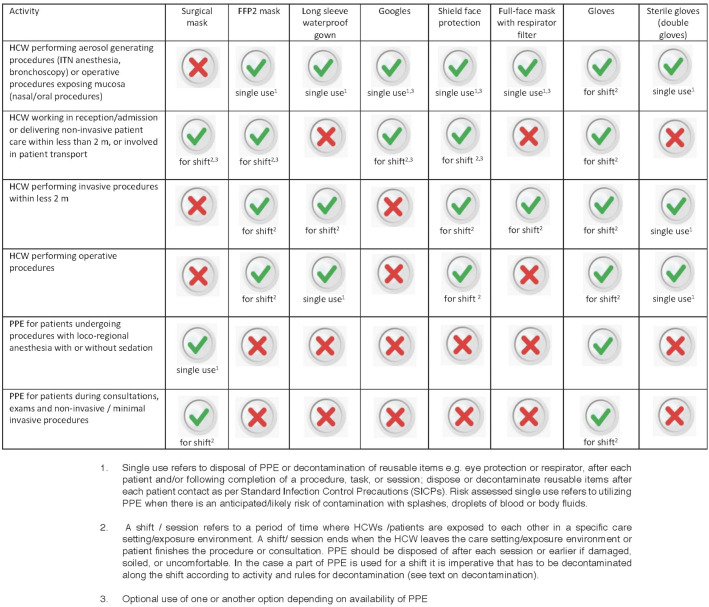
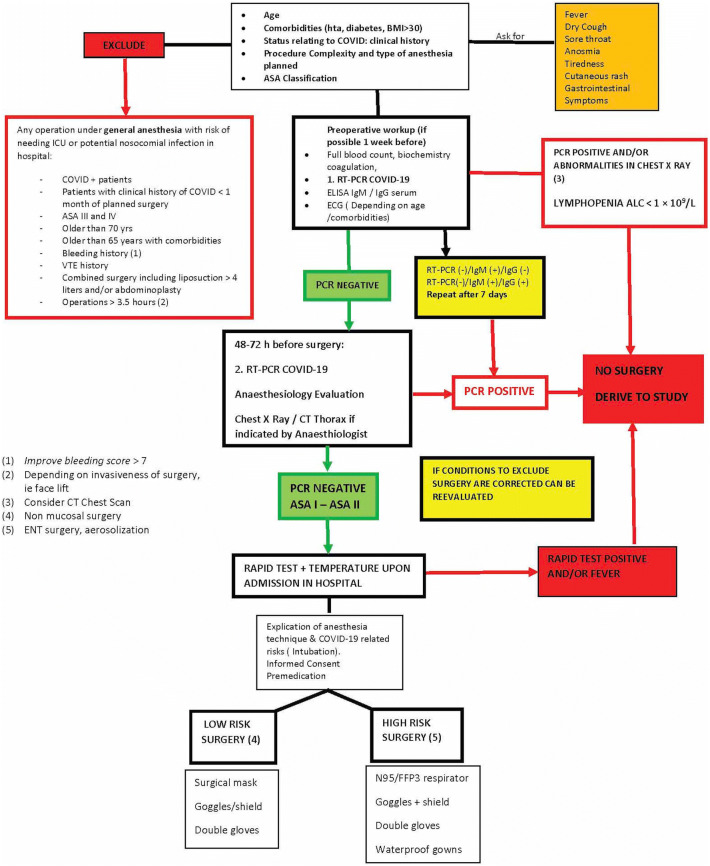
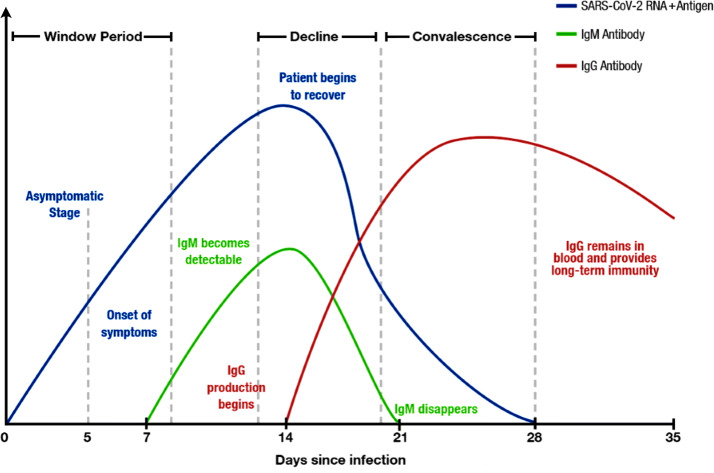
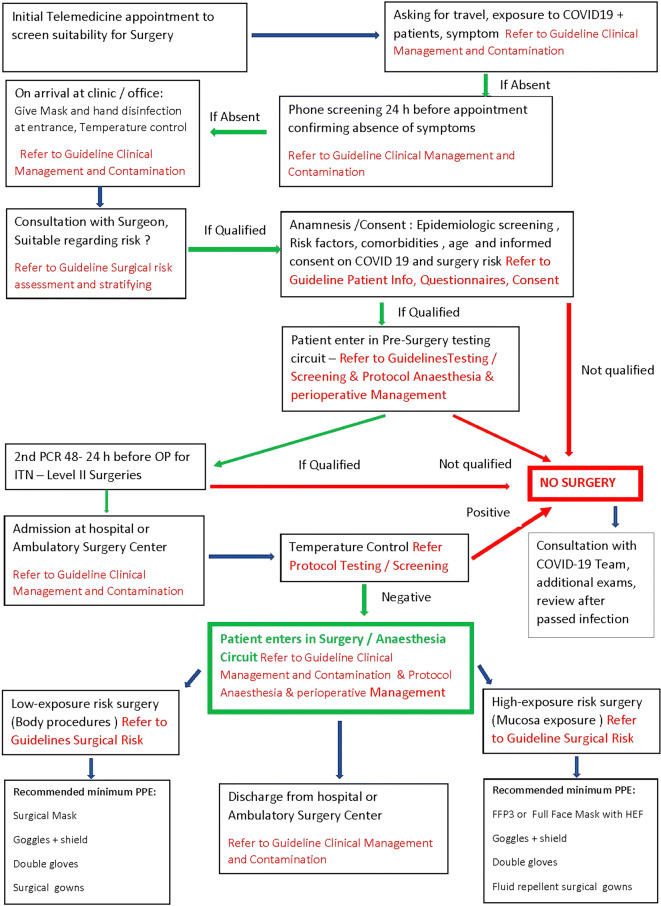
We conducted a MEDLINE/PubMed research for all available publications on COVID-19 and surgery and COVID-19 and anesthesia. Articles and referenced literature describing possible procedural impact factors leading to exacerbation of the clinical evolution of COVID-19-positive patients were identified to perform risk stratification for elective surgery. Based on these impact factors, considerations for patient selection, choice of procedural complexity, duration of procedure, type of anesthesia, etc., are discussed in this article and translated into algorithms for surgical/anesthesia risk management and clinical management. Current recommendations and published protocols on contamination control, avoidance of cross-contamination and procedural patient flow are reviewed. A COVID-19 testing guideline protocol for patients planning to undergo elective aesthetic surgery is presented and recommendations are made regarding adaptation of current patient information/informed consent forms and patient health questionnaires.

CONCLUSION

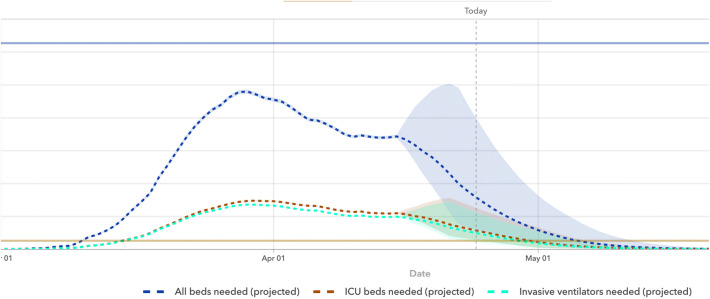
The COVID-19 crisis has led to unprecedented challenges in the acute management of the crisis, and the wave only recently seems to flatten out in some countries. The adaptation of surgical and procedural steps for a risk-minimizing management of potential COVID-19-positive patients seeking to undergo elective aesthetic procedures in the wake of that wave will present the next big challenge for the aesthetic surgery community. We propose a clinical algorithm to enhance patient safety in elective surgery in the context of COVID-19 and to minimize cross-contamination between healthcare workers and patients. New evidence-based guidelines regarding surgical risk stratification, testing, and clinical flow management/contamination management are proposed. We believe that only the continuous development and broad implementation of guidelines like the ones proposed in this paper will allow an early reintegration of all aesthetic procedures into the scope of surgical care currently performed and to prepare the elective surgical specialties better for a possible second wave of the pandemic.

LEVEL OF EVIDENCE V

This journal requires that authors assign a level of evidence to each article. For a full description of these Evidence-Based Medicine ratings, please refer to the Table of Contents or the online Instructions to Authors www.springer.com/00266.

摘要

背景

新型冠状病毒病(COVID-19)在全球范围内的传播,导致大多数受影响国家的所有专业的非紧急、择期手术几乎全部停止。在美容外科领域,大多数国际科学协会推荐的所有美容外科手术的自我暂停,已被全球许多外科医生所采用,这对大多数私人诊所和科室造成了巨大的社会经济影响。大多数国家仍有一个重要问题尚未得到解答,即何时以及如何重新安排择期/美容手术,以及在诊所和科室重新开放时需要进行哪些组织变革,以保护患者和医护人员。为了确保非紧急手术的安全,制定可管理的、基于证据的检测、手术/程序风险缓解以及临床流程管理/污染管理方案至关重要。

方法

我们对 COVID-19 与手术以及 COVID-19 与麻醉的所有可用出版物进行了 MEDLINE/PubMed 研究。确定了可能导致 COVID-19 阳性患者临床病情恶化的程序影响因素,以便对择期手术进行风险分层。基于这些影响因素,本文讨论了患者选择、手术复杂性选择、手术持续时间、麻醉类型等方面的考虑因素,并转化为手术/麻醉风险管理和临床管理的算法。回顾了当前关于污染控制、避免交叉污染和程序患者流程的建议和已发表的方案。提出了择期美容手术患者的 COVID-19 检测指南方案,并就当前患者信息/知情同意书和患者健康问卷的适应提出了建议。

结论

COVID-19 危机给危机的急性管理带来了前所未有的挑战,而且这一波疫情在某些国家似乎刚刚趋于平稳。在这一波疫情过后,寻求接受择期美容手术的潜在 COVID-19 阳性患者的手术和程序步骤的风险最小化管理,将成为美容外科学术界面临的下一个重大挑战。我们提出了一种临床算法,以提高 COVID-19 背景下择期手术的患者安全性,并最大限度地减少医护人员和患者之间的交叉污染。提出了新的基于证据的手术风险分层、检测和临床流程管理/污染管理指南。我们相信,只有不断制定和广泛实施像本文提出的指南,才能使所有美容手术尽早重新纳入当前外科护理范围,并使择期手术专业更好地为大流行的第二波做好准备。

证据水平 V:本刊要求作者为每篇文章指定一个证据水平。有关这些循证医学评级的完整描述,请参考目录或在线作者指南 www.springer.com/00266。
https://cdn.ncbi.nlm.nih.gov/pmc/blobs/6ec7/7224128/9d704c16a22b/266_2020_1752_Fig5_HTML.jpg
https://cdn.ncbi.nlm.nih.gov/pmc/blobs/6ec7/7224128/55ff36a03c19/266_2020_1752_Fig1_HTML.jpg
https://cdn.ncbi.nlm.nih.gov/pmc/blobs/6ec7/7224128/b52a6c21f98e/266_2020_1752_Fig2_HTML.jpg
https://cdn.ncbi.nlm.nih.gov/pmc/blobs/6ec7/7224128/057002aff758/266_2020_1752_Fig3_HTML.jpg
https://cdn.ncbi.nlm.nih.gov/pmc/blobs/6ec7/7224128/3d81030caff4/266_2020_1752_Fig4_HTML.jpg
https://cdn.ncbi.nlm.nih.gov/pmc/blobs/6ec7/7224128/9d704c16a22b/266_2020_1752_Fig5_HTML.jpg
https://cdn.ncbi.nlm.nih.gov/pmc/blobs/6ec7/7224128/55ff36a03c19/266_2020_1752_Fig1_HTML.jpg
https://cdn.ncbi.nlm.nih.gov/pmc/blobs/6ec7/7224128/b52a6c21f98e/266_2020_1752_Fig2_HTML.jpg
https://cdn.ncbi.nlm.nih.gov/pmc/blobs/6ec7/7224128/057002aff758/266_2020_1752_Fig3_HTML.jpg
https://cdn.ncbi.nlm.nih.gov/pmc/blobs/6ec7/7224128/3d81030caff4/266_2020_1752_Fig4_HTML.jpg
https://cdn.ncbi.nlm.nih.gov/pmc/blobs/6ec7/7224128/9d704c16a22b/266_2020_1752_Fig5_HTML.jpg

相似文献

1
Elective, Non-urgent Procedures and Aesthetic Surgery in the Wake of SARS-COVID-19: Considerations Regarding Safety, Feasibility and Impact on Clinical Management.SARS-CoV-2 疫情期间择期非紧急手术和美容手术:关于安全性、可行性及对临床管理影响的考虑。
Aesthetic Plast Surg. 2020 Jun;44(3):1014-1042. doi: 10.1007/s00266-020-01752-9. Epub 2020 May 14.
2
COVID-19 Pandemic: Evaluation of Socio-Economic Impact on Aesthetic Plastic Surgery Providers.COVID-19 大流行:对美容整形外科医生的社会经济影响评估。
Aesthetic Plast Surg. 2021 Aug;45(4):1877-1887. doi: 10.1007/s00266-021-02130-9. Epub 2021 Apr 8.
3
Availability of COVID-19 Information from National and International Aesthetic Surgery Society Websites.国家和国际美容外科学会网站上的 COVID-19 信息的可用性。
Aesthetic Plast Surg. 2020 Jun;44(3):1043-1046. doi: 10.1007/s00266-020-01751-w. Epub 2020 May 12.
4
Avoiding a Second Wave of Medical Errors: The Importance of Human Factors in the Context of a Pandemic.避免医疗差错的第二波浪潮:大流行背景下人为因素的重要性。
Aesthetic Plast Surg. 2020 Oct;44(5):1926-1928. doi: 10.1007/s00266-020-01868-y. Epub 2020 Jul 15.
5
Urgent, Emergent, or Elective Surgery during the COVID-19 Pandemic.2019冠状病毒病大流行期间的急诊、紧急或择期手术
J Coll Physicians Surg Pak. 2020 Jun;30(6):86-87. doi: 10.29271/jcpsp.2020.Supp1.S86.
6
COVID-19 and gastrointestinal endoscopies: Current insights and emergent strategies.新型冠状病毒肺炎与胃肠内镜:当前认识与新兴策略。
Dig Endosc. 2020 Jul;32(5):715-722. doi: 10.1111/den.13693. Epub 2020 Jun 3.
7
International Society for Gynecologic Endoscopy (ISGE) guidelines and recommendations on gynecological endoscopy during the evolutionary phases of the SARS-CoV-2 pandemic.国际妇科内镜学会(ISGE)关于 SARS-CoV-2 大流行进化阶段妇科内镜检查的指南和建议。
Eur J Obstet Gynecol Reprod Biol. 2020 Oct;253:133-140. doi: 10.1016/j.ejogrb.2020.08.039. Epub 2020 Aug 26.
8
Medically Necessary Orthopaedic Surgery During the COVID-19 Pandemic: Safe Surgical Practices and a Classification to Guide Treatment.新冠疫情期间的医学必需矫形外科手术:安全手术实践和分类以指导治疗。
J Bone Joint Surg Am. 2020 Jul 15;102(14):e76. doi: 10.2106/JBJS.20.00599.
9
Aesthetic Plastic Surgery Checklist: A Safety Tool.美容整形手术清单:一种安全工具。
Aesthetic Plast Surg. 2016 Oct;40(5):785-91. doi: 10.1007/s00266-016-0685-y. Epub 2016 Aug 5.
10
The COVID-19 Pandemic and Plastic Surgery: Literature Review, Ethical Analysis, and Proposed Guidelines.《COVID-19 大流行与整形外科学:文献回顾、伦理分析与建议指南》。
Plast Reconstr Surg. 2020 Oct;146(4):482e-493e. doi: 10.1097/PRS.0000000000007268.

引用本文的文献

1
Impact of Public Health and Social Measures on Cosmetic Treatments in the COVID-19 Pandemic: A Retrospective Multi-Center Study Combined With a Questionnaire-Based Cross-Sectional Study.公共卫生和社会措施对新冠疫情期间美容治疗的影响:一项回顾性多中心研究与基于问卷的横断面研究相结合
J Cosmet Dermatol. 2024 Dec;23(12):3800-3808. doi: 10.1111/jocd.16563. Epub 2024 Sep 24.
2
Preeclampsia in the Context of COVID-19: Mechanisms, Pathophysiology, and Clinical Outcomes.子痫前期与 COVID-19:机制、病理生理学和临床结局。
Am J Reprod Immunol. 2024 Aug;92(2):e13915. doi: 10.1111/aji.13915.
3
Viral load of SARS-CoV-2 in surgical smoke in minimally invasive and open surgery: a single-center prospective clinical trial.

本文引用的文献

1
Our Experiences with Plastic and Reconstructive Surgery Procedures during Coronavirus Disease 2019 Pandemic.我们在2019冠状病毒病大流行期间进行整形与重建手术的经验。
Plast Reconstr Surg Glob Open. 2020 May 13;8(5):e2868. doi: 10.1097/GOX.0000000000002868. eCollection 2020 May.
2
Population-level COVID-19 mortality risk for non-elderly individuals overall and for non-elderly individuals without underlying diseases in pandemic epicenters.大流行中心非老年人群和非老年无基础疾病人群的 COVID-19 总体人群死亡率风险。
Environ Res. 2020 Sep;188:109890. doi: 10.1016/j.envres.2020.109890. Epub 2020 Jul 1.
3
微创手术和开放性手术中 SARS-CoV-2 病毒载量在手术烟雾中的研究:一项单中心前瞻性临床试验。
Sci Rep. 2023 Nov 20;13(1):20299. doi: 10.1038/s41598-023-47058-z.
4
Increased time to surgery and worse perioperative outcome in benign brain tumor patients with COVID-19.COVID-19 阳性的良性脑肿瘤患者手术时间延长,围手术期结局更差。
J Clin Neurosci. 2023 Nov;117:20-26. doi: 10.1016/j.jocn.2023.09.010. Epub 2023 Sep 21.
5
Let's Be Reasonable: Surgical Informed Consent in the COVID-19 Era.让我们理智看待:新冠疫情时代的手术知情同意书
Ann Surg Open. 2020 Oct 19;1(2):e016. doi: 10.1097/AS9.0000000000000016. eCollection 2020 Dec.
6
Preoperative universal screening of coronavirus disease 2019 during Omicron outbreak in patients undergoing ophthalmic surgeries: Experience from a tertiary eye care center in Saudi Arabia.2019冠状病毒病在沙特阿拉伯一家三级眼科护理中心奥密克戎疫情期间对眼科手术患者进行术前普遍筛查:经验
Saudi J Ophthalmol. 2023 May 9;37(2):131-136. doi: 10.4103/sjopt.sjopt_94_22. eCollection 2023 Apr-Jun.
7
The impact of COVID-19 pandemic on surgical neuro-oncology: A survey from the Italian society of neurosurgery (SINch).2019年冠状病毒病大流行对外科神经肿瘤学的影响:来自意大利神经外科学会(SINch)的一项调查。
World Neurosurg X. 2023 Jun 24;20:100233. doi: 10.1016/j.wnsx.2023.100233. eCollection 2023 Oct.
8
Necrotizing Skin and Soft Tissue Infection after Gluteal Augmentation in a Perioperatively Asymptomatic COVID-19 Patient-Complications of the Post-Lockdown Era? A Case Report.COVID-19 围手术期无症状患者臀部隆乳术后坏死性皮肤和软组织感染:后封锁时代的并发症?一例报告。
Medicina (Kaunas). 2023 May 10;59(5):914. doi: 10.3390/medicina59050914.
9
An Investigation for Future Practice of Elective Hip and Knee Arthroplasties during COVID-19 in Romania.罗马尼亚 COVID-19 大流行期间髋关节和膝关节择期置换术未来实践的调查
Medicina (Kaunas). 2023 Feb 8;59(2):314. doi: 10.3390/medicina59020314.
10
A propensity score-matched retrospective cohort study of hysterectomies for benign disease during the COVID-19 pandemic.一项针对 COVID-19 大流行期间良性疾病行子宫切除术的倾向评分匹配回顾性队列研究。
Rev Assoc Med Bras (1992). 2023 Feb 20;69(3):458-462. doi: 10.1590/1806-9282.20221564. eCollection 2023.
Personal protective equipment during the COVID-19 pandemic: a reply.
新冠疫情期间的个人防护装备:一则回应
Anaesthesia. 2020 Aug;75(8):1121-1122. doi: 10.1111/anae.15158. Epub 2020 Jun 4.
4
[Management of COVID-19: the Zhejiang experience].[新型冠状病毒肺炎的管理:浙江经验]
Zhejiang Da Xue Xue Bao Yi Xue Ban. 2020 Feb 21;49(2):147-157. doi: 10.3785/j.issn.1008-9292.2020.02.02.
5
Author's reply - Clinical characteristics and outcomes of patients undergoing surgeries during the incubation period of COVID-19 infection.作者回复——新型冠状病毒肺炎感染潜伏期内接受手术患者的临床特征及预后
EClinicalMedicine. 2020 Apr 29;22:100363. doi: 10.1016/j.eclinm.2020.100363. eCollection 2020 May.
6
It's not the heat, it's the humidity: Effectiveness of a rice cooker-steamer for decontamination of cloth and surgical face masks and N95 respirators.关键不在热度,而在湿度:电饭煲蒸汽器对布质口罩、医用外科口罩及N95口罩的消毒效果
Am J Infect Control. 2020 Jul;48(7):854-855. doi: 10.1016/j.ajic.2020.04.012. Epub 2020 Apr 22.
7
Cardiac involvement in COVID-19 patients: Risk factors, predictors, and complications: A review.新冠病毒感染患者的心脏受累:风险因素、预测指标及并发症:综述
J Card Surg. 2020 Jun;35(6):1302-1305. doi: 10.1111/jocs.14538. Epub 2020 Apr 19.
8
Temporal dynamics in viral shedding and transmissibility of COVID-19.新冠病毒脱落和传播的时间动态。
Nat Med. 2020 May;26(5):672-675. doi: 10.1038/s41591-020-0869-5. Epub 2020 Apr 15.
9
Clinical characteristics and outcomes of patients undergoing surgeries during the incubation period of COVID-19 infection.新型冠状病毒肺炎感染潜伏期接受手术患者的临床特征及预后
EClinicalMedicine. 2020 Apr 5;21:100331. doi: 10.1016/j.eclinm.2020.100331. eCollection 2020 Apr.
10
Projecting the transmission dynamics of SARS-CoV-2 through the postpandemic period.预测 SARS-CoV-2 的传播动力学,直至大流行后期。
Science. 2020 May 22;368(6493):860-868. doi: 10.1126/science.abb5793. Epub 2020 Apr 14.