Lizárraga-Verdugo Erik, Ruiz-García Erika, López-Camarillo César, Bermúdez Mercedes, Avendaño-Félix Mariana, Ramos-Payán Rosalío, Romero-Quintana Geovanni, Ayala-Ham Alfredo, Villegas-Mercado Carlos, Pérez-Plasencia Carlos, Aguilar-Medina Maribel
Facultad de Ciencias Químico Biológicas, Universidad Autónoma de Sinaloa, Culiacán, Sinaloa, Mexico.
Instituto Nacional de Cancerología, CDMX, Mexico.
J Oncol. 2020 Apr 29;2020:5701527. doi: 10.1155/2020/5701527. eCollection 2020.
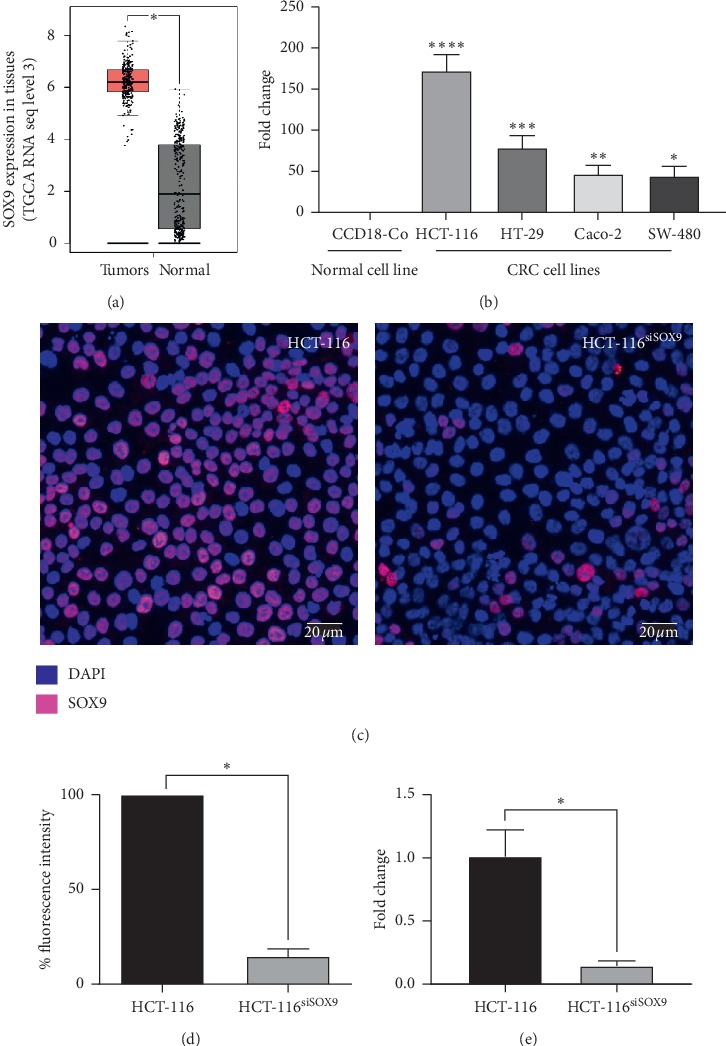
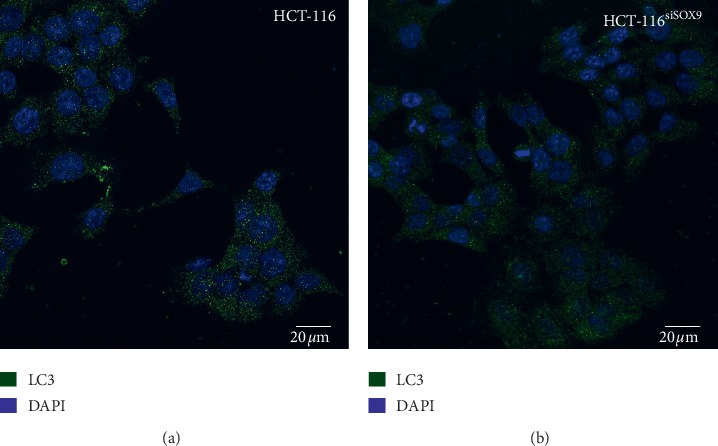
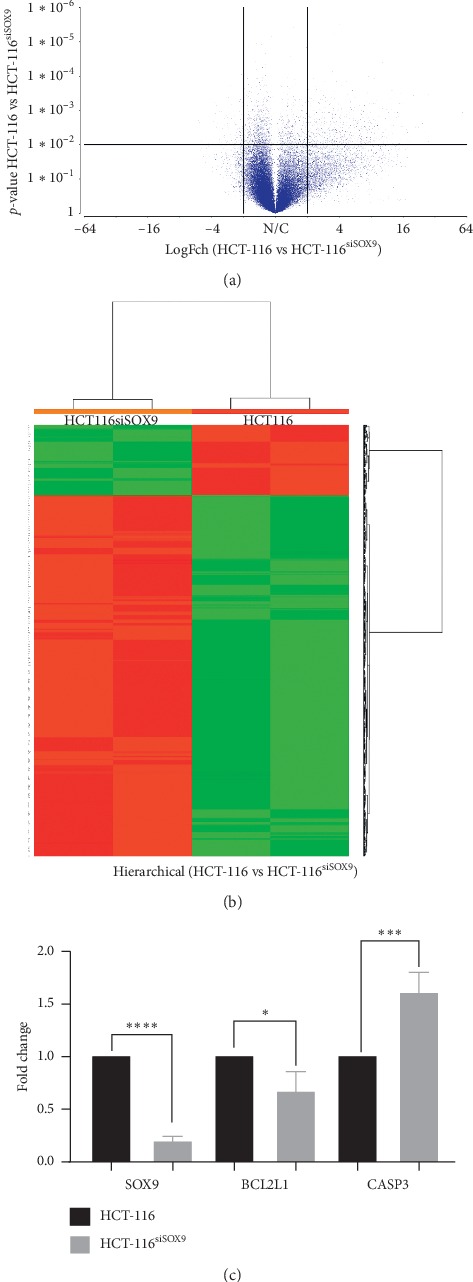
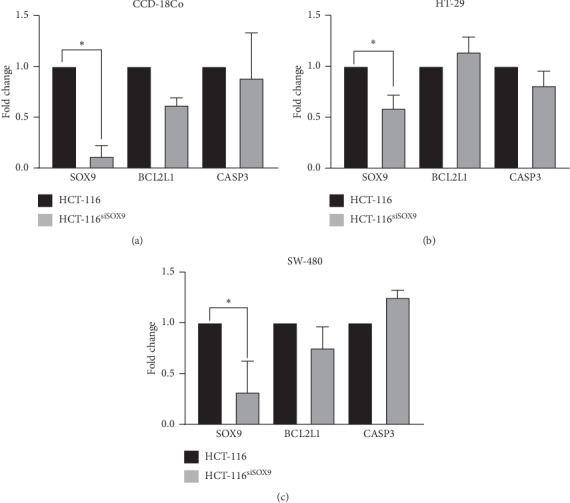
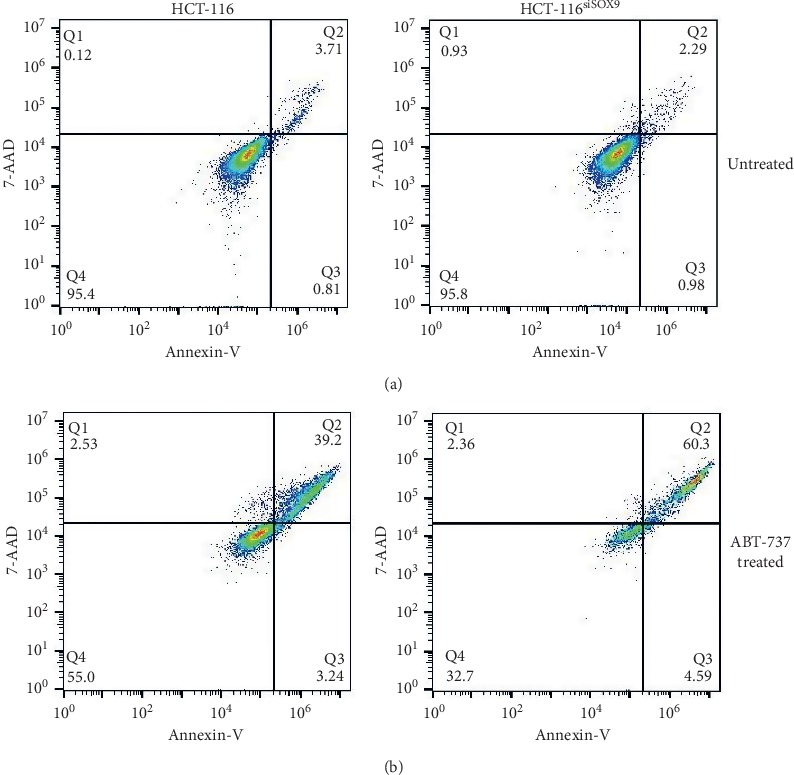
Colorectal cancer (CRC) is one of the most frequent types of malignancies and one of the major causes of cancer-related death worldwide. Sex-determining region Y (SRY)-box 9 protein (SOX9) is a member of the SOX family of transcription factors which are involved in the regulation of differentiation and development. Recently, several reports suggest an important role of SOX9 in tumorigenesis since its overexpression correlates with tumor progression and poor outcome in several types of cancer; however, its role in CRC is not clear until now. Therefore, in this work, we searched for novel SOX9-regulated genes involved in cell survival of CRC. We silenced SOX9 in the poorly differentiated HCT-116 cell line, using a specific siRNA, to identify differential expressed genes by DNA microarrays and analyzed the role or candidate genes in apoptosis and autophagy. Transcriptome analysis showed that diverse cellular pathways, associated with CRC carcinogenesis such as Wnt/-catenin, MAPK, TGF-, and mTOR, were modulated after SOX9 silencing. Interestingly, we found that SOX9 silencing promotes downregulation of BCL2L1 and overexpression of CASP3, proteins related to apoptosis, which was further confirmed in SW-480, a moderated-differentiated cell line, but not in HT-29, well-differentiated cell line. Moreover, inhibition of BCL2L1 by ABT-737 (BH3 mimetic) in SOX9-silenced HCT-116 cells resulted in an increased apoptosis percentage. However, downregulation of BCL2L1 was not enough to induce autophagy. This is the first report, suggesting that cell survival in poorly and moderated-differentiated CRC cells lines is regulated by SOX9/BCL2L1 axis, but not in well-differentiated cell lines.
结直肠癌(CRC)是最常见的恶性肿瘤类型之一,也是全球癌症相关死亡的主要原因之一。性别决定区Y(SRY)-盒9蛋白(SOX9)是SOX转录因子家族的成员之一,参与细胞分化和发育的调控。最近,有几份报告表明SOX9在肿瘤发生中起重要作用,因为它的过表达与几种癌症的肿瘤进展和不良预后相关;然而,其在结直肠癌中的作用至今尚不清楚。因此,在本研究中,我们寻找参与结直肠癌细胞存活的新型SOX9调控基因。我们使用特异性小干扰RNA(siRNA)在低分化的HCT-116细胞系中沉默SOX9,通过DNA微阵列鉴定差异表达基因,并分析候选基因在细胞凋亡和自噬中的作用。转录组分析表明,与结直肠癌发生相关的多种细胞途径,如Wnt/β-连环蛋白、丝裂原活化蛋白激酶(MAPK)、转化生长因子(TGF)和哺乳动物雷帕霉素靶蛋白(mTOR),在SOX9沉默后受到调控。有趣的是,我们发现SOX9沉默促进凋亡相关蛋白BCL2L1的下调和半胱天冬酶3(CASP3)的过表达,这在中度分化的SW-480细胞系中得到进一步证实,但在高分化的HT-29细胞系中未得到证实。此外,在SOX9沉默的HCT-116细胞中用ABT-737(BH3模拟物)抑制BCL2L1导致凋亡百分比增加。然而,BCL2L1的下调不足以诱导自噬。这是第一份报告,表明低分化和中度分化的结直肠癌细胞系中的细胞存活受SOX9/BCL2L1轴调控,但高分化细胞系不受此调控。